
Introduction
DNA is one of the most important biological components found in living organisms. It carries the genetic information that determines how living things develop, grow, function, and reproduce. From humans and animals to plants and microorganisms, DNA plays a central role in maintaining life. It contains instructions that guide cells in producing proteins and performing essential biological activities. Although DNA is extremely small and cannot be seen with the naked eye, its influence on every living organism is enormous.
Students often come across the term DNA in biology textbooks, science examinations, medical studies, and general knowledge questions. Understanding its full form, structure, and functions helps explain how characteristics pass from parents to children and why individuals have different physical features. The full form of DNA is a basic scientific concept, but its importance extends to genetics, medicine, biotechnology, forensic science, and evolutionary research.
1. What Is the Full Form of DNA?
The full form of DNA is Deoxyribonucleic Acid. It is a molecule that stores and transfers genetic information in almost all living organisms. DNA contains the biological instructions required for the growth, development, reproduction, and functioning of living cells. It acts like an instruction manual that tells cells how to perform their different activities.
The word deoxyribonucleic comes from the chemical components that make up the molecule. DNA is primarily located inside the nucleus of eukaryotic cells, although some DNA is also present in mitochondria. In plants, DNA is additionally found in chloroplasts. It is made up of smaller units called nucleotides, which are arranged in a specific sequence to store genetic instructions.
2. What Does Deoxyribonucleic Acid Mean?
The scientific name Deoxyribonucleic Acid describes the chemical nature of DNA. The term deoxyribo refers to deoxyribose, which is a type of five-carbon sugar present in its structure. Nucleic refers to the fact that DNA is a nucleic acid, while acid describes its chemical characteristics.
DNA contains four nitrogenous bases: adenine, thymine, guanine, and cytosine. These bases are commonly represented by the letters A, T, G, and C. Their specific arrangement forms genetic information. The sequence of these bases determines the instructions stored within DNA.
Every living organism has genetic information arranged in DNA. However, the sequence of DNA differs between individuals and species. These differences contribute to biological diversity and explain why humans share certain characteristics while also having individual differences.
3. Structure of DNA
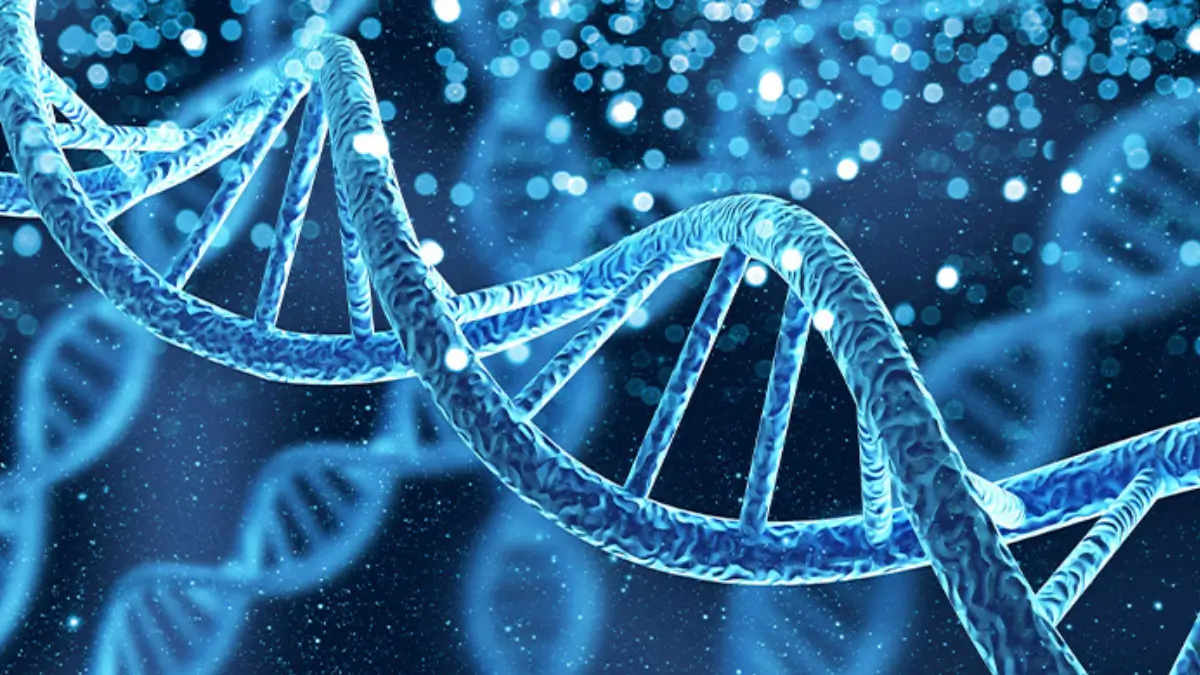
The two strands are connected through specific base-pairing rules. Adenine always pairs with thymine, while guanine pairs with cytosine. These connections help maintain the stability of the DNA molecule. The double-helix structure allows DNA to store large amounts of genetic information in a compact and organized form.
The structure of DNA was famously described by James Watson and Francis Crick in 1953, building on important experimental evidence, including X-ray diffraction work by Rosalind Franklin and contributions from Maurice Wilkins. Their discovery became a major milestone in modern biology.
4. Four Main Nitrogenous Bases in DNA
DNA contains four nitrogenous bases that work together to store genetic information. Each base has a specific partner, which helps maintain the structure and accuracy of DNA.
The four nitrogenous bases are:
-
Adenine (A): Pairs with thymine and is one of the two purine bases.
-
Thymine (T): Pairs with adenine and is a pyrimidine base.
-
Guanine (G): Pairs with cytosine and is a purine base.
-
Cytosine (C): Pairs with guanine and is a pyrimidine base.
These four bases form different sequences that carry biological instructions. Even small changes in their arrangement can sometimes affect how a gene functions. The sequence of these bases is responsible for many inherited characteristics and biological differences among organisms.
5. Important Functions of DNA
DNA performs several essential functions that allow living organisms to survive and reproduce. Its primary responsibility is storing genetic information and making that information available to cells when needed.
One major function of DNA is controlling protein production. Proteins are essential molecules that perform various activities, including supporting tissues, transporting substances, and controlling chemical reactions. DNA contains genes that provide instructions for producing proteins.
Another important function is heredity. DNA carries genetic information from parents to their offspring. This explains why children may inherit characteristics such as eye colour, hair texture, and certain biological features from their parents.
DNA also plays a significant role in cell division. Before a cell divides, its DNA must be copied so that each new cell receives the necessary genetic information. This process supports growth, tissue repair, and reproduction.
6. Where Is DNA Found in the Human Body?
A smaller amount of DNA is found inside mitochondria. These structures are responsible for producing much of the energy required by cells. Mitochondrial DNA is generally inherited from the mother, making it useful in certain genetic and ancestry studies.
DNA can also be obtained from different biological samples, including blood, saliva, hair roots, skin cells, and cheek swabs. These samples are frequently used in medical testing, scientific research, and forensic investigations.
7. What Are Genes and Chromosomes?
Genes and chromosomes are closely connected to DNA, but they have different meanings. A gene is a specific section of DNA that contains instructions for producing a functional product, such as a protein or functional RNA. Genes influence many biological characteristics and activities.
Chromosomes are organized structures made of DNA and proteins. They help package long DNA molecules so they can fit inside the cell nucleus. Human body cells usually contain 46 chromosomes arranged into 23 pairs. One chromosome in each pair generally comes from the mother, while the other comes from the father.
Genes are located on chromosomes, and chromosomes contain many genes. Together, they organize and maintain the genetic information necessary for human development and biological functioning.
8. Difference Between DNA and RNA
DNA and RNA are both nucleic acids that play important roles in storing and using genetic information. However, they have different structures and functions.
| Feature | DNA | RNA |
|---|---|---|
| Full form | Deoxyribonucleic Acid | Ribonucleic Acid |
| Structure | Usually double-stranded | Usually single-stranded |
| Sugar | Deoxyribose | Ribose |
| Bases | A, T, G, C | A, U, G, C |
| Main role | Stores genetic information | Helps use genetic information |
| Stability | Generally more stable | Generally less stable |
One important difference is that RNA contains uracil instead of thymine. RNA plays an essential role in protein synthesis by helping transfer and interpret genetic instructions. Different types of RNA perform different tasks inside cells.
9. Importance of DNA in Human Life
DNA is essential because it provides the biological instructions that support human development and functioning. It influences physical characteristics, cellular activities, and certain inherited health conditions. Without genetic information, cells would not have the instructions needed to perform their specialized functions.
DNA also helps explain human similarities and differences. Every person receives genetic information from their biological parents, which contributes to inherited characteristics. However, environmental factors such as nutrition, physical activity, and lifestyle also influence how certain characteristics develop.
Another important aspect is genetic variation. Differences in DNA sequences contribute to the diversity seen among individuals and populations. These variations are also important for understanding evolution, adaptation, and the development of different species over generations.
10. Applications of DNA in Science and Medicine
DNA research has transformed several scientific and medical fields. Modern technologies allow researchers to examine genetic information and understand how particular genes influence biological processes.
Some important applications include:
1. Medical Diagnosis: Genetic testing can help identify inherited conditions and certain genetic changes associated with diseases.
2. Forensic Science: DNA profiling can help investigators compare biological evidence with reference samples during criminal investigations.
3. Ancestry Research: DNA analysis can provide information about genetic ancestry and biological relationships.
4. Biotechnology: Scientists use genetic techniques to develop medicines, study organisms, and improve certain agricultural processes.
5. Medical Research: DNA research helps scientists understand diseases and investigate potential treatments.
These applications demonstrate how knowledge about genetic material has become valuable in modern science. However, genetic testing also requires careful attention to privacy, consent, and responsible handling of personal information.
11. How Is DNA Passed from Parents to Children?

DNA is passed from parents to children through reproductive cells. In humans, the egg cell from the mother and the sperm cell from the father each normally contain 23 chromosomes. During fertilization, these chromosomes combine to form a cell with 46 chromosomes.
The resulting genetic material contains information from both parents. This is why children often share physical characteristics with their family members. However, the combination of inherited genetic variations makes every individual genetically unique, except in special cases such as identical twins.
The inheritance of DNA is an important part of biological reproduction. It ensures that genetic information continues from one generation to another while allowing variation among individuals.
12. Interesting Facts About DNA
DNA is one of the most fascinating molecules in biology. Although it is extremely small, it contains an enormous amount of information and influences nearly every aspect of living organisms.
Here are some interesting facts:
-
If stretched out, the DNA from a single human cell would measure approximately two metres.
-
Human cells generally contain 46 chromosomes arranged in 23 pairs.
-
DNA is found in humans, animals, plants, fungi, and many microorganisms.
-
Identical twins usually have nearly identical nuclear DNA.
-
DNA can be used in forensic investigations to help identify individuals.
-
Mitochondrial DNA is generally inherited through the maternal line.
These facts demonstrate how a tiny biological molecule can have such a significant influence on life. Scientific research continues to reveal new information about its structure, functions, and applications.
13. Why Is DNA Important for Students?
Learning about DNA is important for students because it builds a foundation for understanding genetics, heredity, evolution, and human biology. It is a frequently discussed topic in school science, competitive examinations, medical education, and general knowledge studies.
Understanding its full form also helps students learn important scientific terminology. Concepts such as genes, chromosomes, mutations, and genetic inheritance become easier to understand when students first learn about DNA.
DNA is also relevant beyond academic studies. Its applications in healthcare, forensic science, biotechnology, and agriculture demonstrate how biological discoveries influence everyday life. A basic understanding of genetics can help students appreciate scientific developments and their practical importance.
14. Frequently Asked Questions (FAQs)
Q1. What is the full form of DNA?
The full form of DNA is Deoxyribonucleic Acid. It is a genetic molecule that stores biological instructions required for the growth, development, functioning, and reproduction of living organisms.
Q2. Who discovered the structure of DNA?
James Watson and Francis Crick proposed the double-helix model of DNA in 1953. Their work was supported by important experimental findings from Rosalind Franklin, Maurice Wilkins, and other researchers.
Q3. Where is DNA located in the human body?
Most DNA is located inside the nucleus of human cells. A smaller amount is present in mitochondria, which are responsible for producing energy for cellular activities.
Q4. What are the four bases of DNA?
The four nitrogenous bases are adenine, thymine, guanine, and cytosine. Adenine pairs with thymine, while guanine pairs with cytosine.
Q5. What is the main function of DNA?
The main function of DNA is to store and transfer genetic information. It provides instructions for protein production, supports cell activities, and passes inherited characteristics from parents to offspring.
Q6. What is the difference between DNA and RNA?
DNA generally has a double-stranded structure and stores genetic information, whereas RNA is usually single-stranded and helps cells use genetic instructions, particularly during protein synthesis.
Conclusion
DNA is one of the most important molecules in the biological world. Its full form, Deoxyribonucleic Acid, describes a genetic molecule responsible for storing and transferring the information required for life. Its double-helix structure, four nitrogenous bases, and organized genetic sequences make it possible for living organisms to grow, develop, and reproduce.
From understanding inherited characteristics to supporting medical research and forensic investigations, DNA has applications across many scientific fields. Learning about its structure, functions, genes, and chromosomes provides a better understanding of human biology and the natural world. Whether studied for school examinations or general knowledge, DNA remains a fundamental concept in modern science.

