
In today’s digital world, computers and smart devices have become an essential part of our daily lives. Whether you are using a smartphone, laptop, or desktop computer, there is one core component that makes everything function smoothly—the CPU. Many people often search for what is the full form of CPU to understand the basics of how computers actually work. This simple question opens the door to a deeper understanding of computing technology.
When you explore what is the full form of CPU, you’ll realize that it is much more than just a term. The CPU is often referred to as the “brain” of the computer because it performs all the important tasks, including calculations, processing instructions, and managing operations. Without it, a computer would not be able to function at all.
Understanding what is the full form of CPU is especially useful for students, tech enthusiasts, and anyone who wants to build basic computer knowledge. In this article, we will explain the full form, meaning, working, types, and importance of the CPU in a clear and engaging way.
What Is the Full Form of CPU?
The answer to what is the full form of CPU is:
CPU = Central Processing Unit
The Central Processing Unit is the primary component of a computer that performs instructions and processes data. It acts as the control center, directing all operations within the system. Whenever you open an app, play a video, or type a document, the CPU is actively working behind the scenes.
In simple terms, if a computer were a human body, the CPU would be the brain. It receives instructions, processes them, and delivers the output efficiently.
Understanding the Role of CPU in a Computer
Once you understand what is the full form of CPU, the next step is to explore its role. The CPU is responsible for executing commands and managing the flow of data within the system. It communicates with other hardware components like memory, storage, and input/output devices.
Every task performed by a computer involves three basic steps: input, processing, and output. The CPU handles the processing part. For example, when you type something on your keyboard, the CPU processes that input and displays it on your screen almost instantly.
The efficiency of a computer largely depends on the speed and capability of its CPU. A faster CPU can handle more instructions per second, making your device run smoothly and efficiently.
Main Components of CPU
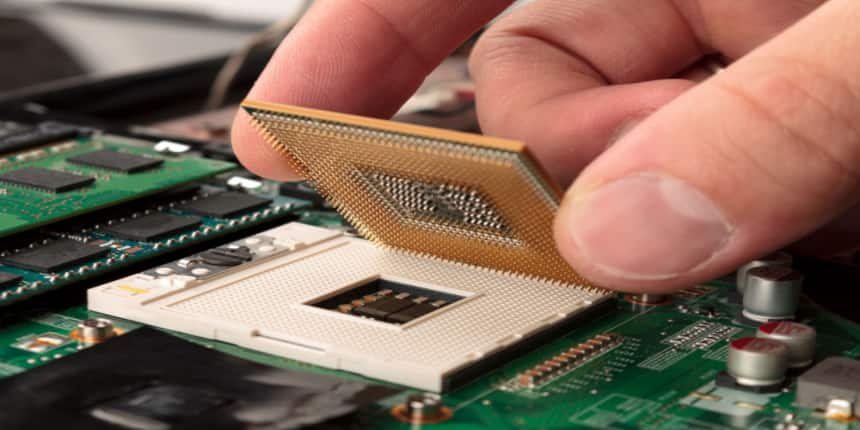
To fully understand what is the full form of CPU, it is important to know its internal structure. The CPU is made up of several key components that work together to process data.
1. Arithmetic Logic Unit (ALU)
The ALU performs all mathematical and logical operations. Whether it’s addition, subtraction, or comparison, this unit handles the calculations required by programs.
2. Control Unit (CU)
The Control Unit directs the operations of the computer. It tells other components what to do and when to do it, ensuring smooth execution of instructions.
3. Registers
Registers are small storage locations within the CPU that temporarily hold data and instructions. They help in quick processing and improve efficiency.
These components work together seamlessly, making the CPU the most important part of a computer system.
Functions of CPU
Understanding the functions helps clarify what is the full form of CPU in a practical sense. The CPU performs several essential tasks that keep a computer running.
- Processing Instructions: Executes commands from programs and applications.
- Performing Calculations: Handles arithmetic and logical operations.
- Controlling Operations: Manages and coordinates all hardware components.
- Data Management: Transfers data between memory and devices.
These functions ensure that the computer performs tasks accurately and efficiently.
How Does a CPU Work?
To better grasp what is the full form of CPU, it’s helpful to understand how it works. The CPU follows a cycle known as the Fetch-Decode-Execute Cycle.
First, the CPU fetches instructions from memory. Then, it decodes those instructions to understand what needs to be done. Finally, it executes the instruction and produces the result.
This process happens billions of times per second, allowing your computer to perform complex tasks quickly. For example, when you watch a video online, the CPU processes video data, audio signals, and user inputs all at once.
Types of CPU
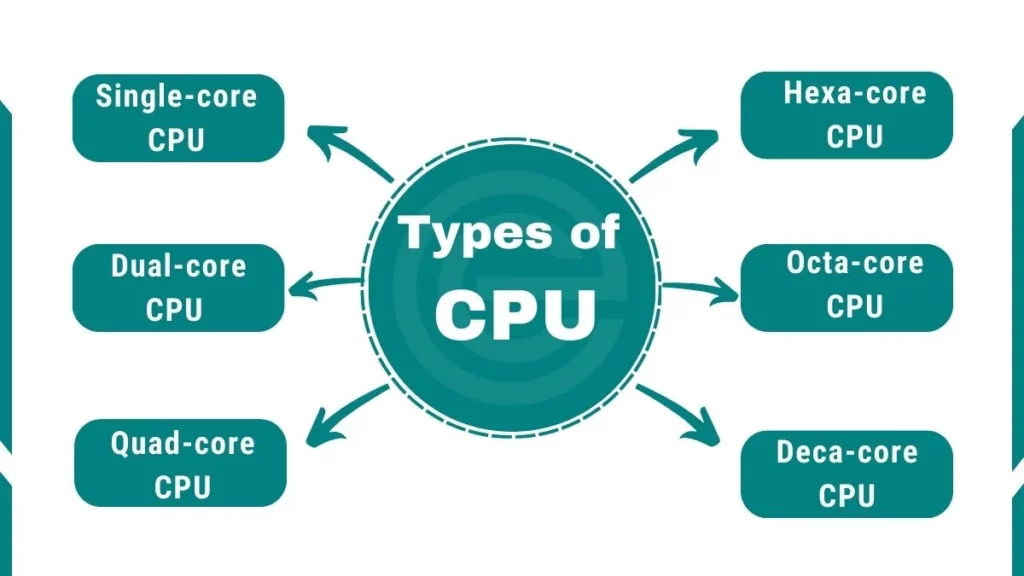
When discussing what is the full form of CPU, it’s also useful to know that CPUs come in different types based on their design and performance.
1. Single-Core CPU
This type has one processing unit and can handle one task at a time. It is found in older computers and basic devices.
2. Dual-Core CPU
A dual-core processor has two cores, allowing it to perform multiple tasks simultaneously.
3. Quad-Core CPU
With four cores, this type offers better multitasking and improved performance.
4. Multi-Core CPU
Modern CPUs have multiple cores (6, 8, or more), making them ideal for gaming, editing, and heavy applications.
These variations show how CPUs have evolved over time to meet increasing technological demands.
CPU vs Other Computer Components
To fully understand what is the full form of CPU, it’s helpful to compare it with other components.
| Component | Function | Importance |
|---|---|---|
| CPU | Processes instructions | Core of the system |
| RAM | Stores temporary data | Supports speed |
| Hard Drive | Stores permanent data | Data storage |
| GPU | Handles graphics | Visual performance |
This table highlights how the CPU works in coordination with other components to deliver a smooth computing experience.
Importance of CPU in Modern Devices
The importance of understanding what is the full form of CPU becomes clear when you look at modern technology. From smartphones to smart TVs, every device relies on a CPU to function.
A powerful CPU ensures faster performance, better multitasking, and improved user experience. For instance, when you switch between apps on your phone, the CPU ensures everything runs smoothly without lag.
In industries like gaming, artificial intelligence, and data processing, CPUs play a crucial role. They enable advanced computations and real-time processing, making modern innovations possible.
Real-Life Examples of CPU Usage
Understanding what is the full form of CPU becomes easier when you relate it to everyday examples. When you open a browser, the CPU processes web pages. When you edit a photo, it applies filters and effects. Even simple tasks like setting an alarm on your phone involve CPU processing.
In offices, CPUs handle spreadsheets, presentations, and emails. In schools, they support online learning and research. This shows how deeply integrated CPUs are in our daily activities.
Advantages of a Powerful CPU
A high-performance CPU offers several benefits that enhance overall computing experience:
- Faster processing speed for applications
- Smooth multitasking without lag
- Better performance in gaming and editing
- Efficient handling of heavy software
These advantages highlight why choosing the right CPU is important for users.
FAQs
1. What is the full form of CPU in simple words?
The full form of CPU is Central Processing Unit. It is the main part of a computer that processes data and executes instructions, making it the brain of the system.
2. Why is the CPU called the brain of the computer?
The CPU is called the brain because it controls all operations, processes data, and ensures that every part of the computer works together efficiently.
3. Can a computer work without a CPU?
No, a computer cannot function without a CPU. It is an essential component required for processing instructions and running programs.
4. What are the main parts of a CPU?
The main parts include the Arithmetic Logic Unit (ALU), Control Unit (CU), and registers. These components work together to process data.
5. Is CPU important for gaming?
Yes, a powerful CPU is crucial for gaming as it ensures smooth gameplay, faster loading times, and better performance.
6. How does CPU affect computer speed?
The CPU directly impacts speed by determining how quickly instructions are processed. A faster CPU results in better overall performance.
Conclusion
By now, you should have a clear understanding of what is the full form of CPU and why it is such an important part of any computing device. The Central Processing Unit is the heart and brain of a computer, responsible for executing instructions and managing operations.
From basic tasks like typing to advanced activities like gaming and data analysis, the CPU plays a crucial role in everything. As technology continues to evolve, CPUs are becoming more powerful and efficient, enabling faster and smarter devices.