
Introduction
India has a well-organised administrative and law enforcement system that plays an important role in maintaining peace, security and public order. Among the most respected government services in the country is the Indian Police Service, commonly known as IPS. Many students dream of joining this service because it provides an opportunity to serve society, protect citizens and contribute to national security. IPS officers are responsible for handling important policing duties, preventing crime and ensuring that laws are properly implemented.
Understanding the full form of IPS is a useful starting point for students preparing for competitive examinations and individuals interested in government careers. The Indian Police Service is one of the three All India Services, alongside the Indian Administrative Service (IAS) and Indian Forest Service (IFoS). Officers are selected through the Civil Services Examination conducted by the Union Public Service Commission (UPSC). This article explains the meaning, eligibility requirements, selection process, training, responsibilities, salary structure and career opportunities associated with IPS.
What Is the Full Form of IPS?
The full form of IPS is Indian Police Service. It is one of India’s most important civil services, responsible for providing senior leadership to police organisations across the country. IPS officers work to maintain law and order, prevent criminal activities, investigate serious cases and protect the safety of citizens. They also coordinate with different government departments and security agencies to address challenges related to public safety.
The Indian Police Service operates under the Ministry of Home Affairs at the central level, while officers are generally allotted to different state or joint cadres. They may serve in district police administration, state police headquarters, central investigative organisations and specialised security agencies. Their responsibilities can vary depending on their position, experience and area of appointment.
Understanding the Indian Police Service
The Indian Police Service is an organised service that provides leadership and professional direction to police forces throughout India. It was established in 1948, after India’s independence, replacing the colonial-era Indian Imperial Police. Its primary purpose is to create an efficient policing system that protects the rights of citizens and maintains public order.
IPS officers hold important administrative and operational positions. They supervise police personnel, prepare security strategies, manage investigations and coordinate emergency responses. Their work also involves improving policing methods, encouraging community participation and ensuring accountability within police organisations. The service plays a significant role in strengthening the country’s internal security framework.
History and Development of IPS
The history of India’s organised police administration dates back to the British colonial period. During that time, the Indian Imperial Police was responsible for maintaining law and order under British administration. Following independence in 1947, India needed a police leadership system that reflected the principles of a democratic nation.
The Indian Police Service was established in 1948 as part of the country’s new administrative structure. It became one of the All India Services and was designed to provide experienced police leadership to both central and state governments. Over the decades, its responsibilities have expanded because of changing security requirements, technological developments and new forms of criminal activity.
Today, IPS officers work in traditional policing as well as specialised fields such as cybercrime investigation, counterterrorism, intelligence, economic offences and organised crime prevention.
Eligibility Criteria for Becoming an IPS Officer
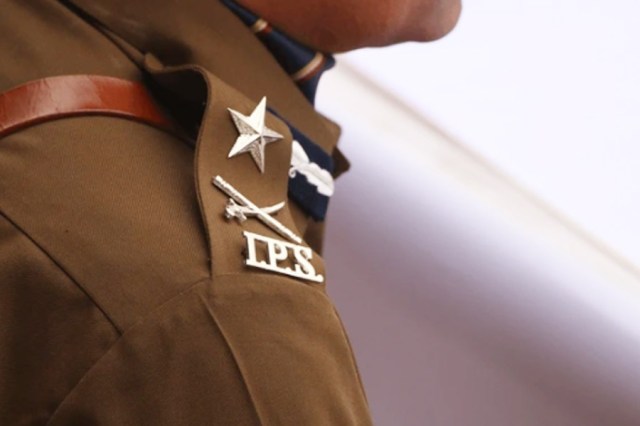
Candidates who want to become IPS officers must fulfil certain eligibility requirements established by the Union Public Service Commission. These conditions generally relate to nationality, educational qualifications, age limits and physical standards.
The basic educational requirement is a bachelor’s degree from a recognised university. Students from different academic backgrounds, including science, commerce, arts, engineering and other disciplines, can apply. Candidates who are appearing in their final year of graduation may also apply provisionally, subject to the examination rules.
Age limits and the number of permitted attempts depend on the candidate’s category and the applicable UPSC rules. Applicants should carefully check the official notification for the relevant examination year because eligibility conditions may be updated.
Educational Qualification Required for IPS
A bachelor’s degree is the minimum educational qualification required to appear for the UPSC Civil Services Examination. There is no compulsory requirement to study a particular subject at school or university. This makes the service accessible to graduates from different educational backgrounds.
For example, a student who has completed a degree in political science can apply, just like someone with a degree in mathematics, economics, law or engineering. However, candidates should develop a strong understanding of subjects such as Indian history, geography, governance, economics, current affairs and constitutional principles.
Good communication skills, analytical thinking and decision-making abilities are also valuable for future police officers. A strong educational foundation helps candidates understand the administrative, social and legal responsibilities associated with the profession.
Age Limit and Number of Attempts
The UPSC establishes age limits and attempt restrictions for candidates appearing in the Civil Services Examination. For general category candidates, the usual minimum age is 21 years, while the upper age limit is generally 32 years.
Certain relaxations are available for eligible reserved categories according to government regulations. For example, candidates belonging to the Other Backward Classes and Scheduled Castes or Scheduled Tribes receive applicable age relaxations and additional attempts.
The general category normally receives six attempts, while OBC candidates receive nine attempts. SC and ST candidates generally have attempts available until they reach their applicable upper age limit. These conditions should always be verified against the latest official UPSC notification.
UPSC Civil Services Examination for IPS
Candidates must qualify in the UPSC Civil Services Examination to be considered for selection into the Indian Police Service. It is a competitive examination designed to evaluate a candidate’s knowledge, understanding, analytical ability and suitability for administrative responsibilities.
The examination consists of three main stages: Preliminary Examination, Main Examination and Personality Test. Each stage has a different purpose and requires a focused preparation strategy.
Candidates who successfully clear the Preliminary Examination become eligible for the Main Examination. Those who qualify in the written Main Examination are invited for the Personality Test. Final service allocation depends on the candidate’s overall rank, service preferences, category, vacancies and medical and other eligibility requirements.
Three Stages of the IPS Selection Process
1. Preliminary Examination
The Preliminary Examination is the first stage of the UPSC Civil Services Examination. It consists of two objective-type papers: General Studies Paper I and General Studies Paper II, commonly known as the Civil Services Aptitude Test or CSAT.
General Studies Paper I covers topics such as history, geography, economics, environment, science, polity and current affairs. CSAT evaluates comprehension, reasoning, analytical ability and basic numerical skills. CSAT is qualifying in nature, and candidates must secure the prescribed minimum marks to qualify.
The marks obtained in the Preliminary Examination are not included in the final merit ranking. However, candidates must clear the required cut-off to move forward.
2. Main Examination
The Main Examination is the second stage and consists of descriptive written papers. It evaluates a candidate’s ability to express ideas clearly, analyse complex issues and demonstrate a broad understanding of different subjects.
The examination includes qualifying language papers, an English paper, an Essay paper, four General Studies papers and two optional subject papers. The merit-based written papers carry a total of 1,750 marks.
Candidates should focus on answer writing, conceptual understanding, revision and current affairs preparation. Regular practice helps improve writing speed, structure and the ability to present balanced arguments.
3. Personality Test or Interview

The Personality Test is the final stage of the selection process. Candidates who qualify in the Main Examination are invited to appear before a UPSC interview board.
The interview evaluates qualities such as confidence, communication, leadership, honesty, awareness, decision-making and suitability for public service. Questions may cover personal background, educational experience, current events, administrative situations and social challenges.
The Personality Test carries 275 marks. The final merit list is prepared using the marks obtained in the written Main Examination and Personality Test, subject to applicable selection rules.
Training of IPS Officers
After selection, candidates undergo professional training to prepare for the responsibilities of police leadership. The initial foundation course is conducted at the Lal Bahadur Shastri National Academy of Administration in Mussoorie, along with other service trainees.
Professional IPS training is primarily conducted at the Sardar Vallabhbhai Patel National Police Academy in Hyderabad. The academy provides classroom education, physical training, practical exercises and field exposure.
Trainees learn criminal law, investigation techniques, police administration, leadership, public relations, cybercrime awareness, weapon handling and security management. They also participate in outdoor activities and practical exercises designed to improve discipline and decision-making.
After academy training, officers receive further field training in their allotted cadres. This practical experience helps them understand the challenges of district policing and prepare for future assignments.
Main Responsibilities of an IPS Officer
IPS officers perform several important duties connected with public safety and law enforcement. Their responsibilities depend on their position, location and department. Some major responsibilities include:
-
Maintaining law and order during normal conditions and emergencies.
-
Preventing criminal activities and supervising investigations.
-
Protecting citizens and important public institutions.
-
Managing police personnel and administrative operations.
-
Coordinating security arrangements during major events.
-
Supervising action against organised crime and cybercrime.
-
Supporting disaster management and emergency response.
-
Ensuring professional conduct and accountability within police departments.
These responsibilities require strong leadership, discipline and the ability to make decisions under pressure.
Different Ranks in the Indian Police Service
IPS officers can serve in different positions as they gain experience and receive promotions. Their designations may differ depending on the state police structure and department.
Some commonly recognised positions include:
Assistant Superintendent of Police (ASP): This is generally an initial field-level leadership position for an IPS officer undergoing practical district training.
Superintendent of Police (SP): An SP usually supervises police administration and law enforcement activities at the district level.
Senior Superintendent of Police (SSP): In certain states and policing structures, an SSP manages larger or important district-level police responsibilities.
Deputy Inspector General (DIG): A DIG generally supervises police ranges or specialised administrative responsibilities.
Inspector General (IG): An IG holds senior leadership responsibilities and may oversee larger police formations or departments.
Additional Director General of Police (ADGP): An ADGP performs senior-level responsibilities in state police administration.
Director General of Police (DGP): The DGP is generally the highest-ranking police position in a state.
Salary of an IPS Officer
The salary of an IPS officer is determined according to the government pay structure and the officer’s position and experience. Under the Seventh Central Pay Commission pay matrix, an entry-level IPS officer generally receives a basic pay of ₹56,100 per month at Level 10.
As officers receive promotions, their basic pay increases according to the applicable pay levels. Senior positions may carry substantially higher basic salaries, with the apex-level basic pay reaching ₹2,25,000 per month under the existing pay matrix.
In addition to basic salary, eligible officers may receive allowances such as dearness allowance, house rent allowance and travel-related benefits. Government accommodation, official vehicles and other facilities may also be provided depending on the posting and applicable rules.
The total compensation can vary because allowances and facilities depend on the officer’s location, responsibilities and government policies.
Important Skills Required for an IPS Officer
Becoming a successful police officer requires more than academic knowledge. Officers must develop a combination of professional, physical and personal skills to handle different situations effectively.
Leadership: Police officers regularly supervise teams and manage responsibilities that require clear direction and accountability.
Communication: Effective communication helps officers interact with citizens, government officials, police personnel and the media.
Decision-making: Emergency situations often require quick and carefully considered decisions.
Physical fitness: Maintaining physical fitness is important because police duties can involve demanding field operations.
Problem-solving: Officers need to understand complicated situations and identify practical solutions.
Integrity: Honesty, fairness and respect for the law are essential qualities for maintaining public trust.
Role of IPS Officers in National Security
IPS officers contribute significantly to India’s internal security. Their work extends beyond traditional crime prevention and includes addressing organised criminal networks, terrorism, cyber threats, illegal activities and other security challenges.
Some officers are assigned to specialised central organisations and security agencies. Depending on their appointments, they may contribute to intelligence gathering, investigations, border-related security coordination and protection of important national institutions.
They also work with other government departments to respond to emerging threats. The increasing use of digital technology has made cybercrime prevention and digital investigation important areas of modern policing.
Through coordination, professional training and effective administration, IPS officers help strengthen the country’s security framework.
Difference Between IAS and IPS
The Indian Administrative Service and Indian Police Service are two major All India Services. Both are recruited through the UPSC Civil Services Examination, but their primary responsibilities are different.
IAS officers generally focus on administration, policy implementation, public development programmes and government coordination. They may work as district magistrates, secretaries and senior administrative officials.
IPS officers mainly focus on police leadership, crime prevention, law enforcement and internal security. They may work as SPs, commissioners, DIGs, IGs and DGPs.
Although their professional responsibilities differ, both services often work together to maintain effective governance and address public issues. Their cooperation is particularly important during elections, disasters, public disturbances and major administrative activities.
Career Opportunities After Joining IPS
The Indian Police Service offers a wide range of professional opportunities. Officers may work in state police departments, central investigative organisations and specialised security institutions.
Some may serve in organisations such as the Central Bureau of Investigation, Intelligence Bureau, National Investigation Agency and other eligible central deputation positions. Assignments depend on government requirements, selection procedures, experience and applicable rules.
Officers may also specialise in cybercrime, intelligence, traffic management, anti-corruption operations, economic offences and counterterrorism. These opportunities allow them to develop professional expertise while contributing to different areas of national security and law enforcement.
Challenges Faced by IPS Officers
Although the Indian Police Service is a respected career, it also comes with several professional challenges. Officers may work long hours, handle emergency situations and manage sensitive law-and-order problems.
Maintaining peace during public gatherings, investigating serious crimes and responding to security threats can create significant pressure. Officers must also manage large teams, administrative responsibilities and public expectations.
Another major challenge is balancing effective law enforcement with the protection of individual rights. Every police action must follow legal procedures and constitutional principles. Officers are expected to remain impartial, professional and accountable even in difficult circumstances.
These challenges make discipline, patience, courage and ethical leadership essential qualities for an IPS officer.
How to Prepare for the IPS Examination
Candidates preparing for the Civil Services Examination should develop a systematic study plan. Preparation usually requires a strong understanding of the UPSC syllabus, consistent revision and regular practice.
Start by understanding the examination pattern and selecting reliable study materials. Read newspapers and follow important national and international developments to improve current affairs knowledge.
Candidates should also study basic NCERT textbooks, standard reference books and previous years’ question papers. Regular mock tests can help identify weak areas and improve time management.
For the Main Examination, answer-writing practice is especially important. Candidates should learn how to organise information, explain arguments and provide suitable examples. Physical fitness and awareness of public issues are also useful for individuals interested in a future policing career.
Importance of IPS in Indian Society
The Indian Police Service plays an essential role in maintaining the democratic structure of the country. A professional police administration helps protect citizens, enforce laws and create a secure environment for social and economic development.
IPS officers contribute to public welfare by addressing crime, protecting vulnerable communities, improving police services and supporting emergency management. Their work also helps strengthen public confidence in government institutions.
Modern policing requires officers to understand changing social conditions and technological developments. Public cooperation, transparent administration and responsible law enforcement are important for creating a safer society.
Frequently Asked Questions About IPS
1. What is the full form of IPS?
The full form of IPS is Indian Police Service. It is one of India’s three All India Services and is responsible for senior-level police administration, law enforcement and internal security.
2. How can I become an IPS officer?
To become an IPS officer, candidates must qualify in the UPSC Civil Services Examination, meet the prescribed eligibility conditions, secure a suitable rank and preference, and satisfy the required medical and physical standards.
3. What is the minimum qualification for IPS?
A bachelor’s degree from a recognised university is the minimum educational qualification. Candidates from different academic backgrounds can apply.
4. What is the starting salary of an IPS officer?
The entry-level basic pay of an IPS officer is generally ₹56,100 per month under Level 10 of the Seventh Central Pay Commission pay matrix. Applicable allowances are additional.
5. Where are IPS officers trained?
IPS officers receive professional training at the Sardar Vallabhbhai Patel National Police Academy in Hyderabad, along with foundation training and practical field experience.
6. Is IPS a central government service?
Yes. IPS is an All India Service under the administrative framework of the central government. Officers are allocated to state or joint cadres and may also serve in central organisations.
Conclusion
The Indian Police Service is one of the most respected and challenging career options in India’s public administration system. It provides an opportunity to protect citizens, maintain law and order, prevent criminal activities and contribute to national security. Becoming an officer requires dedication, academic preparation, discipline and the ability to handle difficult situations responsibly.
Understanding the full form of IPS is only the first step for students who are interested in this prestigious profession. Candidates must prepare thoroughly for the UPSC Civil Services Examination, fulfil the eligibility requirements and develop the personal qualities needed for effective policing. With professional training, practical experience and commitment to public service, IPS officers play an important role in building a safer, more secure and better-governed India.