
When people hear about India’s space missions, one name consistently stands out—ISRO. Whether it’s launching satellites, exploring the Moon, or sending missions to Mars, this organization has become a symbol of scientific excellence and innovation. But many still wonder: what is the full form of ISRO, and what exactly does it do?
The full form of ISRO is Indian Space Research Organisation. It is India’s national space agency responsible for space research, satellite launches, and developing space technology for national development. Established under the Government of India, ISRO has grown from modest beginnings into one of the world’s most respected space agencies.
Understanding the full form of ISRO is just the starting point. Its journey, achievements, and contributions to science and society reveal a much larger and fascinating story.
What is the Full Form of ISRO?
The full form of ISRO is Indian Space Research Organisation. It is headquartered in Bengaluru and operates under the Department of Space, which directly reports to the Prime Minister of India.
ISRO was founded in 1969 by visionary scientist Vikram Sarabhai, who believed that space technology could play a crucial role in national development. Unlike many space agencies that initially focused on military or competition-driven goals, ISRO was built with a strong emphasis on peaceful applications like communication, weather forecasting, and education.
Today, the full form of ISRO represents not just an organization but a mission-driven institution that aims to harness space technology for the benefit of humanity.
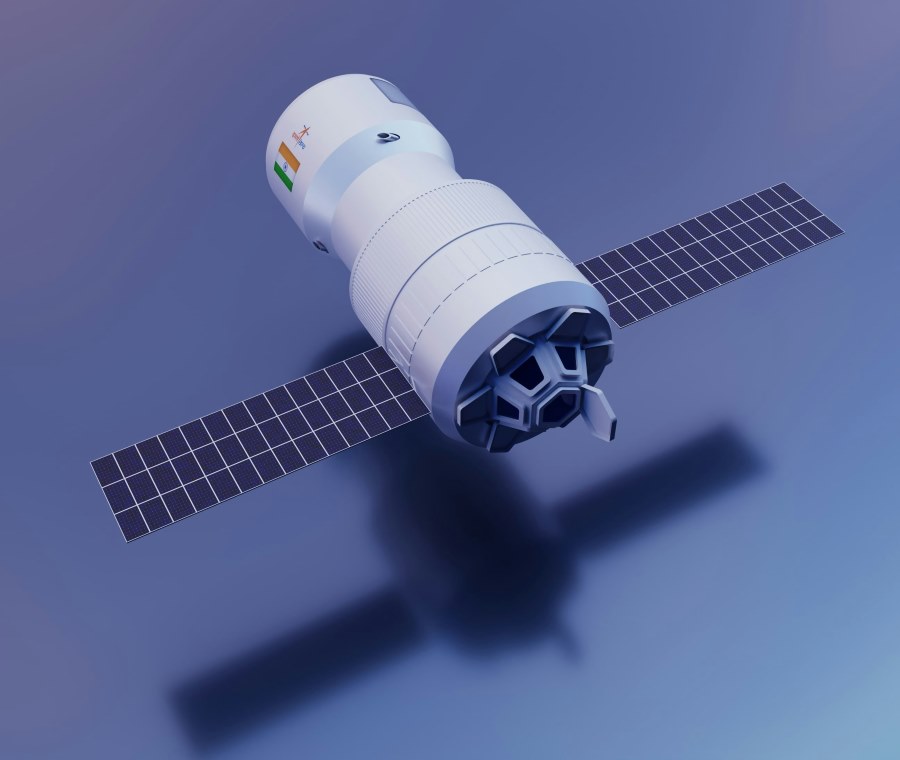
History and Formation of ISRO
The journey behind the full form of ISRO dates back to the early 1960s, when India was still developing its scientific infrastructure. The Indian National Committee for Space Research (INCOSPAR) was the precursor to ISRO, formed in 1962. It laid the groundwork for space exploration in India.
In 1969, ISRO was officially established, replacing INCOSPAR. During its early years, the organization operated with limited resources. Rockets were transported on bicycles and bullock carts, and launch facilities were basic. However, what ISRO lacked in infrastructure, it made up for in determination and vision.
The turning point came when India successfully launched its first satellite, Aryabhata, in 1975. Since then, the organization has steadily advanced, developing its own launch vehicles, satellites, and deep-space missions. The full form of ISRO has since become synonymous with resilience and innovation.
Objectives and Functions of ISRO
The primary goal behind the full form of ISRO is to develop and apply space technology for national development. Unlike agencies focused purely on exploration, ISRO balances scientific discovery with practical applications that benefit everyday life.
ISRO’s core functions include:
- Designing and launching satellites for communication, navigation, and Earth observation
- Developing launch vehicles like PSLV and GSLV
- Conducting space exploration missions to the Moon and Mars
- Providing satellite-based services for agriculture, disaster management, and weather forecasting
These objectives highlight how the full form of ISRO is deeply connected to improving life on Earth while also expanding India’s presence in space.
Major Achievements of ISRO
Over the decades, ISRO has achieved several milestones that have placed India among the top space-faring nations. Its missions are known for being cost-effective yet highly successful.
One of the most remarkable achievements was the Mars Orbiter Mission (Mangalyaan), launched in 2013. India became the first country to reach Mars orbit on its first attempt, a feat that even advanced space agencies like NASA took multiple attempts to accomplish.
Another major success is the Chandrayaan missions. Chandrayaan-1 confirmed the presence of water molecules on the Moon, while Chandrayaan-3 achieved a historic soft landing near the Moon’s south pole.
Additionally, ISRO has launched hundreds of satellites for both domestic and international clients, making it a reliable and affordable partner in the global space industry. These achievements reinforce why the full form of ISRO carries such global recognition.

Key Launch Vehicles Developed by ISRO
Launch vehicles are the backbone of any space agency, and ISRO has developed several powerful rockets to carry satellites into orbit.
Important ISRO Launch Vehicles
| Launch Vehicle | Full Form | Purpose |
|---|---|---|
| PSLV | Polar Satellite Launch Vehicle | Launches satellites into polar orbit |
| GSLV | Geosynchronous Satellite Launch Vehicle | Carries heavier payloads into higher orbits |
| LVM3 | Launch Vehicle Mark III | Used for deep space missions and heavy satellites |
These launch vehicles have enabled ISRO to carry out complex missions efficiently. The reliability of PSLV, in particular, has earned it the nickname “workhorse of ISRO.”
Applications of ISRO’s Work
The full form of ISRO becomes even more meaningful when we look at its real-world applications. Its technologies are not limited to space—they directly impact daily life in India.
ISRO’s satellites support communication networks, enabling television broadcasting, internet services, and mobile connectivity even in remote areas. Weather satellites help predict cyclones and monsoons, saving countless lives and aiding farmers.
In agriculture, satellite data helps monitor crop health and soil conditions. Disaster management systems provide early warnings for floods, earthquakes, and other natural calamities. These applications show how the full form of ISRO goes beyond exploration—it plays a vital role in national development.
Future Missions and Vision
Looking ahead, ISRO has ambitious plans that will further expand its capabilities. The organization is working on the Gaganyaan mission, which aims to send Indian astronauts into space. This will mark India’s entry into human spaceflight.
ISRO is also planning advanced lunar and interplanetary missions, including potential exploration of Venus and Mars. Its focus on reusable launch vehicles and cost-efficient technology continues to set it apart globally.
The full form of ISRO will likely gain even more prominence in the coming years as India strengthens its position in the global space race.
Why ISRO is Unique
What makes ISRO stand out among global space agencies is its ability to achieve remarkable results with limited budgets. Its missions are known for being economical without compromising quality.
Key factors that make ISRO unique include:
- Cost-effective mission planning and execution
- Focus on practical applications alongside exploration
- High success rate in satellite launches
- Strong emphasis on indigenous technology
These qualities have earned ISRO international respect and recognition, making the full form of ISRO a symbol of efficiency and innovation.
FAQs
What is the full form of ISRO?
The full form of ISRO is Indian Space Research Organisation. It is India’s national space agency responsible for space research and satellite missions.
When was ISRO established?
ISRO was established in 1969, building upon earlier efforts initiated in 1962 under INCOSPAR.
Who founded ISRO?
ISRO was founded by Vikram Sarabhai, who is widely regarded as the father of the Indian space program.
What is ISRO famous for?
ISRO is known for missions like Mangalyaan and Chandrayaan, as well as its cost-effective satellite launch capabilities.
Where is ISRO headquartered?
ISRO is headquartered in Bengaluru, Karnataka, India.
What is the main objective of ISRO?
The main objective is to use space technology for national development while also advancing space science and exploration.
Conclusion
The full form of ISRO—Indian Space Research Organisation—represents far more than just a name. It embodies decades of scientific progress, innovation, and a vision to use space technology for the betterment of society. From launching satellites that improve communication to exploring distant planets, ISRO has consistently demonstrated excellence on a global stage.