
Introduction
Education plays an important role in shaping a student’s future, especially for those who dream of building a career in the medical field. Every year, millions of students in India prepare for different entrance examinations to secure admission to professional courses. Among these examinations, NEET is one of the most important for students who want to become doctors, dentists, and healthcare professionals. Understanding its meaning, purpose, and examination process is essential for anyone planning to enter the medical education system.
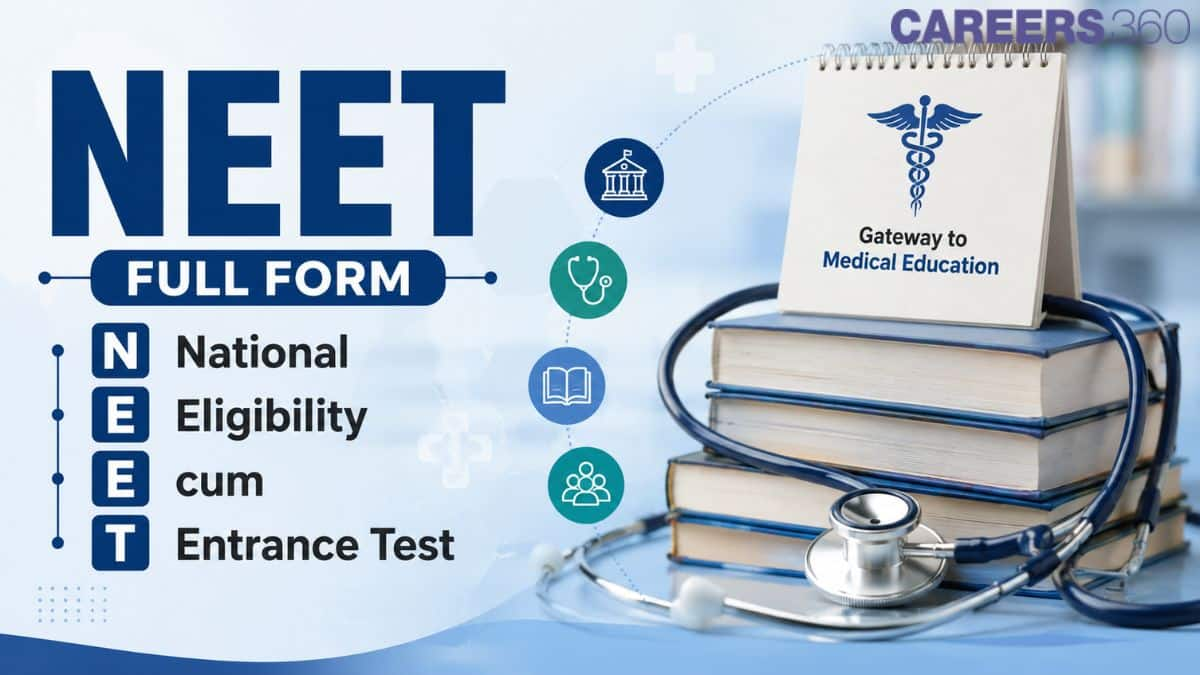
The full form of NEET is National Eligibility cum Entrance Test. It is a national-level entrance examination conducted for admission to undergraduate medical courses in India. Students who wish to study MBBS, BDS, and certain other medical programs generally need to qualify for this examination. NEET provides a common admission pathway for eligible candidates and helps establish a standardized selection process for medical colleges across the country.
For students studying in Classes 11 and 12, understanding this examination early can make preparation easier. Knowing the subjects, eligibility requirements, examination structure, and admission process helps students develop a clear academic plan. This guide explains the major aspects of NEET and why it is important for aspiring medical students.
What Is the Full Form of NEET?
The full form of NEET is National Eligibility cum Entrance Test. It is an entrance examination designed to select students for undergraduate medical education in India. The examination evaluates candidates’ understanding of important science subjects, particularly Physics, Chemistry, and Biology.
NEET serves as a common entrance test for admissions to several medical institutions. Instead of depending on multiple entrance examinations for different colleges, students can use their NEET scores to participate in the relevant admission and counselling processes. This system creates a more consistent approach to selecting candidates based on their examination performance and eligibility.
The examination is conducted by the National Testing Agency (NTA), which is responsible for organizing several national-level entrance tests. Students interested in medical education should understand that qualifying for the examination is an important step, but admission also depends on factors such as rank, seat availability, reservation policies, counselling rules, and college preferences.
Why Is NEET Important for Medical Students?
Medical education requires strong academic knowledge, dedication, and the ability to understand complex scientific concepts. NEET plays an important role because it provides a common examination for students seeking admission to undergraduate medical courses. It allows candidates from different educational boards and regions to compete through a standardized testing system.
One major advantage of this examination is that students do not need to prepare for several separate entrance tests for different medical colleges covered by the common admission system. A single examination score can be used in applicable counselling processes, subject to the admission rules of individual institutions.
Another important reason is transparency in medical admissions. A common entrance examination establishes a structured selection process and helps institutions assess candidates using a shared evaluation framework. It also encourages students to develop a strong foundation in science subjects during their higher secondary education.
Courses Available Through NEET
NEET is primarily associated with undergraduate medical admissions. However, its qualifying score is also relevant to several other healthcare-related programs, depending on the applicable admission regulations.
Some important courses associated with NEET include:
-
MBBS: Bachelor of Medicine and Bachelor of Surgery, a primary undergraduate qualification for becoming a medical doctor.
-
BDS: Bachelor of Dental Surgery, a professional course focused on oral healthcare and dental treatment.
-
BAMS: Bachelor of Ayurvedic Medicine and Surgery, related to the study and practice of Ayurveda.
-
BHMS: Bachelor of Homeopathic Medicine and Surgery, focused on homeopathic medical education.
-
BSMS: Bachelor of Siddha Medicine and Surgery, associated with the Siddha system of medicine.
-
BUMS: Bachelor of Unani Medicine and Surgery, focused on Unani medical education.
NEET qualification may also be relevant to other approved medical or healthcare programs under applicable regulations. Students should always check the current admission notification to understand which courses require NEET scores.
Eligibility Criteria for NEET
Before applying for the examination, students must understand the eligibility requirements. These conditions are established through the official examination and admission regulations. Candidates should carefully check the latest information bulletin because admission requirements may be updated.
The basic educational requirement is that candidates must have studied Physics, Chemistry, Biology or Biotechnology, and English in their qualifying education, according to the applicable rules. Students generally need to complete Class 12 or an equivalent examination from a recognized educational board.
There is also an age requirement. Candidates must generally be at least 17 years old by December 31 of the admission year. The applicable rules should be checked for the relevant examination session.
There is no upper age limit under the current NEET eligibility framework. However, candidates should verify the latest official notification before submitting their application. Meeting the basic eligibility requirements does not automatically guarantee admission because candidates must also satisfy the relevant counselling and course-specific conditions.
NEET Exam Pattern
Understanding the examination pattern is important for creating an effective preparation strategy. NEET is an objective-type examination in which candidates answer multiple-choice questions based on the prescribed syllabus.
The paper covers three major science subjects: Physics, Chemistry, and Biology. Biology includes questions from Botany and Zoology. These subjects are mainly based on concepts taught in Classes 11 and 12.
The examination generally includes questions designed to test conceptual understanding, factual knowledge, scientific reasoning, and the ability to apply learned principles. Candidates should carefully read the instructions provided in the official examination bulletin because the number of questions, marking scheme, and examination duration are determined for each examination session.
The commonly followed examination structure includes:
| Subject | Maximum Marks |
|---|---|
| Physics | 180 |
| Chemistry | 180 |
| Biology | 360 |
| Total | 720 |
Under the standard marking scheme, candidates receive four marks for each correct answer, while one mark is deducted for each incorrect answer. Unanswered questions receive no marks. Students should confirm the marking scheme for their particular examination year.
Subjects Required for NEET Preparation
Students preparing for medical entrance examinations should develop a strong understanding of Physics, Chemistry, and Biology. These subjects form the foundation of medical science and help students build the knowledge required for higher education.
Physics: Physics includes topics such as motion, electricity, magnetism, optics, thermodynamics, and modern physics. Students need to understand formulas, concepts, numerical problems, and their practical applications. Regular practice is particularly important for improving speed and accuracy.
Chemistry: Chemistry is generally divided into Physical Chemistry, Organic Chemistry, and Inorganic Chemistry. It covers chemical reactions, molecular structures, periodic properties, calculations, and bonding. Students should focus on understanding concepts rather than relying only on memorization.
Biology: Biology is particularly important because it carries the highest weightage in the standard examination structure. Important topics include human physiology, genetics, ecology, biotechnology, plant physiology, and reproduction. Studying textbooks carefully and revising diagrams and important biological terms can improve understanding.
How to Prepare for NEET Effectively
Preparing for a national-level medical entrance examination requires consistency, patience, and proper planning. Students should begin by understanding the syllabus and identifying the topics that need more attention. A realistic timetable can help divide study hours among Physics, Chemistry, and Biology.
NCERT textbooks are especially important because they provide the foundation for many concepts covered in the examination. Students should read the relevant chapters carefully, understand important definitions, and solve the questions provided in their textbooks.
Regular practice is another essential part of preparation. Solving previous years’ question papers and mock tests helps candidates understand the examination format and identify areas where they make mistakes. It also improves time management and confidence.
Revision should be included in the daily study routine. Students can prepare short notes, formula sheets, and topic summaries to review important concepts quickly. Instead of studying continuously without breaks, candidates should follow a balanced schedule that includes sufficient rest and healthy daily habits.
Role of NCERT Books in Medical Entrance Preparation
NCERT textbooks play a significant role in preparing for medical entrance examinations. They provide structured explanations of important scientific concepts and help students understand the basic principles of Physics, Chemistry, and Biology.
For Biology, students should pay particular attention to textbook definitions, diagrams, examples, tables, and explanations. Careful reading can help students understand the relationships between different biological processes.
In Chemistry, NCERT books help establish a clear understanding of chemical reactions, periodic trends, bonding, and fundamental concepts. Students should combine textbook learning with regular problem-solving practice.
Physics preparation requires a combination of conceptual understanding and numerical practice. NCERT textbooks can help students build their foundation, while additional practice materials may help improve problem-solving skills.
Students should avoid collecting too many study resources. A limited number of reliable books, regular revision, and consistent question practice can be more effective than switching between multiple materials.
NEET Application Process
The application process is an important step for students planning to appear for the examination. Candidates generally need to complete an online application through the official National Testing Agency website.
The process usually begins with online registration, where students provide basic personal and contact information. After registration, candidates complete the application form by entering educational details and other required information.
Applicants may also need to upload documents such as a photograph, signature, and other specified certificates in the required format. The applicable examination fee must be paid through the available online payment methods.
Before submitting the application, students should carefully check every detail. Incorrect information may create difficulties during later stages of the examination or admission process. Candidates should download and save the confirmation page after successful submission.
What Happens After the NEET Examination?
After the examination, the National Testing Agency generally releases the provisional answer key, response sheets, and other relevant information according to the announced schedule. Candidates can use these resources to review their responses and understand their expected performance.
The final results include important details such as marks, qualifying status, and All India Rank. These results help determine which candidates can participate in the applicable counselling process.
Counselling is an important stage of medical admission. Eligible candidates select their preferred colleges and courses according to the available options. Seat allocation depends on factors such as rank, category, eligibility, seat availability, and counselling preferences.
Different counselling authorities manage different categories of medical seats. Therefore, students should carefully follow the official counselling announcements and complete the required registration and document verification procedures within the specified deadlines.
Career Opportunities After Medical Education

Medical education offers several career opportunities for students who successfully complete their professional courses and meet the applicable licensing or registration requirements.
Students who complete MBBS can pursue careers in hospitals, clinics, healthcare institutions, and public health organizations. They may also choose postgraduate medical education to specialize in areas such as cardiology, pediatrics, surgery, dermatology, or general medicine.
BDS graduates can work in dental clinics, hospitals, and oral healthcare centers. They may also pursue advanced education in specialized dental fields.
Students completing courses in Ayurveda, Homeopathy, Siddha, or Unani medicine can explore careers within their respective healthcare systems, subject to professional registration requirements.
Apart from clinical practice, medical graduates may explore opportunities in medical research, teaching, healthcare administration, public health, and pharmaceutical-related fields. These career paths demonstrate the wide range of opportunities available in healthcare.
Common Mistakes Students Should Avoid
Many students work hard during preparation but make avoidable mistakes that affect their performance. One common mistake is studying without understanding the complete syllabus. Candidates should know which topics they need to cover before creating their preparation timetable.
Another mistake is ignoring revision. Learning a chapter once does not guarantee that students will remember it during the examination. Regular revision helps strengthen memory and improve confidence.
Some students also spend too much time collecting study materials instead of practicing questions. Using too many books can create confusion and make preparation unnecessarily complicated.
Poor time management is another challenge. Students should practice solving questions within a limited time and analyze their performance after every mock test. They should also avoid comparing their preparation progress with others because every student has different learning needs and strengths.
Frequently Asked Questions (FAQs)
1. What is the full form of NEET?
NEET stands for National Eligibility cum Entrance Test. It is a national-level entrance examination used for admission to undergraduate medical courses in India.
2. Who conducts the NEET examination?
The National Testing Agency (NTA) conducts NEET-UG. It manages the examination process, including registration, examination arrangements, answer keys, and result-related activities.
3. Which subjects are included in NEET?
The examination includes Physics, Chemistry, and Biology. Biology is divided into Botany and Zoology. Questions are primarily based on the prescribed Class 11 and Class 12 syllabus.
4. Is NEET compulsory for MBBS admission in India?
Yes, NEET qualification is generally compulsory for admission to MBBS courses in India, subject to applicable admission regulations and any specific exemptions provided under official rules.
5. Can students from any educational board apply for NEET?
Yes, students from recognized educational boards can apply if they meet the prescribed educational, subject, and other eligibility requirements.
6. Is there an upper age limit for NEET?
Under the current eligibility framework, there is no upper age limit for appearing in NEET. Candidates should check the latest official information bulletin for confirmation.
Conclusion
Understanding the full form of NEET is the first step for students who want to build a career in the medical field. National Eligibility cum Entrance Test is an important national-level examination that provides a common admission pathway to undergraduate medical education in India. It evaluates students’ knowledge of Physics, Chemistry, and Biology and plays a major role in the medical admission process.
For aspiring doctors and healthcare professionals, proper preparation, regular revision, and a clear understanding of the examination structure are essential. Students should focus on NCERT textbooks, practice mock tests, solve previous years’ questions, and stay updated with official notifications. With consistent effort, discipline, and the right preparation strategy, candidates can work toward achieving their medical education goals and building a meaningful career in healthcare.