
1. What are full form of dna?
The full form of DNA is Deoxyribonucleic Acid. It is the genetic material present in almost all living organisms and carries instructions for growth, development, and reproduction.
2. Best full form of dna explanation?
The best explanation of full form of dna is that it represents the molecule responsible for storing genetic information, organized in a double-helix structure inside cells.
3. How to choose full form of dna understanding?
To understand full form of dna, focus on its structure, function, and role in heredity. Learning its basics helps in biology, medicine, and genetics studies.
Introduction
Have you ever wondered what makes you unique or why you resemble your parents? The answer lies deep inside your cells in a molecule known as DNA. Understanding the full form of dna is the first step toward unlocking the secrets of life itself.
DNA is not just a scientific term you hear in biology class—it is the blueprint of life. From determining your eye color to influencing your health, DNA plays a crucial role in shaping who you are. It carries genetic instructions that guide every function in your body.
In today’s world, where genetics, biotechnology, and medical research are rapidly evolving, knowing about DNA has become more important than ever. Whether you’re a student, a curious learner, or someone interested in science, understanding DNA can open doors to fascinating knowledge about life.
Quick Summary
- DNA stands for Deoxyribonucleic Acid
- It carries genetic information in living organisms
- Found in the nucleus of cells
- Plays a key role in heredity and biological functions
What is the Full Form of DNA?
The full form of dna is Deoxyribonucleic Acid. It is a complex molecule that contains the instructions needed for an organism to grow, function, and reproduce.
DNA is made up of smaller units called nucleotides, which consist of a sugar molecule, a phosphate group, and a nitrogen base. These bases—adenine, thymine, cytosine, and guanine—pair in a specific way to form the famous double-helix structure.
This structure allows DNA to replicate itself, ensuring that genetic information is passed from one generation to the next. Without DNA, life as we know it would not exist.
Structure of DNA
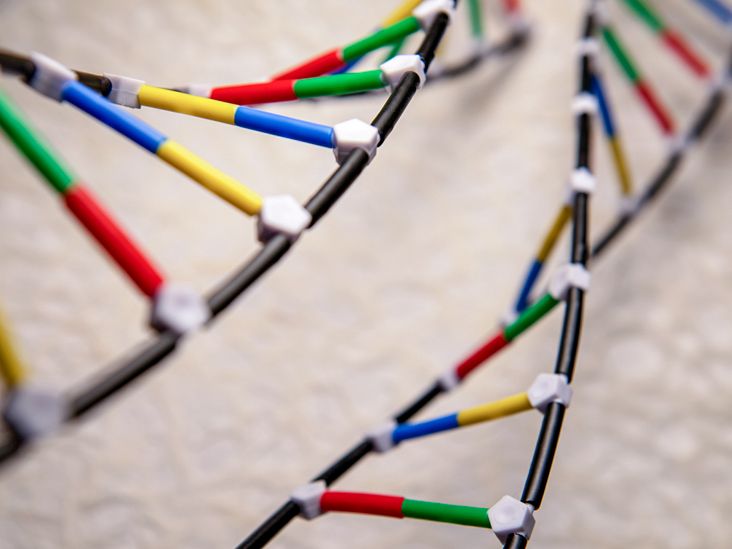
DNA has a unique and fascinating structure known as the double helix. Imagine a twisted ladder, where the sides are made of sugar and phosphate, and the rungs are formed by base pairs.
The pairing follows a specific rule:
- Adenine pairs with Thymine
- Cytosine pairs with Guanine
This precise arrangement ensures accurate genetic coding and replication. The structure also protects genetic information while allowing it to be accessed when needed.

DNA Structure Comparison
| Component | Description | Function |
|---|---|---|
| Sugar | Deoxyribose | Forms backbone |
| Phosphate Group | Connects sugar molecules | Structural support |
| Nitrogen Bases | A, T, C, G | Genetic coding |
| Double Helix | Twisted ladder shape | Stability and replication |
Functions of DNA
DNA is essential for life because it performs several critical functions. It stores genetic information, helps in protein synthesis, and ensures inheritance of traits.
One of the main roles of DNA is to guide the production of proteins. Proteins are responsible for almost every function in the body, including cell structure, enzymes, and hormones. DNA provides the instructions needed to build these proteins accurately.
Another key function is replication. Before a cell divides, DNA makes an exact copy of itself. This ensures that each new cell receives the same genetic information.
Real-Life Example of DNA
Consider a child inheriting traits from their parents. Eye color, hair type, height, and even certain health conditions are influenced by DNA. For example, if both parents have brown eyes, there is a high chance the child will also have brown eyes.
DNA also plays a role in forensic science. It is used to identify individuals in criminal investigations through DNA fingerprinting, making it a powerful tool in modern law enforcement.
Pros and Cons of DNA Knowledge
Pros:
- Helps understand genetic diseases
- Advances in medical research
- Improves forensic investigations
- Supports biotechnology innovations
Cons:
- Ethical concerns in genetic testing
- Privacy issues with DNA data
- Risk of genetic discrimination
Why DNA is Important in Modern Science
The importance of DNA goes beyond basic biology. It is at the core of many scientific advancements, including genetic engineering, cloning, and personalized medicine.
Scientists use DNA sequencing to study genetic disorders and develop targeted treatments. According to recent insights, over 60% of modern medical research involves genetic analysis, showing how critical DNA has become in healthcare.
DNA technology is also used in agriculture to create genetically modified crops that are more resistant to pests and environmental conditions.
Who Should Learn About DNA?
Understanding DNA is beneficial for students, researchers, and anyone interested in science. Biology students need it as a foundation for advanced topics, while medical professionals rely on DNA knowledge for diagnosis and treatment.
Even non-scientists can benefit from learning about DNA, as it helps in understanding health reports, ancestry tests, and genetic risks. In today’s data-driven world, DNA knowledge is becoming increasingly relevant for everyone.
Expert Tips for Understanding DNA
- Focus on the basic structure first
- Learn base pairing rules clearly
- Use diagrams for better visualization
- Relate concepts to real-life examples
Common Mistakes to Avoid
- Confusing DNA with RNA
- Ignoring base pairing rules
- Memorizing without understanding
- Overlooking real-life applications
FAQs
1. What is the full form of dna in simple words?
The full form of dna is Deoxyribonucleic Acid, a molecule that carries genetic information in living organisms.
2. Where is DNA located in the body?
DNA is mainly located in the nucleus of cells, with small amounts in mitochondria.
3. How does DNA affect our traits?
DNA determines traits by controlling protein production, which influences physical and biological characteristics.
4. Is DNA the same in all humans?
About 99.9% of DNA is the same in all humans, with small differences making each person unique.
5. Can DNA be changed?
Yes, DNA can be altered through mutations or genetic engineering techniques.
Summary Recap
DNA, or Deoxyribonucleic Acid, is the foundation of life. It carries genetic instructions, determines traits, and plays a crucial role in growth and reproduction. From its double-helix structure to its role in protein synthesis, DNA is essential for understanding biology and modern science.
Conclusion
Understanding the full form of dna is more than just learning a definition—it’s about exploring the blueprint of life. DNA connects generations, drives evolution, and powers scientific innovation. As technology advances, the role of DNA in medicine, research, and daily life will only grow stronger.