
Introduction
India is one of the world’s oldest civilizations and a country known for its remarkable cultural, linguistic, geographical, and historical diversity. Many students and internet users search for what is the full form of India because they come across different explanations of the country’s name. Unlike terms such as UNESCO or WHO, the word India is not an acronym formed from separate English words. Therefore, it does not have an official expanded full form. The name has a long historical development connected with geography, ancient languages, and the names used for the Indian subcontinent over different periods. Understanding this distinction is important because several unofficial expansions are sometimes presented online as if they were official. A proper explanation should separate historical information from invented acronym-style interpretations and focus on the documented origins of the country’s name.
What Is the Full Form of India?
The direct answer to what is the full form of India is that India does not have an official full form. “India” is a proper name rather than an acronym. It is therefore different from abbreviations that can be expanded into several words. The modern English name developed through historical linguistic usage associated with the Indus River and the broader geographical region around it.
India’s Constitution uses the names “India” and “Bharat” for the country. Article 1 states that “India, that is Bharat” shall be a Union of States. This means both names have official constitutional recognition. Consequently, people should not treat commonly circulated acronym expansions of INDIA as the country’s legally recognized full form.
Why Does India Not Have an Acronym-Based Full Form?
The idea of a “full form” is normally associated with abbreviations. For example, an organization may have a short name created from the first letters of several words. India does not work this way. The name existed as a geographical and historical name rather than being created by combining English words.
This is why searching for what is the full form of India can produce different unofficial answers. Some websites, educational materials, or social media posts may create phrases using the letters I-N-D-I-A. These expressions can be motivational or creative, but they are not official expansions of the country’s name. A reliable explanation should make this difference clear so that students do not memorize an invented phrase as historical fact.
Origin of the Name India
The historical origin of the name India is strongly associated with the Indus River. The Sanskrit name “Sindhu” referred to the Indus River and the surrounding region. Through linguistic changes and the use of the name by people speaking different languages, forms related to “Indus” and “India” developed over time.
The ancient Greek and Latin traditions used forms of the name that eventually contributed to the English word “India.” The name therefore reflects a long history of interaction among languages and civilizations. It was not created as an English acronym. Understanding this linguistic development provides a more accurate explanation than attempting to assign a separate word to each letter of INDIA.
India and the Name Bharat
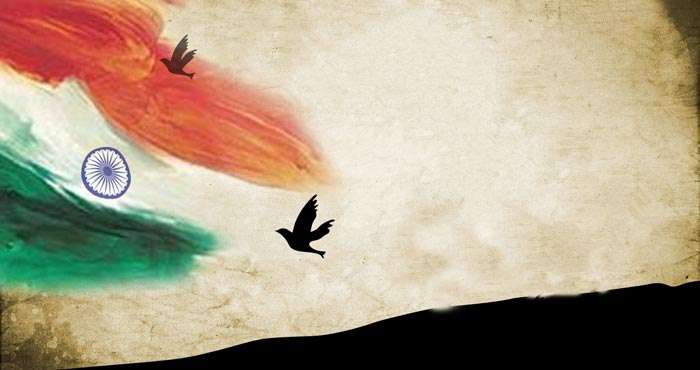
India has another historically significant name: Bharat. The Constitution recognizes both names by stating “India, that is Bharat.” Bharat is traditionally associated with ancient Indian literature and cultural traditions. The name is commonly connected with the ancient figure Bharata and has been used in various historical and literary contexts.
The coexistence of India and Bharat reflects the country’s long cultural history. “India” became widely established internationally through historical geographical usage, while “Bharat” remains deeply rooted in Indian languages and traditions. Both names refer to the same sovereign country, although their linguistic and historical backgrounds are different.
What Does Bharat Mean?
Bharat is not simply another acronym for the country. It is a traditional name with roots in Indian cultural and literary history. References to Bharata appear in ancient Sanskrit traditions, although interpretations of the name’s precise historical development can vary depending on the source and context.
Today, Bharat is constitutionally recognized alongside India. The use of both names demonstrates how modern India connects its constitutional identity with its historical and cultural traditions. When researching what is the full form of India, understanding Bharat is useful because it explains why the country has two constitutionally recognized names rather than an acronym-based expansion of “India.”
Historical Development of the Name
The Indian subcontinent has been known by different names in different languages and historical periods. Ancient texts, neighboring civilizations, travelers, and later European traditions used various terms to describe the region. Names associated with rivers, kingdoms, geographical areas, and cultural traditions all contributed to the rich terminology surrounding the subcontinent.
Over centuries, linguistic changes transformed earlier geographical names into forms used in different languages. The English term India became internationally established through historical usage. This development demonstrates why the country’s name should be understood through linguistics and history rather than through an invented letter-by-letter expansion.
Common Unofficial Full Forms of INDIA
Students may encounter various creative expansions of INDIA online. These may assign words such as “Independent,” “Nation,” “Development,” or similar terms to individual letters. Such expressions can sometimes be used for motivational purposes, educational activities, or patriotic messages.
However, these phrases should not be described as the official full form of India. There is no universally accepted government-recognized acronym expansion represented by the letters I-N-D-I-A. Therefore, anyone researching what is the full form of India should distinguish between creative interpretations and historically established facts.
India’s Constitutional Name
The Constitution of India provides the clearest official reference to the country’s name. Article 1 identifies the country as “India, that is Bharat” and describes it as a Union of States. This constitutional wording gives both names official status.
This is particularly important for students preparing for examinations because questions about India’s official name may be answered differently from questions about the historical origin of “India.” The constitutional answer is straightforward: India and Bharat are both recognized names of the country. Neither is an acronymic full form of the other.
Why Students Search for the Full Form of India
The phrase what is the full form of India is frequently searched because school assignments, quizzes, general knowledge questions, and online educational content often use the expression “full form” broadly. Students may assume that every country name must have an expanded version, just as many organizations and technical terms do.
Learning the correct distinction helps students develop better research habits. Instead of memorizing an unofficial expansion, they can understand that India is a historical proper name with linguistic roots. This approach also makes it easier to explain the topic accurately in examinations, presentations, and educational discussions.
India as a Modern Country
India became an independent country on August 15, 1947, after the end of British colonial rule. The Constitution of India came into effect on January 26, 1950, establishing India as a sovereign democratic republic under its constitutional framework.
Modern India is a federal country consisting of states and union territories. It has enormous geographical diversity, including mountains, plains, deserts, forests, coastlines, and islands. Its linguistic and cultural diversity is equally significant. Understanding the name India is therefore only one small part of understanding the country’s broader historical and national identity.
Difference Between a Full Form and a Name
A key concept to remember is the difference between an acronym and a proper name. An acronym is generally formed from letters representing words, while a proper name identifies a person, place, organization, or entity. India belongs to the second category.
For example, a term such as “WHO” can be expanded into “World Health Organization.” India cannot be expanded in the same grammatical way because the word itself is the country’s name. Therefore, what is the full form of India has a different answer from questions about abbreviations. The correct response is that India has no official acronym-based full form.
Importance of Understanding India’s Name
Understanding the origin and official use of India’s name helps prevent misinformation. Online platforms sometimes repeat attractive but unsupported claims because they are easy to remember. Historical names, however, require context and evidence.
Knowing that India and Bharat are constitutionally recognized names also gives students a clearer understanding of national identity. It shows how language, history, geography, and constitutional law can contribute to the way a country is identified. This makes the topic more meaningful than simply memorizing a supposed expansion of five letters.
Frequently Asked Questions
Does India have an official full form?
No. India does not have an official acronym-based full form. It is the country’s proper name and has a long historical and linguistic development.
Is Bharat the full form of India?
No. Bharat is not a full form or abbreviation of India. Both India and Bharat are constitutionally recognized names for the country.
Where does the name India come from?
The name is historically connected with the Indus River, whose Sanskrit name is associated with “Sindhu.” Forms of the name developed through different languages and historical traditions.
Are online full forms of INDIA official?
Generally, no. Letter-by-letter expansions found online are usually creative or unofficial interpretations rather than constitutionally or historically recognized full forms.
Conclusion
The simplest answer to what is the full form of India is that India has no official full form because it is a proper geographical and national name, not an acronym. The name India has historical and linguistic connections with the Indus River and developed through centuries of usage across different languages and civilizations. At the same time, Bharat is another constitutionally recognized name of the country. Understanding these distinctions helps students and readers avoid confusing unofficial acronym expansions with historical facts. Rather than searching for a forced meaning behind each letter of INDIA, it is more accurate to explore the linguistic history, constitutional status, and cultural significance of the country’s names. This approach provides a clearer and more reliable understanding of India’s identity and its place in history.