
Introduction
The full form of NASA is the National Aeronautics and Space Administration. NASA is one of the world’s most recognized space agencies and has played a major role in the development of space exploration, aeronautics, astronomy, and scientific research. Established in the United States, the organization conducts missions that help scientists understand Earth, the solar system, distant planets, stars, and the wider universe. NASA is also involved in developing advanced spacecraft, rockets, satellites, aircraft technologies, and scientific instruments. Over several decades, its missions have expanded human knowledge and contributed to technologies used in everyday life. Understanding the full form of NASA is therefore useful not only for students but also for anyone interested in science, technology, aviation, and space exploration.
What Is NASA?
NASA is a United States government agency responsible for civilian space and aeronautics activities. Its work covers a wide range of scientific and technological areas, including human spaceflight, robotic exploration, Earth observation, planetary science, astrophysics, and aerospace research. NASA works with universities, research institutions, commercial companies, and international space organizations on various projects.
The agency’s activities are not limited to sending astronauts into space. It also studies Earth’s atmosphere and climate, observes the Sun and other celestial objects, develops new aviation technologies, and sends robotic spacecraft to distant destinations. Through these programs, NASA provides scientific data that researchers around the world can use to understand natural phenomena and technological challenges.
History Behind the Full Form of NASA
NASA was created in 1958 during a period when space exploration was becoming an important area of technological competition and scientific research. It replaced the National Advisory Committee for Aeronautics, commonly known as NACA, while expanding the United States’ focus toward space activities.
The establishment of NASA marked the beginning of a coordinated national effort to advance aeronautics and space exploration. During its early years, the agency concentrated on developing launch systems, spacecraft, and technologies capable of carrying humans and scientific equipment beyond Earth. Over time, NASA’s responsibilities expanded into numerous fields, including planetary exploration, astronomy, Earth science, and advanced aerospace engineering.
Why Was NASA Established?
NASA was established to organize and advance civilian aeronautics and space research in the United States. Before its creation, several organizations worked on aviation and space-related research, but there was a growing need for a dedicated agency with a broader focus.
The agency brought together scientific and engineering expertise to work on major aerospace challenges. Its formation created a central institution capable of coordinating large-scale research programs and space missions. The full form of NASA, National Aeronautics and Space Administration, reflects these two major areas of responsibility: aeronautics and space administration.
NASA and Human Spaceflight
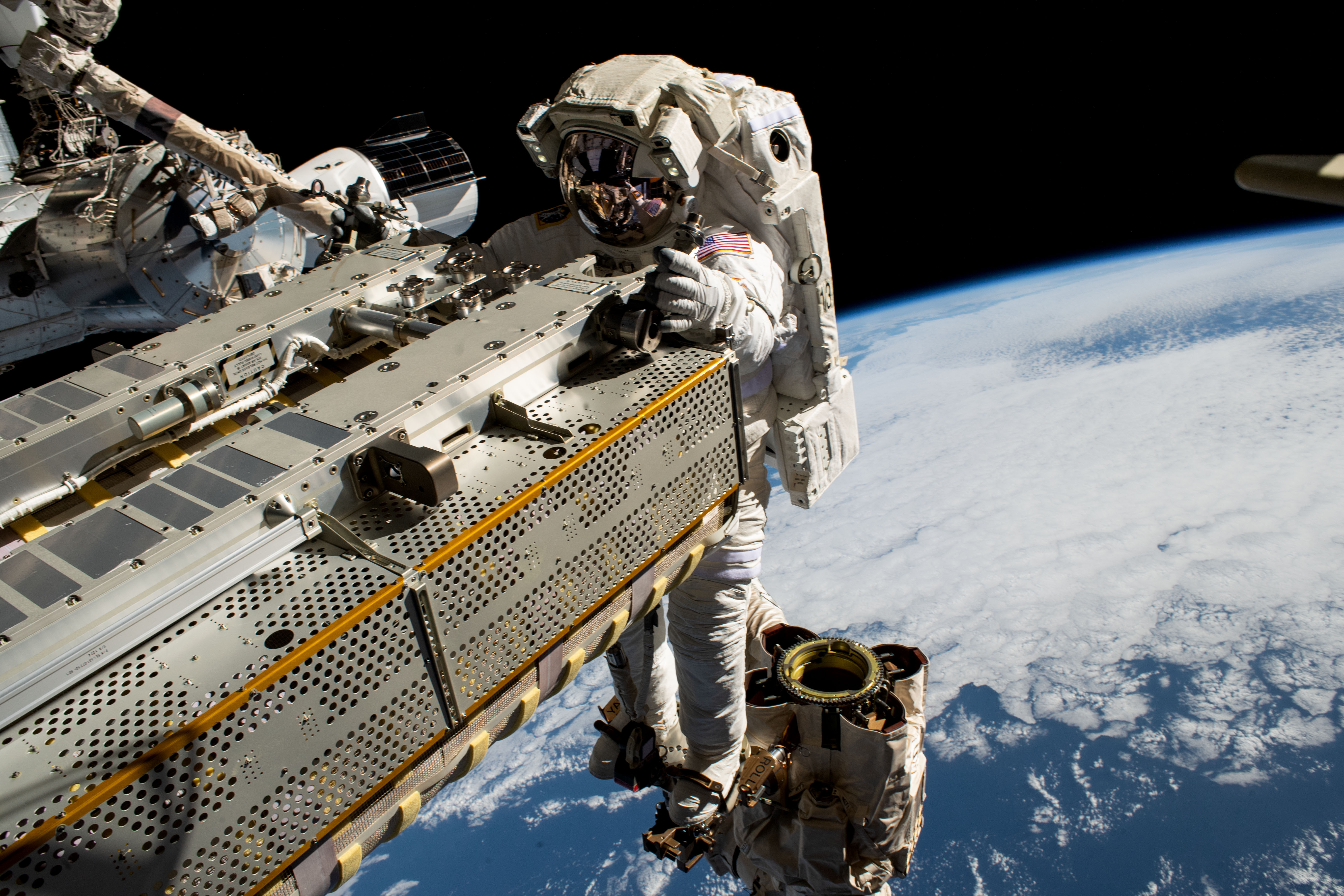
Human spaceflight has been one of NASA’s most visible areas of activity. The agency developed programs designed to understand how humans could safely travel beyond Earth’s atmosphere and operate spacecraft in space.
The Apollo program became one of the most important chapters in NASA’s history. Apollo missions demonstrated advanced spacecraft, navigation systems, life-support technology, and lunar exploration techniques. Apollo 11 achieved the first crewed landing on the Moon in 1969, with astronauts conducting scientific activities on the lunar surface.
Later programs focused on reusable spacecraft, long-duration missions, and life in low Earth orbit. NASA’s work on the Space Shuttle program and the International Space Station contributed significantly to understanding how humans and equipment can operate in space for extended periods.
NASA’s Role in Robotic Exploration
Not every space mission requires astronauts. Robotic spacecraft can travel to environments that may be too distant, dangerous, or difficult for humans. NASA has therefore developed numerous robotic missions to investigate planets, moons, asteroids, comets, and other objects.
Robotic spacecraft can carry cameras, spectrometers, sensors, drilling equipment, and other scientific instruments. These technologies allow researchers to study the composition, atmosphere, geology, and history of distant worlds.
Mars exploration has been a particularly important area. NASA has operated several spacecraft, landers, and rovers on and around Mars. These missions have collected information about the planet’s surface, atmosphere, geological history, and potential habitability.
NASA and Earth Science
Although NASA is widely associated with outer space, studying Earth is also an important part of its work. Satellites and other instruments allow scientists to monitor Earth’s atmosphere, oceans, land surfaces, ice, and environmental systems.
Earth-observing missions can provide information about weather patterns, atmospheric conditions, changes in land cover, and other large-scale processes. Scientists use this information to improve their understanding of Earth’s interconnected systems.
NASA’s Earth science programs demonstrate that space technology can be used to study the planet on which humans live. Satellites can observe large areas repeatedly, providing valuable measurements that complement observations made on the ground.
NASA’s Contribution to Astronomy
Astronomy is another major field connected with NASA. The agency has developed and supported space-based observatories that allow scientists to study objects beyond Earth’s atmosphere.
Space telescopes are especially useful because Earth’s atmosphere can interfere with certain types of astronomical observations. Observatories operating above the atmosphere can capture different wavelengths of light and provide detailed information about stars, galaxies, planets, and other cosmic phenomena.
The Hubble Space Telescope became particularly well known for its observations of distant galaxies, nebulae, stars, and other astronomical objects. More recent observatories have expanded scientific capabilities by studying the universe in infrared and other wavelengths.
NASA and Technological Innovation
The work associated with the full form of NASA extends beyond traditional space missions. Developing spacecraft and scientific instruments requires advances in computing, materials, communications, robotics, navigation, sensors, and engineering.
Space missions often require equipment that is lightweight, reliable, energy-efficient, and capable of functioning in demanding environments. Engineers therefore develop technologies specifically suited to extreme conditions.
Some technologies developed or improved through aerospace research have influenced applications on Earth. NASA’s research has contributed to areas such as imaging, communications, environmental monitoring, materials science, and robotics. The agency’s research programs demonstrate how challenges in space can encourage innovation in other industries.
NASA’s Major Space Programs
NASA has operated many significant programs throughout its history. Mercury was among its earliest human spaceflight programs, followed by Gemini, which helped develop techniques needed for future lunar missions.
Apollo then became famous for its crewed lunar exploration missions. After Apollo, NASA pursued the Space Shuttle program, which supported satellite deployment, scientific research, and construction and servicing activities in low Earth orbit.
The agency later became a major participant in the International Space Station program. More recently, NASA has developed the Artemis program, which focuses on returning humans to the Moon and establishing capabilities that can support future exploration.
NASA and International Cooperation
Modern space exploration often involves cooperation between multiple countries and organizations. NASA has worked with international partners on scientific missions, spacecraft, research programs, and the International Space Station.
International collaboration allows agencies to combine scientific expertise, engineering capabilities, equipment, and financial resources. It also enables researchers from different countries to analyze scientific information and conduct experiments together.
Cooperation has become particularly important as space missions become increasingly complex. Exploring the Moon, Mars, and deep space requires extensive planning, advanced technologies, and long-term scientific research.
Importance of NASA for Students
Learning the full form of NASA can be a starting point for students interested in science and technology. NASA’s activities involve subjects such as physics, mathematics, chemistry, biology, computer science, engineering, astronomy, and environmental science.
Students can study NASA missions to understand how scientific theories are transformed into practical technologies. Spacecraft design, rocket launches, planetary research, and satellite operations all require people with different technical skills.
NASA’s work can therefore serve as an example of how multiple scientific disciplines can work together to solve complicated problems. It also demonstrates the importance of research, experimentation, teamwork, and long-term planning.
Future of NASA
NASA’s future activities are expected to continue focusing on human exploration, robotic missions, Earth science, astronomy, and aerospace technology. Lunar exploration is an important part of current long-term planning, particularly through the Artemis program.
The agency also continues to investigate Mars and other destinations while developing technologies for future deep-space missions. Advances in robotics, artificial intelligence, communications, propulsion, and scientific instruments may make future missions more capable and efficient.
At the same time, Earth observation and climate-related research remain important areas of scientific activity. NASA’s combination of space exploration and Earth science gives the agency a broad role in understanding both our planet and the universe beyond it.
Frequently Asked Questions About the Full Form of NASA
What is the full form of NASA?
The full form of NASA is National Aeronautics and Space Administration. It is the United States government agency responsible for civilian space exploration, aeronautics research, and related scientific activities.
When was NASA established?
NASA was established in 1958. It succeeded the National Advisory Committee for Aeronautics and was created to coordinate and expand United States civilian aerospace and space research.
What does NASA do?
NASA conducts research and missions involving space exploration, human spaceflight, astronomy, Earth science, planetary science, aeronautics, and aerospace technology.
Is NASA only involved in space exploration?
No. NASA also conducts aeronautics research and studies Earth using satellites and other scientific instruments. Its activities cover both space and aviation-related research.
Why is NASA important?
NASA contributes scientific knowledge about Earth and the universe while developing technologies for exploration and research. Its missions also provide opportunities for international scientific collaboration and technological development.
Conclusion
The full form of NASA is National Aeronautics and Space Administration, an organization that has played a significant role in the development of modern space exploration and aerospace research. From early human spaceflight programs and lunar missions to robotic planetary exploration, space telescopes, Earth observation, and advanced aeronautics, NASA’s activities cover a broad range of scientific fields. Its work has helped researchers learn more about Earth, the Moon, Mars, distant galaxies, and the conditions of space. NASA also provides an important example of how science, engineering, computing, and international cooperation can come together to address complex challenges. For students and technology enthusiasts, learning about NASA offers a useful introduction to the wider world of aerospace, astronomy, and scientific discovery.