
Introduction
Banking has become easier and more convenient with the development of modern technology. In the past, people often had to visit a bank branch and stand in long queues to withdraw money, check account balances, or obtain basic banking services. Today, many of these activities can be completed within minutes using an automated banking machine. One of the most important inventions in this field is the Automated Teller Machine, commonly known as an ATM.
The full form of ATM is Automated Teller Machine. It is an electronic banking device that allows customers to perform several financial transactions without directly interacting with a bank employee. ATMs are widely used to withdraw cash, check account balances, obtain mini statements, and access other services depending on the bank and machine. They are available in many locations, including shopping centres, markets, railway stations, airports, and bank premises.
ATMs play an important role in everyday financial activities because they provide convenient access to money outside regular banking hours. They have also helped banks manage customer demand more efficiently. Understanding how ATMs work, their benefits, and the precautions required while using them can help people make better use of this essential banking facility.
What Is the Full Form of ATM?
The full form of ATM is Automated Teller Machine. The term describes an electronic machine designed to provide selected banking services automatically. The word “automated” refers to performing tasks with limited direct assistance from a bank employee, while “teller” traditionally refers to a person who handles banking transactions. A machine performs several of these basic functions electronically.
An ATM generally requires a debit card, an eligible banking card, or another supported authentication method to identify the customer. Users usually enter a personal identification number, commonly called a PIN, to verify their identity. After successful authentication, the machine displays the available services and allows the customer to select a transaction. The request is processed through the bank’s systems, and the machine provides the appropriate response.
ATMs are an important part of the banking infrastructure because they allow customers to access cash and account information without visiting a bank counter. However, the services available may vary depending on the bank, machine operator, card type, and account features.
History and Development of ATMs
The introduction of ATMs transformed the way people accessed banking services. Before automated machines became common, customers generally depended on bank branches for cash withdrawals and other routine transactions. This process could be inconvenient, particularly for people who needed money outside working hours or lived far from a branch.
The first generation of automated cash machines appeared during the 1960s. Over the following decades, improvements in electronics, communication networks, banking software, and card technology made ATMs more reliable and widely available. Banks gradually expanded their ATM networks to serve customers in cities, towns, and rural areas.
Modern ATMs offer more than simple cash withdrawals. Depending on the machine, customers may be able to check balances, print mini statements, change their PIN, transfer funds, or deposit cash. Some machines also support cardless transactions and other digital authentication methods.
The development of ATMs demonstrates how technology can simplify routine financial tasks. Although mobile banking has become increasingly popular, ATMs remain valuable because they provide physical cash and selected banking services when customers need them.
How Does an ATM Work?
An ATM works by connecting a customer to a bank’s transaction-processing system through a secure electronic network. When a customer inserts a card or uses another supported access method, the machine reads the required information and asks the user to complete the authentication process. For card-based transactions, this normally involves entering a PIN.
After authentication, the customer selects a service, such as cash withdrawal or balance enquiry. For a withdrawal, the ATM sends a request to the relevant banking system to verify the account, available balance, transaction limits, and other applicable conditions. If the transaction is approved, the machine dispenses the requested cash, records the transaction, and updates the account through the banking network.
The ATM also maintains transaction information and may print a receipt if the customer requests one. If a transaction cannot be completed, the machine may display an error message or cancel the request. For example, insufficient funds, incorrect PIN entries, network interruptions, or a lack of cash can prevent a withdrawal.
Customers should always wait for the transaction to finish, collect their card and cash, and check the displayed message before leaving the machine.
Main Features of an ATM
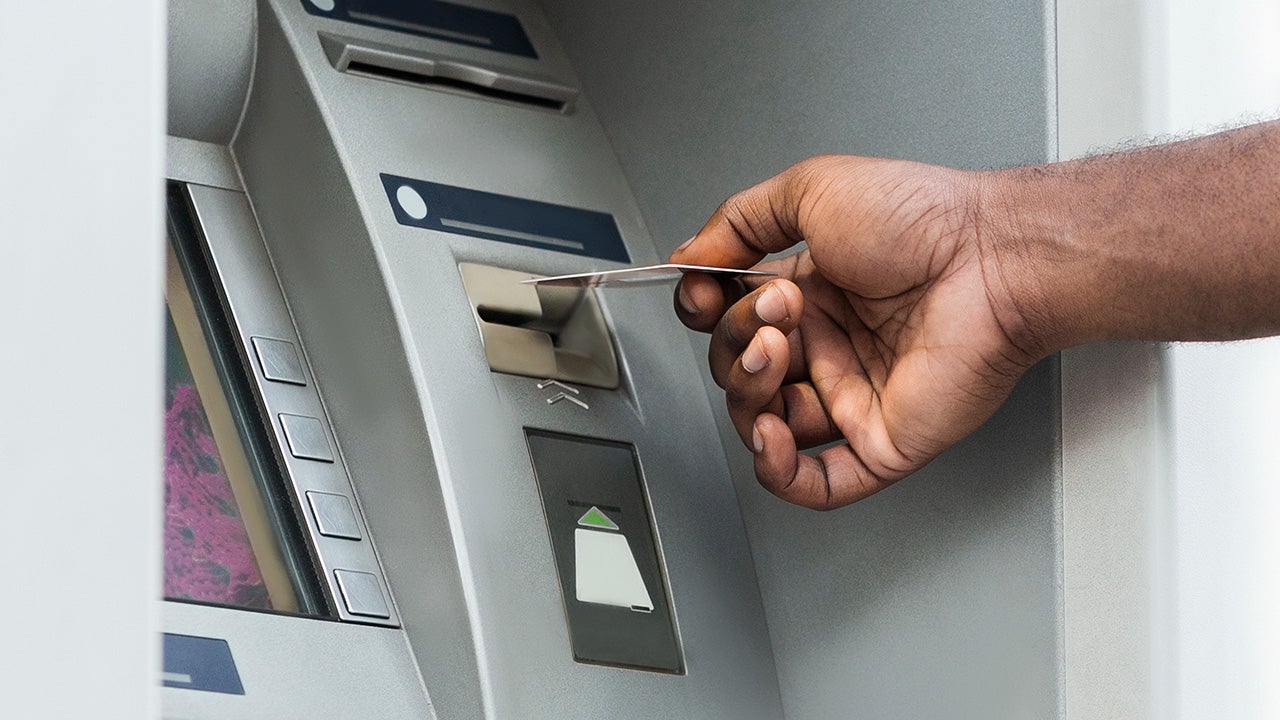
ATMs contain several components that help customers complete banking transactions. The card reader or supported authentication system identifies the customer, while the keypad or touchscreen allows users to enter information and select services. A display screen provides instructions throughout the process.
The cash dispenser releases banknotes after an approved withdrawal. Many machines also contain a receipt printer that produces a record of the transaction. Some ATMs include deposit slots, document readers, or additional facilities, depending on their design.
Security is another important feature. Modern machines may use encrypted communications, PIN protection, monitoring systems, and anti-tampering measures. These features help protect customers and reduce the risk of unauthorised access, although they cannot eliminate every possible threat.
ATMs are also designed to provide instructions in accessible and understandable formats. Depending on the machine, customers may be able to choose a language or use accessibility features. These options help make automated banking more practical for people with different needs and levels of technical experience.
Different Types of ATMs
ATMs are available in different forms depending on their location, ownership, and available services. Understanding these categories helps customers identify the most suitable machine for a particular banking requirement.
1. Bank-owned ATMs: These machines are operated by banks to provide their customers with convenient access to cash and other supported services. They may be installed at bank branches, commercial areas, and other public locations.
2. White-label ATMs: These are established and operated by authorised non-bank entities under the applicable regulatory framework. They expand access to automated banking facilities in locations where traditional bank-operated machines may be less common.
3. Cash withdrawal ATMs: These machines primarily allow users to withdraw cash, check balances, and access other basic services supported by the operator.
4. Cash deposit machines: Some automated banking machines accept cash deposits into eligible accounts. Certain machines combine deposit and withdrawal facilities.
5. Multifunction ATMs: These provide several services, which may include mini statements, PIN changes, balance enquiries, and selected fund transfers.
The availability of each type depends on the operator and banking arrangements. Customers should review the displayed options and any applicable charges before completing a transaction.
Uses of ATMs in Daily Life
ATMs are useful in many everyday situations because they provide access to cash without requiring a visit to a bank counter. One of their most common uses is withdrawing money for shopping, transportation, food, and other routine expenses. They are especially helpful when customers need cash during evenings, weekends, or public holidays.
Another important use is checking an account balance. Customers can review the available balance before making a purchase or planning an expense. Many machines also provide mini statements showing recent transactions, helping users monitor account activity.
Some ATMs support PIN changes, cash deposits, and other banking facilities. These options depend on the bank and machine. Travellers may also use ATMs to obtain cash at destinations where other payment methods are not accepted.
Although digital payments are increasingly common, cash remains important in many situations. ATMs provide a practical connection between digital banking accounts and physical money, allowing customers to manage their daily financial needs more independently.
Benefits of Using ATMs
The biggest benefit of an ATM is convenience. Customers can perform basic transactions without waiting for a bank employee, making routine banking faster and easier. Many ATMs operate around the clock, although access may be affected by maintenance, location restrictions, or technical problems.
ATMs also help reduce pressure on bank branches. When customers can withdraw cash or check balances independently, bank employees can spend more time assisting with complex services, account issues, and financial guidance.
Another advantage is accessibility. A broad ATM network allows customers to access money in different neighbourhoods and cities. Depending on the bank’s arrangements, customers may also use machines operated by other eligible banks.
ATMs can support better financial management by allowing customers to check balances and review recent transactions. Receipts and mini statements can provide useful records of withdrawals and account activity.
Overall, ATMs contribute to a more flexible banking system. Their value is particularly clear when customers need cash quickly or require basic banking services outside normal branch hours.
ATM Safety Tips for Secure Transactions
Although ATMs are convenient, customers should follow basic security practices to protect their accounts and personal information. The most important precaution is keeping the PIN confidential. Never share it with strangers, and avoid writing it where another person can easily find it.
Before using a machine, check for unusual attachments, loose parts, or anything that appears to have been added to the card reader or keypad. If the machine looks suspicious, choose another ATM and report the issue to the bank or operator.
Cover the keypad while entering the PIN. Avoid accepting unsolicited assistance from strangers, even if they appear helpful. Be cautious if someone asks you to disclose confidential information or follow unfamiliar instructions.
After completing a transaction, collect your card, cash, and receipt if required. Keep the receipt secure if it contains account-related information. Enable transaction alerts where available, and regularly review account activity to identify unfamiliar transactions.
If a card is retained by a machine or a transaction fails unexpectedly, contact the bank through an official channel. Report unauthorised withdrawals promptly and follow the bank’s instructions for blocking the card or raising a complaint.
Common Problems Faced While Using ATMs
Customers may occasionally encounter difficulties while using ATMs. A machine may run out of cash, become temporarily unavailable, or experience a network interruption. Incorrect PIN entries can also prevent access, and repeated errors may lead to the card being blocked according to the bank’s security rules.
Another problem occurs when an account is debited but cash is not dispensed. In such cases, customers should keep any available transaction receipt, note the location and time, and contact their bank through an official customer service channel. The bank can investigate the transaction and explain the applicable resolution process.
A retained card is another possible issue. Customers should not leave the machine unattended while attempting to resolve the problem or accept help from unknown individuals. Instead, they should contact their bank and follow its instructions.
Many ATM problems are temporary and can be resolved through technical support or a formal complaint. Keeping transaction details and reporting problems quickly makes it easier for the bank to investigate the issue.
ATM vs Digital Banking: Understanding the Difference
ATMs and digital banking both provide convenient ways to access financial services, but they serve different purposes. An ATM is a physical machine that provides selected services, particularly cash withdrawals. Digital banking generally refers to services accessed through a bank’s website or mobile application.
Through digital banking, customers may be able to transfer funds, pay bills, download statements, manage cards, and monitor accounts without visiting a physical location. ATMs, meanwhile, remain particularly useful when customers need banknotes or when a specific service is available only through an automated machine.
Both methods have advantages and limitations. Digital banking requires an appropriate device, internet access, and secure account authentication. ATM access depends on machine availability, location, network connectivity, and the services supported.
Using these options together can make banking more flexible. Customers can use digital platforms for many account-management tasks and visit ATMs when physical cash or machine-based services are required.
The Future of ATM Technology
ATM technology continues to develop as banks respond to changing customer expectations and security requirements. Some machines now support contactless card access, cardless withdrawals, improved accessibility features, and more advanced transaction monitoring. Availability varies by bank and location.
Future improvements may focus on stronger authentication, more reliable cash management, better user interfaces, and improved protection against fraud. Banks may also integrate automated machines more closely with mobile banking applications, allowing customers to initiate or authenticate selected transactions digitally.
At the same time, ATMs will need to adapt to the growth of digital payments. Rather than becoming unnecessary, they may increasingly serve as specialised service points for cash access, deposits, and selected banking functions.
The long-term importance of ATMs will depend on customer needs, banking infrastructure, security, and the continued availability of cash. Their development shows that traditional banking facilities can evolve alongside modern digital services.
Conclusion
The full form of ATM is Automated Teller Machine. It is an important banking innovation that allows customers to withdraw cash, check account balances, obtain mini statements, and use other supported services without directly visiting a bank counter. ATMs save time, improve convenience, and provide access to selected banking facilities outside normal branch hours.
From their early development to modern machines with advanced security features, ATMs have significantly changed everyday banking. They continue to serve customers in cities, towns, and rural areas, particularly when physical cash is needed. However, safe usage is essential. Protecting the PIN, checking the machine for suspicious attachments, collecting the card and cash, and reporting unusual transactions can help reduce financial risks.
As digital banking continues to expand, ATMs will remain a useful part of the financial system. Understanding their meaning, functions, benefits, and limitations helps customers use them confidently and manage their everyday banking needs more effectively.