
Introduction
India is one of the world’s oldest civilizations and largest democratic countries. Known for its rich cultural heritage, diverse languages, historical monuments, and scientific achievements, India holds an important place in global affairs. People frequently search for the full form of India because they want to understand whether the country’s name represents an abbreviation or has a deeper historical meaning. The answer is interesting because the name India is not officially recognized as an acronym with a separate word for each letter.
Unlike terms such as NASA or UNESCO, the name India does not have an officially accepted expanded form. Instead, its origins can be traced to ancient geographical names, particularly the Indus River and the historical words associated with the region surrounding it. Understanding the full form of India therefore requires examining the country’s constitutional identity, historical background, and cultural significance rather than treating the name as an abbreviation.
India is officially known as India in English and Bharat in Hindi. Both names are recognized in the Constitution of India and represent the identity of a nation with thousands of years of history. Learning about these names helps students, competitive examination candidates, and general readers understand the country’s identity more accurately.
What Is the Full Form of India?
The most important fact to understand is that India has no official full form. It is a proper noun, not an acronym. Each letter in the word INDIA does not officially stand for a separate word under Indian law or in the country’s Constitution.
However, some educational websites, motivational articles, and informal discussions present creative expansions of the word INDIA. These versions may use words such as Independent, Nation, Democratic, International, or similar terms to form a memorable phrase. Such interpretations are informal wordplay rather than historically or constitutionally established meanings.
When answering an examination question about the full form of India, the most accurate response is that India has no official acronym expansion. The country’s name developed through historical and linguistic processes over many centuries. Its meaning is connected to the Indus River and the geographical region known to ancient civilizations.
Knowing this distinction is useful because it prevents confusion between an actual abbreviation and an invented expansion. It also provides a more meaningful understanding of the origin of the country’s name and the evolution of its national identity.
Historical Origin of the Name India
The name India has a long history associated with the Indus River, one of the major rivers of the Indian subcontinent. The river was known in Sanskrit as Sindhu. Over time, the name passed through different languages and underwent changes in pronunciation.
In ancient Persian usage, the sound at the beginning of Sindhu was adapted, producing a form associated with Hindu or Hindush. Greek writers later used the term Indos for the river and related forms such as India for the surrounding region. Through these linguistic developments, the name India became established in European languages and international geographical terminology.
The historical development of the name demonstrates how trade, travel, cultural contact, and political interactions influenced the way different civilizations referred to geographical regions. India was connected with Persia, Greece, Central Asia, and other parts of the world through commercial routes and intellectual exchanges.
Over many centuries, the name India continued to be used in historical records, maps, and international communication. Today, it is the country’s widely recognized English name. Its origin is therefore geographical and historical, rather than an abbreviation formed from five individual letters.
Why Is India Also Called Bharat?
Bharat is another important name for the country and has deep roots in Indian cultural and historical traditions. It appears in ancient Indian literature, including the Mahabharata, and is associated with the Bharata people and traditions connected with the name Bharata.
The name Bharat has remained significant in Indian languages, literature, cultural practices, and national identity. It is widely used in Hindi and several other Indian contexts. Many people use Bharat to express a connection with the country’s indigenous historical traditions and civilizational heritage.
The Constitution recognizes both India and Bharat. Article 1 begins with the statement, “India, that is Bharat, shall be a Union of States.” This constitutional wording establishes the country’s identity through both names. It is not necessary to choose one name as the only legitimate designation because both are constitutionally recognized.
The continued use of Bharat reflects the country’s cultural continuity and linguistic diversity. While India is commonly used in international English-language communication, Bharat is deeply familiar within Indian society. Together, the two names represent different historical and linguistic traditions associated with the same nation.
What Does the Constitution of India Say About Its Name?
The Constitution of India provides the clearest legal explanation of the country’s official identity. Article 1 identifies the nation as India, that is Bharat, and describes it as a Union of States. This means that India and Bharat are both recognized names within the constitutional framework.
The Constitution was adopted by the Constituent Assembly on 26 November 1949 and came into effect on 26 January 1950. These dates are important in Indian history because they mark the adoption of the country’s constitutional framework and the beginning of the Republic of India.
The constitutional recognition of both names reflects the country’s attempt to connect its modern democratic institutions with its historical and cultural traditions. It also establishes a common national identity for people belonging to different states, speaking different languages, and following diverse customs.
When people ask about the full form of India, Article 1 is particularly relevant because it explains the country’s constitutional name without inventing an acronym. It offers a reliable answer for students, teachers, and anyone seeking accurate information about the legal identity of the nation.
Difference Between India, Bharat, and Hindustan
India, Bharat, and Hindustan are three names associated with the same geographical and national identity, but their origins and usage differ.
India is the internationally recognized English name of the country. It is commonly used in diplomatic relations, international organizations, educational publications, scientific research, and global business. The historical development of the word is connected with the Indus River and the names used by ancient civilizations.
Bharat comes from Indian historical and literary traditions. It is used in Hindi and other cultural and linguistic contexts, and it has explicit recognition in Article 1 of the Constitution. The name often appears in discussions about Indian civilization, history, and cultural heritage.
Hindustan is a historical term that developed through Persian linguistic and geographical traditions. Its usage has varied across different historical periods. In some contexts, it has referred to parts of the Indian subcontinent, while in everyday speech it is sometimes used as a poetic or informal name for India.
Although these names share connections with the country’s identity, they are not identical in historical origin or usage. Understanding their differences helps explain the linguistic diversity that has shaped the country’s history.
Important Facts About India
India has many distinctive features that make it an important country in Asia and around the world. It is located in South Asia and shares borders with several neighboring countries. Its geography includes the Himalayan mountain range, fertile plains, deserts, plateaus, forests, and long coastal regions.
India is the world’s most populous country according to recent international demographic estimates. Its large population contributes to a diverse society with many languages, religions, regional cuisines, artistic traditions, and cultural practices. Hindi and English have important roles in official Union government communication, while the Constitution’s Eighth Schedule recognizes 22 languages.
India is also the world’s largest democracy by population. Its parliamentary system allows citizens to elect representatives, while the Constitution establishes fundamental rights, government institutions, and the responsibilities of public authorities. Elections are an essential part of its democratic structure.
The country has made significant contributions to mathematics, philosophy, literature, medicine, space research, information technology, and manufacturing. India’s space program, agricultural development, educational institutions, and growing digital economy are important parts of its modern development.
These facts demonstrate that the identity of India extends far beyond its name. The country combines ancient cultural traditions with modern institutions, scientific progress, and a continually developing economy.
Why Do Students Search for the Full Form of India?
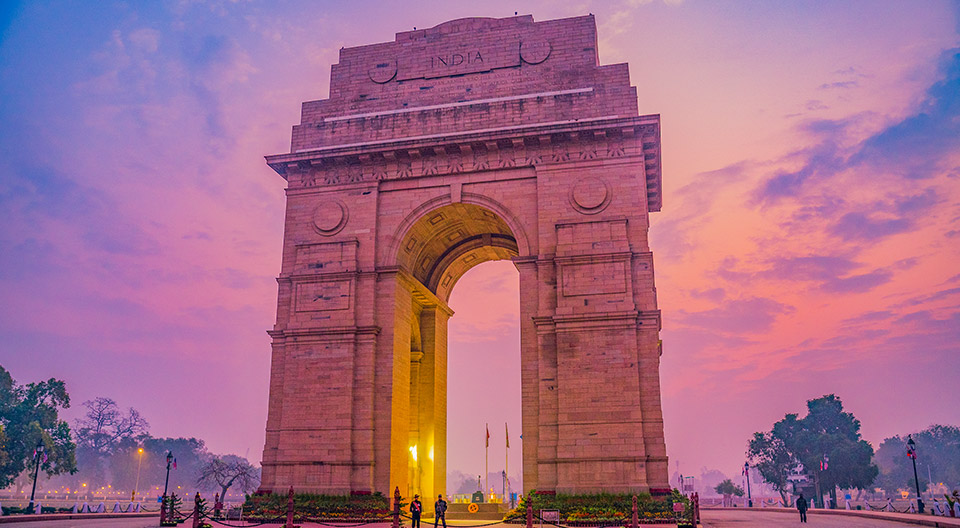
Students often search for the full form of India while preparing school assignments, general knowledge examinations, quizzes, competitive examinations, and interview questions. The question appears simple, but it can lead to confusion because some sources provide unofficial expansions without explaining their origin.
For schoolwork, the most reliable approach is to distinguish between the historical meaning of a word and an acronym. An acronym is formed from the initial letters of other words, while a proper noun can develop through linguistic and historical changes. India belongs to the second category.
Teachers may use this topic to introduce students to the history of the Indian subcontinent, the Constitution, and the relationship between language and national identity. It also offers an opportunity to discuss why different countries have multiple historical names and how those names become established in public usage.
For competitive examinations, candidates should remember the constitutional wording in Article 1 and the fact that India has no official acronym expansion. This answer is more dependable than memorizing a creative phrase that may appear in informal educational material but has no official status.
Cultural Significance of India’s Name
A country’s name often carries historical memories, cultural associations, and a sense of belonging. In India, the names India and Bharat connect different aspects of the country’s identity. India reflects a name that became established through historical geographical and linguistic exchanges, while Bharat is strongly connected with indigenous literary and cultural traditions.
The country’s diversity makes this connection especially meaningful. People across different states may speak different languages, celebrate different festivals, follow different customs, and maintain distinct regional traditions. Nevertheless, they share a constitutional framework and a national identity.
Indian literature, classical music, dance, architecture, philosophy, and religious traditions have influenced communities across generations. Historical places such as ancient universities, temples, forts, and archaeological sites provide evidence of the region’s long cultural development. Modern cities and research institutions show how this heritage continues to interact with contemporary life.
Understanding the names of the country encourages people to look beyond simple definitions. It provides a starting point for exploring how language, history, and culture contribute to national identity. For this reason, learning about India’s name is a small but valuable part of understanding the country itself.
Common Misconceptions About the Full Form of India
One common misconception is that each letter in INDIA has an official meaning. In reality, no constitutionally established or universally accepted expansion exists. Phrases created by rearranging or assigning words to the letters should be treated as informal interpretations.
Another misconception is that Bharat and India refer to different countries. Both names refer to the same country under Article 1 of the Constitution. Their usage differs according to language, context, and tradition, but they do not identify separate sovereign states.
Some people also assume that the name India was created only during British rule. However, forms of the name existed in ancient Greek geographical traditions, with roots connected to earlier names for the Indus River. The name’s history extends much further back than the colonial period.
Finally, it is inaccurate to assume that Hindustan is the country’s only traditional name. Indian history contains several regional, literary, and historical names, each with its own context. Recognizing these differences helps readers understand the evolution of the country’s identity without confusing cultural usage with legal terminology.
Conclusion
The full form of India is a common general knowledge question, but the correct answer is that India has no official full form because it is not an acronym. Its name has historical roots connected with the Indus River and the linguistic traditions of ancient civilizations. Over time, the name became widely established in international usage.
India is also constitutionally recognized as Bharat under Article 1, which states that India, that is Bharat, shall be a Union of States. The name Bharat reflects important cultural and historical traditions, while Hindustan is another historical term associated with the Indian subcontinent.
Understanding these names helps students and readers appreciate the relationship between language, geography, history, and national identity. Rather than memorizing an unofficial expansion, it is better to learn the documented origin of the country’s name and its constitutional significance. This approach provides an accurate foundation for general knowledge, academic assignments, and a deeper understanding of India’s rich heritage.