
Introduction
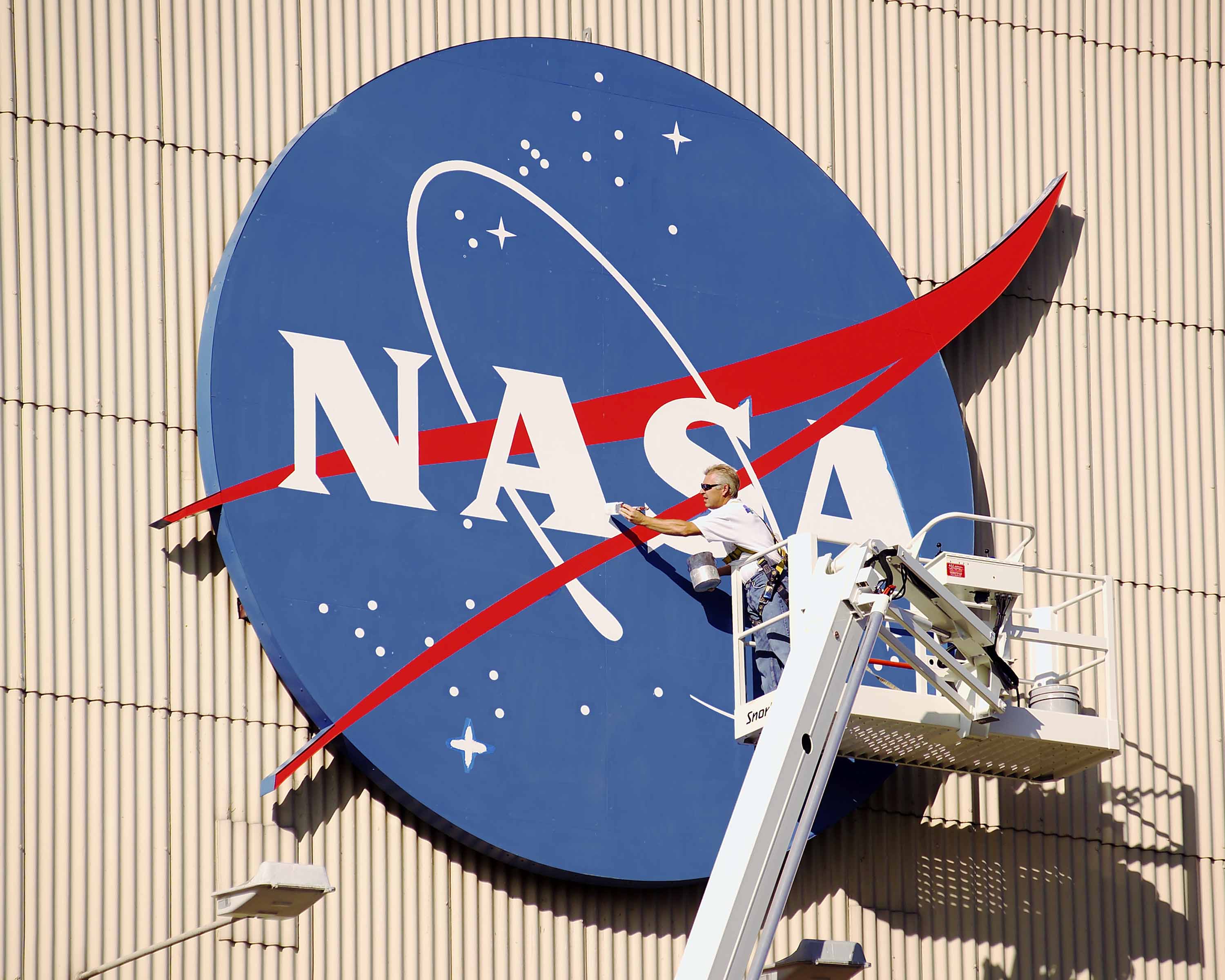
Space exploration has played an important role in expanding human knowledge about Earth, the solar system, and the universe. Among the organizations associated with space research, NASA is one of the most widely recognized names. Students, researchers, science enthusiasts, and general readers often search for the full form of NASA when learning about space science and exploration. NASA is the abbreviation for the National Aeronautics and Space Administration, a United States government agency responsible for civilian space exploration and a broad range of aeronautics and space research activities.
NASA has contributed to major developments in human spaceflight, robotic exploration, Earth science, astronomy, aeronautics, and space technology. Its missions have helped scientists study planets, stars, galaxies, the atmosphere, climate, and the effects of spaceflight on humans. Understanding NASA’s meaning and role provides useful background for anyone interested in science, technology, engineering, and space exploration.
What Is the Full Form of NASA?
The full form of NASA is National Aeronautics and Space Administration. The organization was established by the United States government in 1958 and began operations on October 1 of that year. NASA was created during a period when space exploration and aerospace technology were becoming increasingly important.
The name itself describes the agency’s broad responsibilities. “National” refers to its role as a United States federal agency, “Aeronautics” relates to the science and technology of flight within Earth’s atmosphere, while “Space Administration” reflects its responsibilities involving space exploration and research. Although many people primarily associate NASA with astronauts and rockets, its work extends to scientific research, aircraft technology, Earth observation, planetary science, and many other fields.
History of NASA
To understand the full form of NASA more completely, it is useful to look at the agency’s history. NASA was established in response to growing interest in advanced aerospace and space technology during the late 1950s. Before NASA was created, the United States conducted significant aeronautical and space-related research through the National Advisory Committee for Aeronautics, commonly known as NACA.
NASA brought together NACA’s aeronautical research capabilities with additional space-related programs. Its establishment created a dedicated civilian organization capable of coordinating large-scale space research and exploration programs. During its early years, NASA concentrated heavily on developing the technologies needed for human spaceflight and robotic missions.
Over subsequent decades, NASA expanded its activities into numerous scientific and technological fields. Its work has included human missions, planetary probes, space telescopes, Earth-observation systems, and aeronautical research.
NASA and Human Spaceflight
Human spaceflight is one of the areas most strongly associated with NASA. The agency’s early programs focused on demonstrating that humans could safely travel into space and return to Earth. Projects such as Mercury and Gemini helped develop important knowledge about human spaceflight, spacecraft operations, rendezvous, docking, and astronaut training.
The Apollo program later became one of NASA’s most historically significant programs. Apollo 11 achieved the first crewed landing on the Moon in July 1969, with astronauts Neil Armstrong and Buzz Aldrin walking on the lunar surface while Michael Collins remained in lunar orbit.
NASA’s human-spaceflight activities continued after Apollo through programs including the Space Shuttle and the International Space Station. These programs contributed to knowledge about long-duration spaceflight, microgravity, spacecraft engineering, and international cooperation.
NASA’s Role in Space Exploration
NASA does much more than send humans into space. Robotic spacecraft have traveled to different planets, moons, asteroids, and other objects in the solar system. Robotic missions are particularly useful because they can explore environments that are extremely distant, hazardous, or unsuitable for humans.
NASA spacecraft and scientific instruments have studied Mars, Jupiter, Saturn, the outer solar system, and numerous smaller celestial bodies. Robotic missions can collect measurements, photograph planetary surfaces, analyze atmospheres, and investigate geological characteristics.
Exploration missions help scientists understand how planets formed and evolved. They can also provide clues about whether environments elsewhere in the solar system might once have been suitable for life. These missions demonstrate how space exploration combines engineering with scientific research.
NASA and Earth Science
Another major area of NASA’s work is studying Earth itself. Satellites and other observation systems provide information about Earth’s atmosphere, oceans, land surfaces, ice, weather patterns, and environmental changes.
Earth-observation data can help researchers monitor hurricanes, wildfires, droughts, glaciers, sea levels, and other environmental phenomena. Scientists use satellite observations alongside information collected from aircraft, ground stations, ships, and other sources.
This work demonstrates that space technology is not only about exploring distant worlds. Observing Earth from space can provide valuable information for scientific research, environmental monitoring, disaster response, agriculture, and understanding changes in the planet’s systems.
NASA and Astronomy
Astronomy is another important part of NASA’s scientific work. Space-based observatories can observe wavelengths of light that are difficult or impossible to study effectively from Earth’s surface because of the atmosphere.
NASA has supported major space telescopes and observatories that have transformed our understanding of stars, galaxies, planets, and the universe. These instruments allow scientists to examine objects across enormous distances and study phenomena that cannot be easily observed using ground-based facilities.
Space astronomy has contributed to research into the formation of galaxies, the life cycles of stars, distant planets, black holes, and the early universe. These observations help scientists develop and test theories about how the universe works.
NASA’s Contribution to Technology
The full form of NASA is often introduced in school science lessons, but the organization’s importance extends far beyond its name. NASA missions require highly advanced engineering and technology. Developing spacecraft that can operate in extreme environments requires solutions involving materials, electronics, communications, computing, propulsion, robotics, navigation, and life-support systems.
Research connected to space missions can also contribute to technologies and knowledge that have applications beyond space exploration. NASA’s work has encouraged advances in areas such as imaging, sensors, robotics, materials, communications, and computer systems.
Space missions often require engineers to solve unusual problems under strict limitations involving weight, energy, reliability, temperature, and distance. The solutions developed for these challenges can influence broader scientific and technological research.
NASA’s Aeronautics Research
The word “Aeronautics” in the full form of NASA is significant because NASA’s work is not limited to outer space. The agency also conducts research related to aviation and aircraft technology.
Aeronautics research can focus on improving aircraft efficiency, reducing emissions and noise, enhancing safety, and developing new approaches to flight. NASA researchers have investigated advanced aircraft designs, propulsion concepts, air-traffic technologies, and other areas related to aviation.
This work connects NASA’s space activities with atmospheric flight. Both fields require advanced knowledge of physics, engineering, materials, computer systems, and control technologies.
NASA and the International Space Station
NASA has been one of the major participants in the International Space Station, a multinational project involving several space agencies and international partners. The station provides a laboratory environment where astronauts can conduct experiments in microgravity.
Research aboard the station covers biology, physics, materials science, human health, Earth observation, and other subjects. Long-duration missions also allow scientists to study how humans respond to living and working in space for extended periods.
The International Space Station demonstrates the importance of cooperation in space science. Large scientific projects can require substantial resources, specialized expertise, and coordination among multiple countries and organizations.
NASA’s Future in Space Exploration
NASA continues to develop programs focused on future human and robotic exploration. Lunar exploration is an important part of its current long-term activities, particularly through the Artemis program, which is designed to support human exploration of the Moon and contribute to capabilities that could eventually support missions farther into the solar system.
Future exploration can involve new spacecraft, lunar systems, scientific instruments, communication technologies, habitats, and robotic vehicles. Each new mission presents technical challenges that require research and testing.
The future of space exploration is also becoming increasingly collaborative. Government agencies, universities, research institutions, and commercial aerospace companies can contribute different technologies and capabilities to large exploration projects.
Why NASA Is Important for Students
Learning the full form of NASA can be a simple starting point for students interested in science and technology. NASA’s work connects many subjects taught in schools and universities, including physics, mathematics, chemistry, biology, computer science, engineering, and environmental science.
Students can learn about NASA missions to understand how scientific theories are transformed into real-world technologies. Space exploration also demonstrates the importance of teamwork because major missions involve thousands of scientists, engineers, technicians, programmers, astronauts, and support personnel.
NASA can therefore serve as an example of how different scientific disciplines work together to solve complex problems.
Interesting Facts About NASA
NASA’s history includes many remarkable achievements. It supported the first human lunar landing, developed the Space Shuttle program, contributed significantly to the International Space Station, and operated numerous robotic missions throughout the solar system.
NASA has also supported powerful space observatories that have provided images and scientific observations of distant objects. Its spacecraft have traveled far beyond Earth and helped scientists understand planets and moons across the solar system.
Another important aspect of NASA is the scale of its operations. A single space mission can involve years of planning, design, testing, launch preparation, data collection, and scientific analysis. The final mission is therefore the result of extensive work conducted by many teams.
NASA and Scientific Discovery
NASA’s scientific importance comes from its ability to investigate questions that cannot always be answered from Earth. Space provides opportunities to study environments with different gravitational conditions, observe distant astronomical objects, and investigate planets and moons directly through spacecraft.
NASA missions can produce large quantities of scientific data. Researchers analyze these observations to understand planetary geology, atmospheric conditions, cosmic phenomena, and the history of the universe.
Scientific discovery is an ongoing process. A mission may answer one question while creating several new ones. This is one reason space exploration continues to develop as technology improves and scientists gain access to more sophisticated instruments.
Conclusion
The full form of NASA is National Aeronautics and Space Administration. Established in 1958, NASA has become a major organization in aeronautics, human spaceflight, robotic exploration, astronomy, Earth science, and space technology. Its history includes landmark achievements such as the Apollo Moon missions, the Space Shuttle program, participation in the International Space Station, and numerous scientific missions across the solar system.
For students and general readers, understanding NASA provides an introduction to the wider world of space science and technology. The organization demonstrates how mathematics, physics, engineering, computing, biology, and many other disciplines can work together to address complex scientific questions. As humanity continues exploring the Moon, Mars, and deeper regions of space, NASA’s research and missions remain an important part of the continuing effort to understand Earth and the universe beyond it.