
Introduction
The full form of NATO is the North Atlantic Treaty Organization. It is an international political and military alliance created to promote the security and cooperation of its member countries. NATO was established in 1949 after the signing of the North Atlantic Treaty, at a time when countries in Europe and North America were concerned about security and political stability following the Second World War. Over the decades, NATO has developed from a regional defense alliance into an important international organization involved in collective defense, crisis management, cooperation, and security discussions.
NATO brings together countries from Europe and North America under the principle of collective defense. This means that an armed attack against one member is treated as a matter of concern for the alliance as a whole. Understanding NATO is useful for students, researchers, and anyone interested in international relations because the organization has played an important role in major security developments since the middle of the twentieth century.
What Is the Full Form of NATO?
The full form of NATO is North Atlantic Treaty Organization. The organization is commonly known by its abbreviation, NATO, which comes from the initial letters of its English name. It was founded on April 4, 1949, when twelve countries signed the North Atlantic Treaty in Washington, D.C. The founding members were Belgium, Canada, Denmark, France, Iceland, Italy, Luxembourg, the Netherlands, Norway, Portugal, the United Kingdom, and the United States.
The central purpose of NATO is collective security. Its members cooperate on defense planning, military preparedness, security policy, and other areas related to international stability. NATO operates through political consultation as well as military cooperation. Decisions are generally made collectively, reflecting the principle that member countries participate in discussions and contribute to the alliance according to their national responsibilities and capabilities.
Why Was NATO Created?
NATO was created in the early post-Second World War period when European security conditions were changing rapidly. Many Western European countries faced concerns about military security, political instability, and the possibility of further conflict. The United States and Canada also became involved in developing a broader transatlantic security arrangement.
The organization was designed to provide a framework through which members could consult with one another and respond collectively to serious security threats. Its creation reflected the idea that cooperation among countries could reduce the possibility of another major conflict in the North Atlantic region. The alliance also strengthened political connections between North America and Western Europe.
The creation of NATO therefore represented more than a military agreement. It established a long-term system for political consultation and defense cooperation among participating countries.
The Main Purpose of NATO
The primary purpose of NATO is to protect the freedom and security of its members through political and military cooperation. Collective defense is at the heart of the alliance. Article 5 of the North Atlantic Treaty states that an armed attack against one or more members in Europe or North America is considered an attack against them all.
However, collective defense does not mean that every response must be identical. Each member determines what action it considers necessary in response to an attack. The alliance provides a framework for consultation, planning, coordination, and collective action.
NATO also focuses on preventing conflict, managing crises, supporting cooperation among members, and adapting to changing security conditions. Its work has expanded over time as new challenges have emerged, including terrorism, cyber threats, emerging technologies, and other forms of security risk.
History and Development of NATO
NATO’s history began in 1949, but the alliance has changed significantly since its creation. During the Cold War, NATO was primarily concerned with the security of its members in relation to the Soviet Union and the broader division between Eastern and Western blocs.
Following the end of the Cold War, NATO faced a changing international environment. The organization expanded its partnerships and membership and became involved in crisis-management operations beyond its original strategic circumstances. The alliance also developed cooperation programs with countries outside its membership.
NATO’s development demonstrates how international organizations can change according to geopolitical circumstances. Its priorities have shifted over different periods, while collective defense has remained a central element of the alliance.
NATO Membership and Expansion
NATO began with twelve founding members and gradually expanded over the decades. Several European countries joined after the end of the Cold War, increasing the alliance’s geographical reach. New members are required to meet political, military, and institutional expectations before joining.
Membership is significant because it involves commitments to collective defense and cooperation. At the same time, NATO membership does not mean that every member has identical military capabilities, foreign policies, or national priorities. Each country retains its own government and defense policy while participating in alliance decision-making.
NATO’s expansion has been an important feature of European security since the 1990s. It has also been a subject of international political debate because changes in alliance membership can affect regional security relationships.
How NATO Makes Decisions
NATO follows a principle of consensus decision-making. This means that important decisions are generally made only when all member countries agree. The process encourages consultation and allows members to express their national positions before a collective decision is reached.
Consensus can require extensive discussion because NATO includes countries with different geographic circumstances, political systems, military capabilities, and national interests. Nevertheless, the system is intended to ensure that major alliance decisions have the support of all members.
The North Atlantic Council is NATO’s principal political decision-making body. Member countries are represented in the council, and meetings can take place at different levels depending on the subject being discussed.
NATO’s Military Structure
NATO has a military structure designed to coordinate the defense capabilities of its members. Member countries provide military forces and resources for different alliance activities, while national governments retain control over their armed forces.
The organization develops defense plans, conducts military exercises, coordinates preparedness, and works on interoperability. Interoperability is important because forces from different countries may need to operate together during multinational activities.
NATO also maintains command structures responsible for planning and coordinating military operations. These arrangements allow participating countries to work together while maintaining their own national military organizations.
NATO and Collective Defense
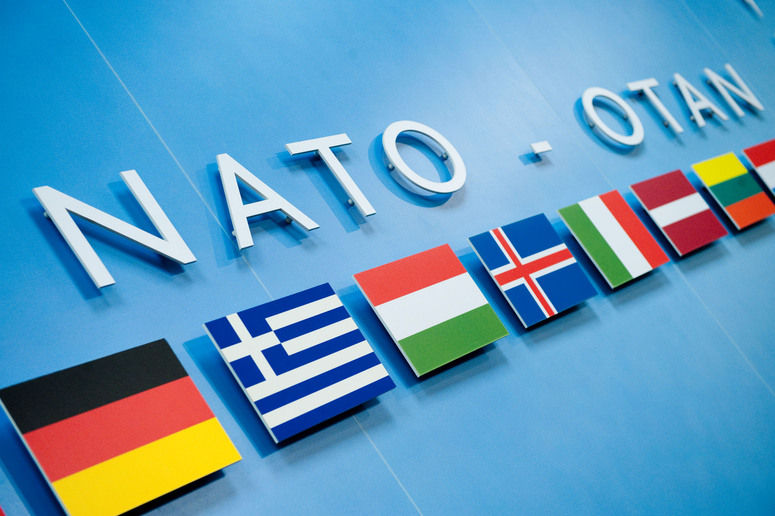
Collective defense is one of the most important concepts associated with NATO. Article 5 is often described as the foundation of the alliance because it establishes the principle that an armed attack against one member concerns the entire alliance.
Article 5 has been invoked only once in NATO’s history, following the terrorist attacks against the United States on September 11, 2001. The alliance responded through a range of measures, including support for the United States and subsequent security operations.
Collective defense is intended to provide deterrence as well as a mechanism for responding to attacks. The idea is that a potential aggressor must consider the combined political and military capabilities of the alliance rather than the capabilities of an individual member.
NATO’s Role in Modern Security
In the modern security environment, NATO addresses a wide range of issues. Traditional military threats remain important, but the organization also considers cyber defense, terrorism, hybrid threats, emerging technologies, resilience, and other security challenges.
Cybersecurity has become particularly important because governments, military organizations, infrastructure, and communication systems increasingly depend on digital technology. NATO works with its members to improve cyber defense capabilities and information sharing.
The organization also conducts exercises and develops policies intended to strengthen preparedness. These activities demonstrate how the alliance has adapted its security agenda to technological and geopolitical changes.
Importance of NATO in International Relations
Understanding the full form of NATO provides only the starting point for understanding the organization. NATO is also important because it represents one of the world’s major examples of long-term international security cooperation.
The alliance connects North American and European countries through common institutions and defense commitments. Its activities can influence diplomatic relationships, defense planning, military cooperation, and broader discussions about European and transatlantic security.
NATO also maintains relationships with partner countries and international organizations. These partnerships allow it to cooperate on areas of shared interest even when a country is not a full NATO member.
NATO and the United Nations
NATO and the United Nations are different organizations with different purposes and structures. The United Nations is a global organization that addresses international peace and security along with economic, humanitarian, development, and other issues. NATO, in contrast, is a regional political and military alliance focused primarily on the security of its members.
Despite these differences, NATO and the United Nations have interacted on various international security matters. NATO activities may take place in cooperation with or under mandates associated with international institutions, depending on the circumstances.
Understanding this distinction helps avoid confusion between NATO as a military-political alliance and the United Nations as a broader global organization.
NATO’s Importance for Students
Students often encounter NATO while studying history, geography, political science, international relations, or current affairs. Knowing the full form of NATO helps students understand references to the organization in textbooks, newspapers, examinations, and international affairs discussions.
For students, it is useful to remember three basic points: NATO stands for North Atlantic Treaty Organization, it was established in 1949, and collective defense is one of its central principles. Students can then build a broader understanding by studying NATO’s history, membership expansion, decision-making system, and role in international security.
Learning these concepts can also make it easier to understand major geopolitical developments and relationships between European and North American countries.
Common Questions About NATO
One common question is whether NATO is only a military organization. NATO has a strong military component, but it is also a political alliance. Member countries regularly consult on security issues and make collective decisions.
Another common question concerns NATO’s founding. The alliance was established in 1949 by twelve founding countries. Since then, its membership has expanded significantly.
People also frequently ask what NATO’s main principle is. Collective defense is central to the alliance, particularly the principle expressed in Article 5 of the North Atlantic Treaty.
Understanding the full form of NATO and these basic concepts provides a useful foundation for learning more about international security and global affairs.
NATO and the Future of Global Security
NATO continues to operate in an international environment that is different from the one that existed when the alliance was founded. Modern security challenges include conventional military threats as well as cyberattacks, technological competition, terrorism, disinformation, infrastructure risks, and other emerging issues.
The alliance therefore needs to adapt its strategies, defense planning, and cooperation mechanisms as circumstances change. Technology is likely to remain an important part of future security planning, particularly in areas such as artificial intelligence, cybersecurity, communications, surveillance, and autonomous systems.
At the same time, NATO’s basic purpose of collective security remains central to its identity. Its future role will depend on how member countries respond collectively to changing international conditions.
Conclusion
The full form of NATO is North Atlantic Treaty Organization, an international political and military alliance established in 1949. It was created to strengthen collective security and cooperation among countries in North America and Europe. Over time, NATO has expanded its membership, developed new partnerships, and adapted to changing security challenges.
NATO’s importance comes from its combination of political consultation and military cooperation. The principle of collective defense, particularly Article 5, remains one of its defining features. For students and readers interested in international affairs, understanding NATO’s history, purpose, structure, and changing role provides valuable insight into modern global security. Learning the full form of NATO is therefore only the first step toward understanding one of the world’s most significant international alliances.