
Introduction
Computers have become an essential part of modern life. From education and business to entertainment and communication, people use computers for different activities every day. However, several important components work together to make a computer function properly. One of the most important components is the CPU, which is responsible for processing instructions and performing calculations.
Many students, computer beginners, and technology enthusiasts often search for the full form of CPU to understand its meaning and purpose. The CPU is commonly known as the brain of a computer because it controls and manages various operations. Without it, a computer cannot perform the tasks required by users.
Understanding the CPU is important for anyone interested in computer technology. This article explains its full form, meaning, working process, components, different types, and importance in everyday life.
What Is the Full Form of CPU?
The full form of CPU is Central Processing Unit. It is one of the most important hardware components of a computer system. The CPU processes instructions received from computer programs and performs calculations based on those instructions.
The Central Processing Unit manages different operations, including mathematical calculations, logical decisions, and data processing. It also coordinates with other computer components, such as memory, storage devices, and input and output devices.
In simple words, whenever someone opens an application, types a document, watches a video, or plays a computer game, the CPU helps execute the instructions required to complete that activity. Its performance directly influences how efficiently a computer handles different tasks.
What Is a CPU in a Computer?
A CPU is an electronic processing component that executes instructions provided by software. It receives information, processes it according to programmed instructions, and produces the required results.
Most modern CPUs are installed on the motherboard inside desktop computers and laptops. They are generally designed as small chips containing millions or billions of transistors. These transistors help the processor perform complex operations at extremely high speeds.
The CPU works closely with RAM, storage, and other hardware components. RAM temporarily stores information that the processor needs quickly, while storage devices keep files and applications for long-term use.
A powerful CPU can handle demanding applications, multitasking, and complicated calculations more efficiently. This makes it an important factor when choosing a computer for personal, educational, or professional purposes.
Main Functions of a CPU
The CPU performs several important functions that allow a computer to operate correctly. Its responsibilities include processing information, controlling hardware operations, and executing software instructions.
1. Processing Data
One of the primary functions of a CPU is processing data. It receives information from different sources and performs the required operations. For example, when a user calculates numbers using a calculator application, the processor performs the mathematical operations and displays the result.
2. Executing Instructions
Every computer program contains instructions that explain what the system needs to do. The CPU reads and executes these instructions one by one or simultaneously, depending on its architecture and capabilities.
3. Performing Calculations
A processor handles mathematical operations such as addition, subtraction, multiplication, and division. It also performs logical comparisons that help applications make decisions.
4. Controlling Computer Operations
The CPU coordinates different hardware components to ensure that they work together properly. It manages communication between memory, input devices, output devices, and other system components.
5. Managing Multitasking
Modern processors can handle multiple tasks efficiently. This allows users to browse the internet, listen to music, edit documents, and run different applications without constantly closing programs.
Main Components of a CPU
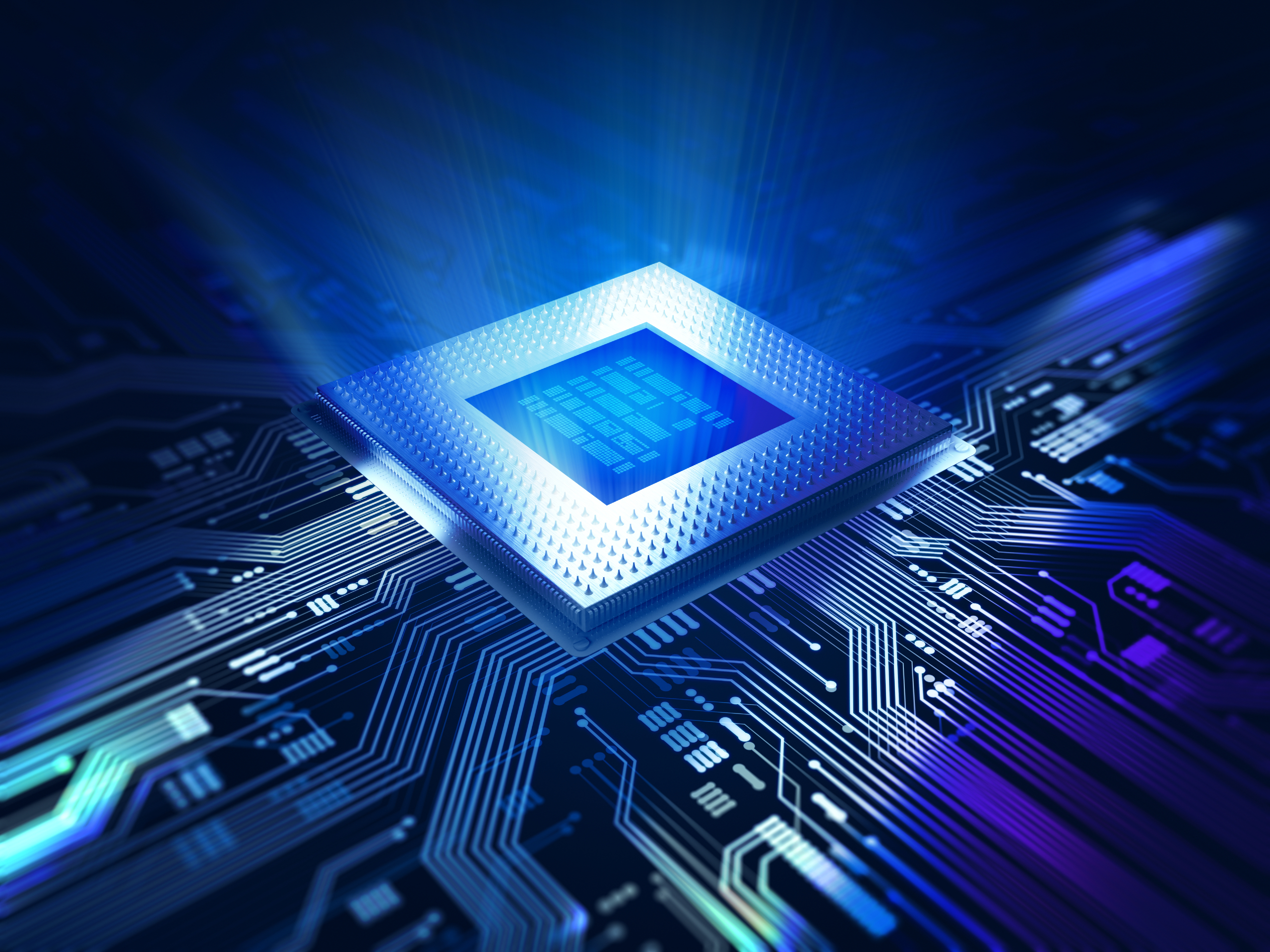
A processor contains several important internal components. Each component performs a specific function to support the overall processing system.
1. Arithmetic Logic Unit (ALU)
The Arithmetic Logic Unit, commonly called ALU, performs mathematical and logical operations. It handles calculations such as addition, subtraction, multiplication, and division.
Apart from mathematical calculations, the ALU also compares values and performs logical operations. These functions help computer programs make decisions based on different conditions.
For example, when a program checks whether one number is greater than another, the ALU performs the comparison. It plays an essential role in the execution of computer instructions.
2. Control Unit (CU)
The Control Unit manages and coordinates the activities of different CPU components. It receives instructions, interprets them, and directs other parts of the processor to perform the required operations.
The CU also helps control the movement of data between the processor, memory, and other hardware devices. It ensures that instructions are executed in the correct sequence.
Without the Control Unit, different components would not be able to coordinate their activities effectively.
3. Registers
Registers are small and extremely fast storage locations inside the processor. They temporarily hold data, instructions, and addresses that the CPU needs while performing operations.
Registers help reduce the time required to access frequently needed information. They are generally faster than RAM because they are located directly inside the processor.
Different registers perform different functions, including storing instructions, memory addresses, and intermediate calculation results.
4. Cache Memory
Cache memory is a small, high-speed memory located inside or close to the CPU. It stores frequently used data and instructions so that the processor can access them quickly.
Cache memory is commonly divided into three levels: L1, L2, and L3. L1 is generally the smallest and fastest, while L3 is usually larger and shared among processor cores in many modern designs.
Cache memory improves processing efficiency by reducing the need to repeatedly retrieve information from slower main memory.
How Does a CPU Work?
The CPU follows a process to receive, understand, and execute instructions. This process is commonly explained through the instruction cycle, also known as the fetch-decode-execute cycle.
1. Fetch: The processor retrieves an instruction from memory. It identifies the next instruction that needs to be processed.
2. Decode: The Control Unit interprets the instruction and determines what operation must be performed.
3. Execute: The processor performs the required operation. This may involve calculations, comparisons, or transferring information between different components.
4. Store: The result is stored in a register or memory location so that it can be used by another instruction or displayed to the user.
These steps happen extremely quickly, allowing computers to perform millions or billions of operations every second. Modern processors also use advanced techniques to execute multiple instructions efficiently.
Different Types of CPUs

CPUs are available in different designs and configurations. Each type is developed to meet particular computing requirements.
1. Single-Core Processor
A single-core processor contains one processing core. It can execute instructions but has limited multitasking capabilities compared with modern multicore processors.
These processors were commonly used in older computers and basic electronic devices. They are useful for understanding the early development of computer processing technology.
2. Dual-Core Processor
A dual-core processor contains two processing cores within a single processor chip. Each core can execute instructions independently, improving multitasking performance.
These processors are suitable for basic computing activities, such as browsing, document editing, and watching videos.
3. Quad-Core Processor
A quad-core processor contains four processing cores. It offers better multitasking capabilities and can handle more demanding applications than many basic dual-core processors.
Quad-core processors are commonly used in laptops, desktop computers, and several other electronic devices.
4. Hexa-Core Processor
A hexa-core processor contains six processing cores. It is designed to manage multiple tasks efficiently and offers good performance for demanding applications.
These processors are often found in gaming computers, productivity systems, and modern laptops.
5. Octa-Core Processor
An octa-core processor contains eight processing cores. It can handle several processing tasks efficiently and is commonly used in smartphones, laptops, and desktop computers.
The actual performance depends on factors such as processor architecture, clock speed, power efficiency, and software optimization.
Importance of CPU in Everyday Life
The CPU plays an important role in modern digital activities. Almost every computing task depends on processing capabilities to some extent.
In education, processors help students attend online classes, prepare assignments, conduct research, and use educational applications. In offices, they support spreadsheets, presentations, communication software, and business management systems.
In entertainment, processors help run games, stream videos, edit photographs, and play music. Modern smartphones also contain processors that manage applications, camera operations, internet browsing, and background activities.
Businesses use powerful processors for data analysis, financial calculations, software development, and managing large information systems. Scientific research also depends on advanced processing technology to perform complex calculations and simulations.
As technology continues to develop, processors are becoming more powerful and energy-efficient, supporting increasingly advanced digital services.
Difference Between CPU and GPU
CPU and GPU are two important processing components, but they are designed for different purposes.
| Feature | CPU | GPU |
|---|---|---|
| Full form | Central Processing Unit | Graphics Processing Unit |
| Main purpose | General processing | Graphics and parallel processing |
| Core design | Usually fewer powerful cores | Usually many smaller processing cores |
| Tasks | General computing | Graphics rendering and parallel workloads |
| Applications | Operating systems and software | Gaming, graphics, and AI workloads |
The CPU manages general computer operations, while the GPU is designed to process many similar operations simultaneously. Both components work together to improve overall computer performance.
What Factors Affect CPU Performance?
Several factors determine how efficiently a processor performs different tasks. Understanding these factors can help users select a suitable computer.
Clock Speed: Clock speed measures how many processing cycles a CPU can perform per second. It is generally measured in gigahertz (GHz). However, higher clock speed does not always mean better overall performance.
Core Count: A processor with multiple cores can handle several processing tasks simultaneously. This is especially useful for multitasking and applications designed for parallel processing.
Cache Size: A larger cache can help the processor access frequently required information more quickly, although the actual benefit depends on the workload and processor design.
Architecture: Processor architecture influences how efficiently instructions are processed. Newer architectures may offer better performance and energy efficiency.
Thermal Management: Excessive heat can reduce processor speed to protect the hardware. Proper cooling helps maintain stable performance during demanding activities.
Conclusion
The CPU is one of the most essential components of a computer system. Its full form, Central Processing Unit, explains its central role in processing instructions, performing calculations, and managing different computing operations.
From basic document editing to advanced gaming, software development, and scientific research, processors support a wide range of digital activities. Their internal components, including the ALU, Control Unit, registers, and cache memory, work together to execute instructions efficiently.
Understanding the CPU helps students, beginners, and technology enthusiasts develop a better knowledge of computer hardware. As computing technology continues to advance, processors will remain an important foundation of modern digital devices and everyday technological experiences.