
Introduction
India is one of the world’s oldest civilizations and largest democracies, known for its rich cultural heritage, diverse traditions, and remarkable history. The country is home to numerous languages, religions, festivals, and communities that contribute to its unique national identity. Many students and general knowledge enthusiasts search for the full form of India because they want to understand what the country’s name represents and whether it has an official expansion.
An important fact to understand is that India does not have an official full form. Unlike abbreviations such as CPU or DNA, India is a proper name rather than an acronym formed from the initial letters of several words. However, different interpretations of the name have circulated in educational materials and online discussions. Learning about the origin of the name, its historical background, and its constitutional recognition helps readers distinguish established facts from popular explanations.
What Is the Full Form of India?
The direct answer is that India has no official full form. The name is not an abbreviation, and the Government of India does not recognize any particular phrase as its expanded form. The word has developed through historical and linguistic traditions over many centuries, reflecting the country’s connections with ancient civilizations and geographical regions.
Some websites and informal educational sources suggest phrases such as “Independent Nation Declared In August” as the full form of India. Such expressions are unofficial and should not be presented as historically established or constitutionally recognized meanings. They are examples of backronyms, which are phrases created after a word already exists to fit its letters.
When answering questions about the full form of India, the most accurate response is that India is the country’s name, not an acronym. Its actual significance is better understood by exploring its historical origins and the different names associated with the nation.
Origin and Historical Meaning of the Name India
The name India has a long history connected with the Indus River and the civilizations that developed around it. The term ultimately traces back to the ancient name of the river, known in Sanskrit as Sindhu. The Indus River played an important role in the development of early settlements, trade networks, agriculture, and cultural exchange across the northwestern part of the Indian subcontinent.
The Sanskrit word Sindhu referred to the river and, in some contexts, the surrounding region. As people from different linguistic communities interacted with the area, the name evolved through several forms. Persian speakers used a form associated with Hindu, while Greek writers adopted the term Indos for the river and India for the surrounding land. Over time, the name India became widely used in geographical and historical writing.
This linguistic journey explains why the country’s name has an identifiable historical origin even though it does not possess a full form. Rather than representing a modern phrase, India reflects centuries of cultural contact, geographical knowledge, and language development.
Why Is India Also Called Bharat?
Bharat is another important name for the country and has deep roots in Indian history, literature, and cultural traditions. It is widely used in Indian languages and appears in the country’s Constitution alongside India. The name is associated with ancient Indian traditions, including references to Bharatavarsha in historical and religious literature.
Several traditional explanations connect Bharat with King Bharata, a figure appearing in ancient Indian texts. Different traditions describe Bharata in different ways, so the name’s cultural significance is broader than a single historical explanation. Over many generations, Bharat became an important expression of the land’s civilizational identity and cultural continuity.
The relationship between Bharat and India demonstrates how a country can have more than one established name. India is widely recognized internationally, while Bharat is deeply rooted in indigenous linguistic and cultural traditions. Both names refer to the same country, although their usage can vary according to language, context, and tradition.
What Does the Indian Constitution Say About the Country’s Name?

The Constitution of India provides the clearest official explanation of the country’s name. Article 1 states: “India, that is Bharat, shall be a Union of States.” This wording recognizes both India and Bharat as names of the same nation.
The provision is significant because it connects the country’s modern constitutional identity with its historical and cultural heritage. It also establishes India as a union of states, reflecting the federal structure through which the country is governed. The Constitution does not expand the word India into a phrase made from individual letters.
Understanding this distinction is useful for students preparing for school examinations, competitive tests, and general knowledge quizzes. When asked for the official full form of India, the correct response is that no official full form exists. When asked for its constitutional name, the appropriate answer is India, that is Bharat.
The Difference Between India, Bharat, and Hindustan
India, Bharat, and Hindustan are three names commonly associated with the same geographical and cultural region, but they have different historical backgrounds and patterns of use.
India developed through linguistic forms connected with the Indus River and became widely used in international geography, diplomacy, and modern political institutions. Bharat comes from ancient Indian linguistic and cultural traditions and has constitutional recognition. Hindustan developed through Persian and related historical usage and has often been used to refer to the Indian subcontinent or particular regions within it, depending on the period.
Although these names can refer to the same country in contemporary conversation, they are not identical in origin or historical usage. Bharat is a constitutional name, India is also a constitutional name and the most common international designation, while Hindustan is a historical and cultural term whose meaning has varied over time.
Knowing these distinctions gives readers a more complete understanding of the country’s identity and prevents confusion between a nation’s official name and the informal interpretations sometimes circulated online.
Why Do People Search for the Full Form of India?
Many people search for the full form of India because they encounter similar questions about abbreviations in school textbooks, quizzes, examinations, and online educational content. Since many technical and organizational terms have full forms, readers may naturally assume that the name of a country follows the same pattern.
Another reason is the popularity of memorable phrases created to explain familiar words. These phrases may appear in social media posts, short videos, classroom discussions, or general knowledge articles. Although they can be entertaining, they do not automatically represent authentic linguistic history.
Students should therefore learn to distinguish between official definitions, historical explanations, and creative wordplay. For factual questions, reliable references such as the Constitution and established historical sources provide stronger evidence than unattributed online claims.
Understanding why the question arises is just as useful as knowing the answer. It encourages critical thinking, improves general knowledge, and helps learners avoid repeating incorrect information in academic assignments or examinations.
Important Facts About India
India has many distinctive features that contribute to its national identity. It is located in South Asia and has a diverse landscape that includes the Himalayan mountain range, fertile plains, deserts, plateaus, forests, and long coastlines. These geographical differences influence agriculture, food, clothing, architecture, and regional lifestyles.
The country is also known for its linguistic diversity. Hindi and English are used for official purposes at the Union level under the applicable constitutional and legal framework, while states and union territories use different languages according to their laws and administrative practices. The Constitution recognizes 22 languages in its Eighth Schedule, reflecting an important part of the country’s linguistic heritage.
India is a parliamentary democratic republic with a written Constitution. Its institutions include the President, Parliament, the judiciary, state governments, and local administrative bodies. The country also celebrates national occasions such as Independence Day on 15 August and Republic Day on 26 January. These events commemorate independence from British rule and the commencement of the Constitution, respectively.
The Importance of Understanding India’s Name
A country’s name is more than a label used on maps or official documents. It can represent historical experiences, cultural traditions, geographical connections, and shared memories. In India’s case, the names India and Bharat demonstrate how different linguistic and cultural histories can coexist within a single national identity.
Learning about the origin of the name also provides insight into the movement of languages and ideas across regions. The connection between Sindhu, the Indus River, and the name India illustrates how geographical features have influenced the names of civilizations and countries. Meanwhile, Bharat reflects a different historical and cultural tradition that remains meaningful in modern India.
For students, this knowledge is useful in history, civics, geography, and general awareness. It also promotes responsible learning by encouraging people to verify claims before accepting them as facts. Recognizing that India has no official acronym-based full form is a simple but important example of distinguishing evidence-based knowledge from popular assumptions.
Common Misconceptions About the Full Form of India
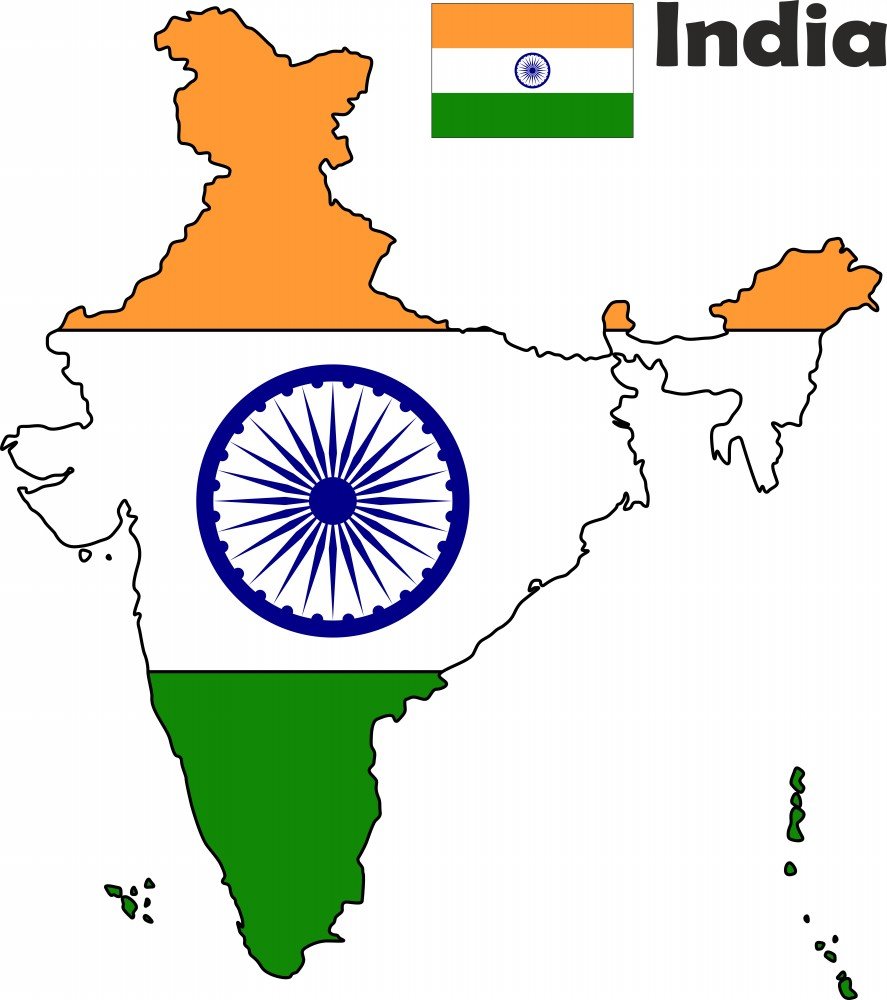
One common misconception is that every country name must have a full form. In reality, most country names are proper nouns with historical, geographical, or linguistic origins rather than abbreviations.
Another misconception is that a phrase created from the letters in INDIA must be official if it appears frequently online. Repetition does not establish authenticity. An expansion becomes official only when supported by an appropriate authoritative source, and no such official expansion is recognized for India.
Some people also assume that India and Bharat are names with completely separate national meanings. In fact, the Constitution explicitly identifies them as names of the same country. Their historical origins differ, but their modern constitutional reference is shared.
Correcting these misunderstandings helps students provide accurate answers in examinations and educational discussions. It also demonstrates why checking the source of a claim matters, particularly when dealing with history, national identity, and constitutional information.
Frequently Asked Questions
1. What is the full form of India?
India has no official full form because it is a proper name, not an acronym. The name has historical and linguistic roots associated with the Indus River.
2. Is “Independent Nation Declared In August” the official full form of India?
No. This is an unofficial phrase sometimes circulated online. It is not recognized as the official or historical expansion of India’s name.
3. What is the official name of India according to the Constitution?
Article 1 of the Constitution states, “India, that is Bharat, shall be a Union of States.” Both India and Bharat are constitutionally recognized names for the country.
4. Why is India called Bharat?
Bharat has deep roots in Indian cultural and literary traditions. Traditional explanations often associate the name with King Bharata and references to Bharatavarsha.
5. Where does the word India come from?
The word India ultimately derives from historical forms connected with the Indus River, whose ancient Sanskrit name is Sindhu. The name evolved through Persian and Greek linguistic traditions.
6. Is Bharat different from India?
No. In the Constitution, Bharat and India refer to the same country. The names have different historical origins and cultural associations, but both are officially recognized.
Conclusion
The question about the full form of India is common among students and people interested in general knowledge. The most accurate answer is that India has no official full form because it is a proper name rather than an abbreviation. Its name has historical connections with the Indus River and has evolved through several languages over many centuries.
The country is also known as Bharat, a name deeply connected with Indian cultural traditions and explicitly recognized in Article 1 of the Constitution. Understanding the origins and meanings of these names provides a clearer picture of India’s history, diversity, and constitutional identity.
Rather than memorizing unofficial phrases created from the letters of the word INDIA, readers should focus on verified historical and constitutional facts. This approach encourages accurate learning and helps people appreciate the many traditions that contribute to the identity of one of the world’s most diverse nations.