
Introduction
Science helps us understand how living organisms grow, develop, and pass characteristics from one generation to another. One of the most important discoveries in biology is DNA, a molecule that carries the genetic information required for the development and functioning of living organisms. From determining inherited characteristics to supporting medical research, DNA plays a fundamental role in understanding life. Students frequently encounter this term in biology textbooks, competitive examinations, and general science discussions.
The full form of DNA is Deoxyribonucleic Acid. It is the hereditary material found in humans and most other living organisms. DNA contains instructions that help cells produce proteins, regulate biological activities, and maintain essential functions. It also explains why children often share physical characteristics with their parents while remaining genetically unique. Understanding DNA provides a foundation for learning about genetics, evolution, biotechnology, forensic science, and modern healthcare.
What Is DNA?
DNA is a complex biological molecule that stores and transfers genetic instructions. These instructions influence numerous characteristics, including certain physical features, biological processes, and inherited tendencies. In humans, most DNA is located inside the nucleus of a cell, where it is organized into structures called chromosomes. A smaller amount of DNA is also present in mitochondria, which help cells produce usable energy.
DNA works like a biological instruction manual. Different sections of DNA contain information that cells use to build proteins and regulate various activities. Proteins are essential for tissue formation, immune responses, chemical reactions, and many other functions. Although DNA is remarkably stable, changes can occur in its sequence. These changes are called mutations and may have no noticeable effect, contribute to genetic variation, or sometimes cause disease. Studying DNA helps scientists understand both the similarities and differences among living organisms.
What Does Deoxyribonucleic Acid Mean?
The scientific name Deoxyribonucleic Acid describes the molecule’s chemical composition. The term “deoxyribo” refers to deoxyribose, a type of sugar that forms part of the DNA structure. “Nucleic acid” identifies the class of biological molecules to which DNA belongs. Together, these terms describe a molecule made from repeating units that carry genetic information.
Each repeating unit is called a nucleotide. A DNA nucleotide contains three components: a deoxyribose sugar, a phosphate group, and one nitrogenous base. The four bases found in DNA are adenine, thymine, guanine, and cytosine. Their specific order creates the genetic code. The sequence of these bases provides instructions that cells can interpret to carry out biological processes. Even small differences in DNA sequences can contribute to variations between individuals, making the molecule central to the study of inheritance and biological diversity.
Structure of DNA
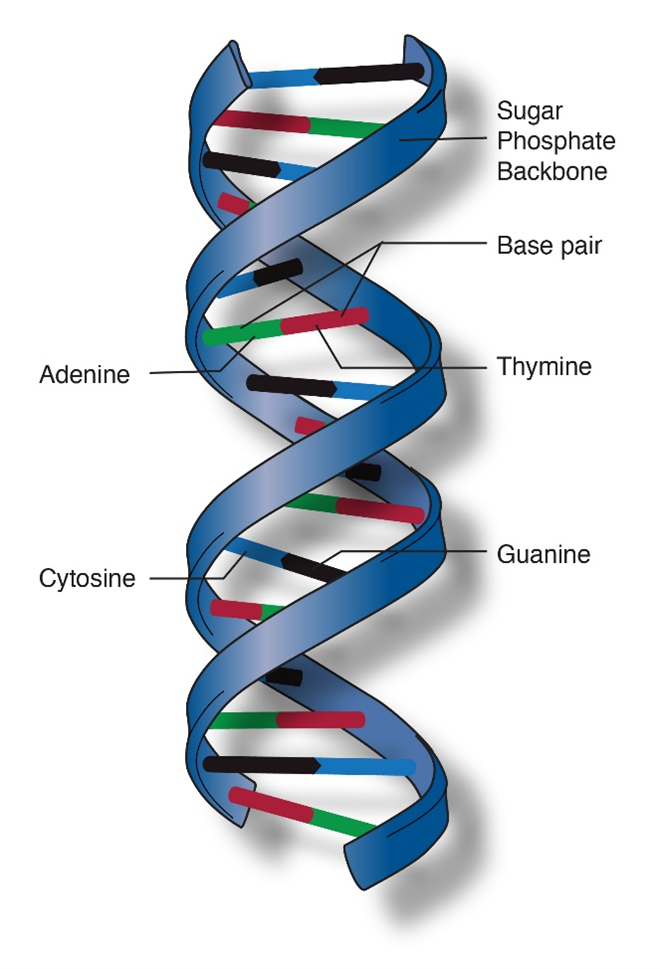
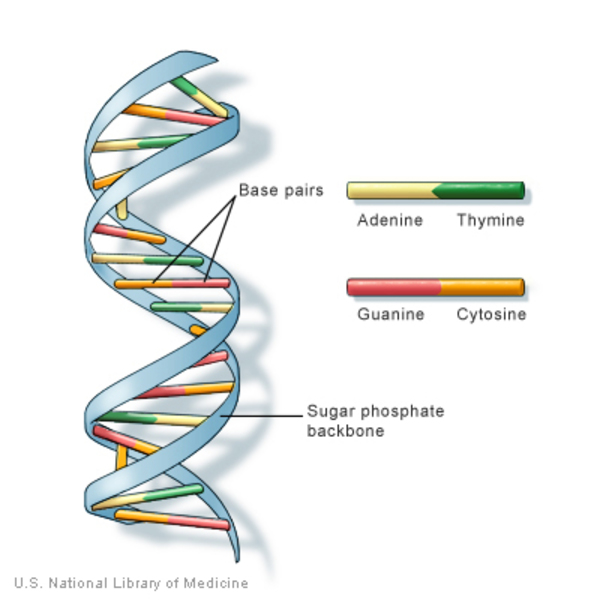
DNA has a distinctive structure known as a double helix. It is often compared to a twisted ladder because its two strands wind around each other. The sides of this ladder consist of alternating sugar and phosphate groups, while the nitrogenous bases form the connecting steps. This arrangement allows DNA to store a large amount of information in a compact and organized form.
The two strands are held together through complementary base pairing. Adenine pairs with thymine, while guanine pairs with cytosine. These specific pairings are essential because they allow DNA to be copied accurately before cell division. If one strand is used as a template, its complementary sequence can be determined from the base-pairing rules. This structural feature supports the reliable transmission of genetic information from one cell to another and, through reproduction, from parents to their offspring.
Main Components of DNA
DNA consists of four nitrogenous bases, a sugar, and phosphate groups. Each component contributes to the molecule’s structure or its ability to store genetic instructions. The four bases are commonly represented by the letters A, T, G, and C. Their sequence, rather than simply their presence, determines the information carried by a DNA segment.
The sugar and phosphate groups form the backbone of each strand, providing stability and connecting the nucleotides. The nitrogenous bases face inward and pair with bases on the opposite strand. Because adenine pairs with thymine and guanine pairs with cytosine, the two strands complement one another. This organization makes DNA replication possible and helps preserve genetic information during cell division. The combination of these relatively simple chemical components creates an information-storage system capable of supporting the extraordinary complexity of life.
Important Functions of DNA
The primary function of DNA is to store genetic information. This information influences how an organism develops, how its cells operate, and which characteristics may be inherited by future generations. DNA also provides the instructions needed to produce RNA and, in many cases, proteins. These products carry out important activities, including metabolism, cell signaling, tissue repair, and immune defense.
Another major function of DNA is the transmission of hereditary information. Before most cells divide, their DNA is replicated so that each new cell can receive a copy of the genetic material. This process is necessary for growth, development, and the replacement of damaged or aging cells. DNA also contributes to genetic variation through mutations and the reshuffling of genetic material during sexual reproduction. Such variation is important for evolution because it creates differences upon which natural selection can act.
Role of DNA in Heredity
Heredity is the process through which biological characteristics pass from parents to their offspring. DNA plays a central role in this process because genes are sections of DNA that contain functional instructions. Humans generally inherit one set of nuclear chromosomes from each biological parent, giving them a combination of genetic information from both sides of the family.
These inherited genes contribute to characteristics such as natural hair texture, aspects of eye color, and certain blood group traits. However, many human characteristics are influenced by multiple genes and environmental factors. For example, height depends on numerous genetic influences as well as nutrition and general health during development. Therefore, DNA does not determine every aspect of an individual’s life in isolation. Instead, it provides biological instructions that interact with environmental conditions to influence how many traits develop.
DNA and Chromosomes
Chromosomes are organized structures made primarily of DNA and proteins. In most human body cells, the nucleus contains 46 chromosomes arranged into 23 pairs. One chromosome in each pair is generally inherited from each biological parent. The 23rd pair consists of sex chromosomes, although chromosome patterns and variations can differ among individuals.
DNA is extremely long, so it must be packaged efficiently to fit inside the cell nucleus. Proteins called histones help organize and compact DNA into chromatin, which can form visible chromosomes during cell division. This packaging protects the genetic material and helps regulate which genes are accessible for use. Chromosomes also make it easier for cells to distribute DNA accurately when they divide. Understanding the relationship between DNA, genes, and chromosomes helps explain how genetic information is organized and passed between cells and generations.
Difference Between DNA and RNA
DNA and RNA are both nucleic acids, but they have different structures and biological roles. DNA generally stores long-term genetic information, whereas RNA helps use and regulate that information. RNA is involved in several stages of protein production and also performs other functions within cells.
DNA usually contains two complementary strands, while many RNA molecules consist of a single strand. DNA uses deoxyribose sugar and the bases adenine, thymine, guanine, and cytosine. RNA contains ribose sugar and uses uracil instead of thymine. Different types of RNA, including messenger RNA, transfer RNA, and ribosomal RNA, contribute to protein synthesis. Although DNA and RNA are closely related, their differences allow cells to store genetic instructions and use them efficiently for essential biological activities.
Importance of DNA in Medical Science
DNA research has transformed modern medicine by helping scientists investigate inherited disorders, understand diseases, and develop more targeted diagnostic approaches. Genetic testing can identify particular changes in DNA that are associated with certain inherited conditions. Depending on the test and the circumstances, the results may help healthcare professionals assess risk, confirm a diagnosis, or guide decisions about further testing and treatment.
DNA analysis also contributes to cancer research. Some cancers develop when changes accumulate in genes that regulate cell growth and division. Studying these changes can help researchers understand how a tumor behaves and identify possible treatment options. In addition, advances in genetic technologies have supported research into gene therapy and personalized medicine. However, genetic tests have limitations, and a result does not always predict whether someone will develop a particular condition. Medical interpretation, privacy protection, and appropriate counseling remain important parts of responsible genetic testing.
Uses of DNA in Forensic Science
Forensic science uses DNA analysis to help investigate crimes and identify individuals. Biological materials such as blood, saliva, hair roots, or skin cells may contain DNA that can be examined under suitable conditions. Investigators can compare DNA profiles obtained from evidence with reference samples to determine whether the profiles are consistent with a possible source.
DNA testing is also used in parentage investigations and the identification of missing persons or human remains. In many cases, DNA evidence can provide valuable information when combined with other investigative findings. However, results must be interpreted carefully because contamination, sample quality, mixtures of biological material, and laboratory procedures can affect conclusions. A DNA match should be evaluated within the full context of the evidence rather than treated as an automatic explanation of what happened.
DNA in Modern Biotechnology
Biotechnology uses biological systems and genetic information to develop products, technologies, and scientific solutions. DNA analysis enables researchers to study genes, compare organisms, and investigate how particular genetic changes affect biological functions. Scientists can also use genetic engineering techniques to modify DNA for specific research or practical purposes.
One important application is the production of certain medicines. For example, genetically engineered microorganisms can produce human insulin for diabetes treatment. DNA-based methods are also used in agricultural research to study crop characteristics, improve disease resistance, and investigate responses to environmental stress. In laboratories, DNA sequencing helps scientists examine genetic variation and study relationships among organisms. These applications offer significant benefits, but they also require careful consideration of safety, ethical responsibilities, environmental effects, and the protection of genetic information.
How Is DNA Tested?
DNA testing generally begins with collecting a biological sample, such as saliva, a cheek-cell swab, or blood, depending on the purpose of the test. The laboratory extracts DNA from the sample and uses suitable techniques to examine selected regions or determine the sequence of genetic material. Different tests are designed to answer different questions, so the method depends on whether the goal is identifying a person, investigating an inherited condition, or studying genetic variation.
The results are then analyzed and interpreted according to the test’s purpose. A forensic DNA profile, for instance, is different from a medical test that examines genes associated with a disease. Not every DNA test examines every gene, and some tests may produce uncertain or incomplete findings. Sample quality, the scope of the analysis, and the scientific limitations of the method all influence what conclusions can be drawn. Testing should be performed by qualified laboratories using appropriate procedures.
Conclusion
DNA is one of the most important molecules in biology because it stores genetic information, supports cellular functions, and enables hereditary characteristics to pass from one generation to another. Its double-helix structure and complementary base pairs allow genetic instructions to be copied and maintained with remarkable accuracy. Research on DNA has also expanded scientific understanding of genetics, medicine, forensic investigations, and biotechnology.
The full form of DNA is Deoxyribonucleic Acid, and its importance extends far beyond a simple scientific definition. By studying DNA, researchers can better understand inherited traits, investigate certain diseases, identify biological relationships, and develop new technologies. Although genetic information provides valuable insights, it must be interpreted carefully because genes interact with environmental factors and do not explain every aspect of human health or behavior. Learning about DNA is therefore an essential step toward understanding the science of life and the discoveries shaping modern biology.

