
Introduction
Space exploration has always fascinated people because it helps us understand the universe, discover new worlds, and learn more about our own planet. From the first human journeys into space to modern missions exploring distant planets, scientific organizations have played a major role in expanding human knowledge. One of the most recognized organizations in this field is NASA, which has contributed significantly to astronomy, engineering, climate science, and space technology.
The full form of NASA is National Aeronautics and Space Administration. It is the United States government agency responsible for civilian space exploration, aeronautics research, and many scientific investigations related to Earth and the universe. Established in 1958, NASA has become a global symbol of scientific innovation and exploration. Its work includes sending astronauts into space, developing advanced spacecraft, studying planets, and observing changes in Earth’s environment.
Understanding the full form of NASA is only the beginning of learning about this important organization. Its history, missions, scientific discoveries, and technological achievements reveal how human curiosity can lead to extraordinary progress.
What Is the Full Form of NASA?
The full form of NASA is National Aeronautics and Space Administration. Each part of this name represents an important aspect of the organization’s responsibilities. National indicates that it is a United States government agency. Aeronautics refers to the science and technology of flight within Earth’s atmosphere, including aircraft design, aviation safety, and improved flight performance. Space Administration reflects its responsibilities for organizing and managing civilian space exploration and scientific missions.
NASA works with scientists, engineers, universities, research institutions, and international partners to explore questions about space and Earth. Its activities range from studying the atmosphere to investigating distant galaxies. The agency also develops spacecraft, scientific instruments, and technologies that make space missions possible.
People frequently search for the full form of NASA because the acronym appears in educational books, news reports, documentaries, and discussions about space. Learning its meaning provides a foundation for understanding the agency’s work and its influence on modern science.
History and Establishment of NASA
NASA was established on July 29, 1958, when United States President Dwight D. Eisenhower signed the National Aeronautics and Space Act. The agency officially began operations on October 1, 1958. Its creation followed growing international interest in space exploration during the early years of the Space Age.
Before NASA existed, the National Advisory Committee for Aeronautics, commonly known as NACA, conducted research on aircraft and aerodynamics. NASA inherited NACA’s research facilities, expertise, and many of its responsibilities. It expanded this foundation to include civilian space exploration and the development of technologies for traveling beyond Earth’s atmosphere.
The establishment of NASA marked an important turning point in American scientific research. During the following decades, the agency developed programs designed to send humans into space, launch scientific satellites, and investigate the Moon and planets. Its work also encouraged progress in computing, communications, materials science, and aerospace engineering.
Today, NASA continues to build on this history by conducting research that helps scientists understand the solar system, distant astronomical objects, and the changing conditions of our home planet.
Main Objectives of NASA
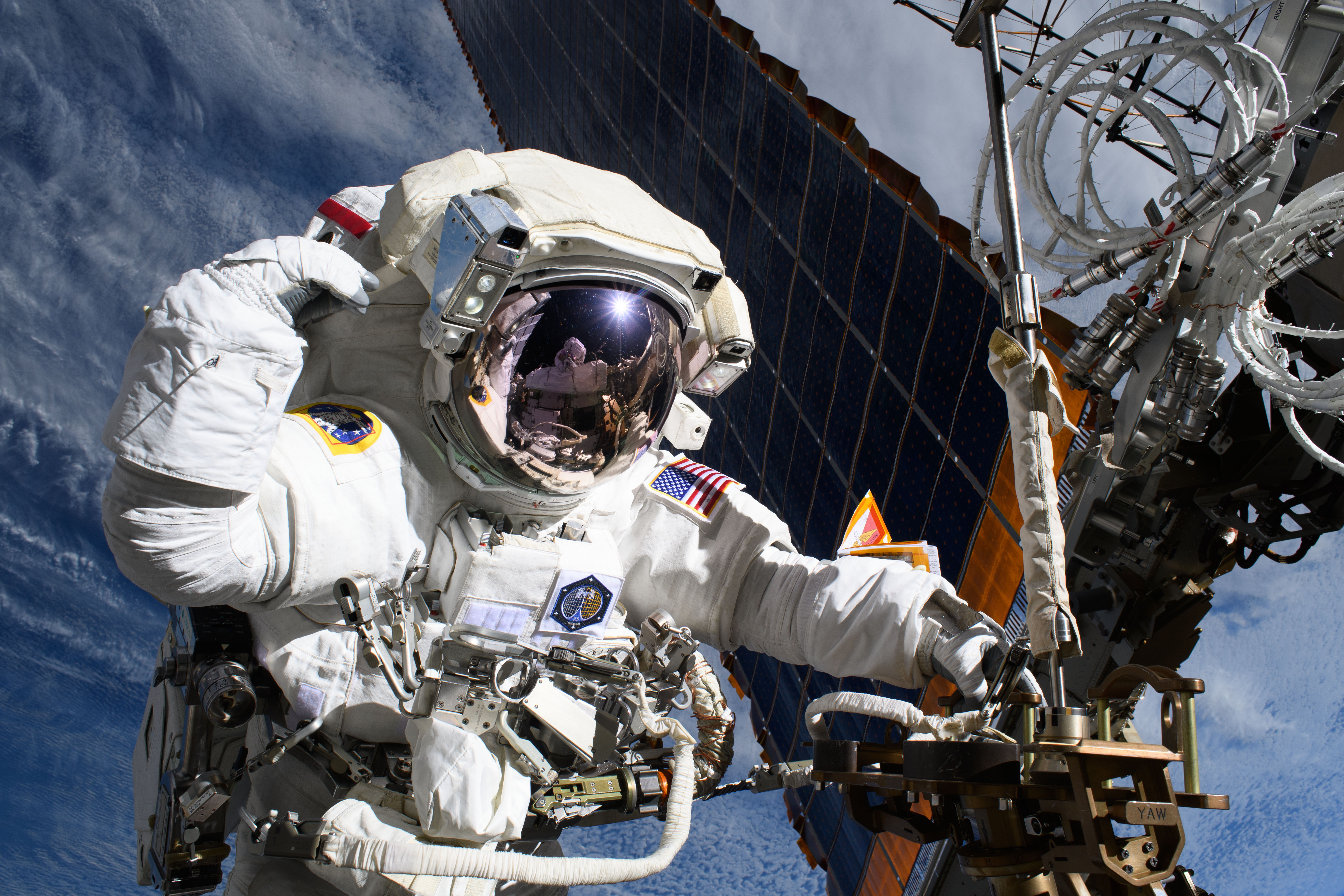
NASA has several major objectives that guide its scientific and technological activities. One of its primary goals is to expand human knowledge of the universe through observation, experimentation, and exploration. Space telescopes, planetary probes, and scientific satellites collect information that helps researchers investigate the origins of stars, the formation of planets, and the possibility of life beyond Earth.
Another objective is to develop safer and more efficient aviation technologies. NASA conducts aeronautics research to improve aircraft performance, reduce environmental impacts, and support advances in flight safety. This work benefits aviation researchers, manufacturers, and the wider transportation industry.
The agency also studies Earth using satellites and other scientific instruments. These systems measure atmospheric conditions, ocean temperatures, land changes, and other environmental factors. Such observations help researchers understand climate patterns and natural processes.
Human spaceflight is another important responsibility. NASA develops systems and conducts missions that allow astronauts to live and work in space. By supporting scientific experiments in microgravity and preparing for future exploration, the agency contributes to long-term efforts to make human space travel more capable and sustainable.
Major NASA Space Exploration Programs
NASA has developed several major programs throughout its history. Each program has addressed different scientific and engineering challenges while helping researchers improve their understanding of space.
The Mercury program was among the agency’s earliest human spaceflight initiatives. It focused on determining whether humans could safely travel into space and return to Earth. The Gemini program followed, helping NASA develop techniques for longer missions, spacewalks, and spacecraft rendezvous.
The Apollo program became one of NASA’s most famous achievements. Apollo 11 landed astronauts Neil Armstrong and Buzz Aldrin on the Moon on July 20, 1969, while Michael Collins remained in lunar orbit. Armstrong and Aldrin became the first humans to walk on the lunar surface.
Later programs included the Space Shuttle, which supported satellite deployment, scientific research, and construction activities in space. NASA also contributed to the International Space Station, where astronauts from different countries conduct experiments and demonstrate technologies for future missions.
These programs illustrate how NASA has progressed from early experiments in human spaceflight to complex international scientific projects.
NASA’s Role in Planetary Exploration
Planetary exploration is an important part of NASA’s scientific mission. By sending robotic spacecraft to other worlds, scientists can investigate the history, geology, atmospheres, and potential habitability of planets and moons.
NASA’s Mars exploration program has included orbiters, landers, and rovers. Robotic explorers such as Curiosity and Perseverance have studied Martian rocks, soil, and environmental conditions. Perseverance also collects and stores selected rock samples for potential future return to Earth through planned sample-return efforts.
The agency has also explored other destinations across the solar system. The Voyager spacecraft, launched in 1977, provided remarkable observations of the outer planets and later continued into interstellar space. The Juno mission has studied Jupiter’s atmosphere, magnetic field, and internal structure, while the Europa Clipper mission is investigating Jupiter’s icy moon Europa to assess whether conditions there could support life.
These missions demonstrate how robotic exploration can reach places that are difficult or dangerous for humans to visit. Their findings help researchers develop better theories about planetary formation and the possibility of habitable environments elsewhere.
NASA and Human Spaceflight
Human spaceflight remains one of NASA’s most visible areas of work. Astronauts travel into space to conduct experiments, operate scientific equipment, test technologies, and study the effects of microgravity on the human body.
The International Space Station is a major example of international cooperation in human spaceflight. It provides a laboratory where astronauts investigate biology, physics, materials science, and other subjects under conditions that cannot be fully reproduced on Earth. Research conducted there can support medical studies, improve engineering methods, and prepare humans for longer missions.
NASA’s Artemis program aims to return astronauts to the Moon and establish a foundation for future exploration. The program includes the Space Launch System rocket, the Orion spacecraft, and partnerships with commercial companies and international organizations. Its broader goals include developing capabilities for sustained lunar exploration and gaining experience relevant to future human missions to Mars.
Human spaceflight involves considerable challenges, including radiation exposure, equipment reliability, life-support requirements, and astronaut health. NASA’s research helps engineers and scientists address these issues while improving the safety and effectiveness of future missions.
Important Scientific Discoveries and Achievements
NASA has made numerous contributions to science and technology. Its missions have improved our understanding of the Moon, Mars, the outer planets, and objects beyond the solar system. The agency has also supported astronomical research through powerful observatories that examine the universe across different wavelengths of light.
The Hubble Space Telescope, launched in 1990, has helped scientists study distant galaxies, star formation, and the expansion of the universe. The James Webb Space Telescope, launched in December 2021, observes the universe primarily in infrared light. It allows researchers to investigate early galaxies, examine the atmospheres of selected exoplanets, and study the formation of stars and planetary systems.
NASA’s scientific satellites also monitor Earth. Their observations provide valuable information about hurricanes, wildfires, sea levels, vegetation, and atmospheric changes. These measurements help researchers understand environmental processes and improve scientific models.
The agency’s achievements extend beyond individual discoveries. Its missions require progress in robotics, precision instruments, navigation, software, and advanced materials. These developments demonstrate how challenging scientific goals can encourage innovation across multiple fields.
How NASA Benefits Everyday Life
Although NASA is primarily associated with space exploration, its research can also influence everyday life. Technologies and scientific methods developed for aerospace applications sometimes find uses in medicine, transportation, environmental monitoring, and industrial engineering.
For example, satellite observations support weather forecasting, disaster monitoring, and agricultural planning. Information collected from space helps researchers track storms, assess drought conditions, and observe changes in forests and oceans. Such information can assist governments, researchers, and communities in making informed decisions.
NASA’s work also contributes to improvements in navigation, communications, remote sensing, and materials research. However, it is important to recognize that many technologies are developed through cooperation among universities, private companies, government agencies, and international research organizations. Not every modern invention originated at NASA.
Education is another important benefit. NASA publishes scientific information, develops learning resources, and supports programs that encourage students to explore science, technology, engineering, and mathematics. These activities help inspire future researchers and engineers.
By combining scientific investigation with practical engineering, NASA demonstrates how research conducted for ambitious goals can sometimes produce benefits far beyond its original purpose.
NASA’s Contribution to Climate and Earth Science
Studying Earth is a major part of NASA’s mission. Satellites provide a broad view of the planet, allowing scientists to observe environmental changes across regions and over long periods. These observations complement measurements collected from weather stations, ships, aircraft, and ground-based research systems.
NASA missions monitor sea surface temperatures, ice sheets, atmospheric gases, soil moisture, and changes in vegetation. By combining these measurements, researchers can examine how Earth’s systems interact. For example, satellite data can help scientists investigate the relationship between ocean temperatures and weather patterns or measure changes in polar ice.
This research is important because climate and environmental processes affect agriculture, water availability, ecosystems, and coastal communities. NASA’s observations contribute to scientific assessments and improve understanding of long-term trends. They do not replace the work of meteorological agencies or climate researchers, but they provide essential information for many studies.
Earth science also connects directly to space exploration. Understanding Earth’s atmosphere, radiation environment, and natural systems helps scientists evaluate conditions that astronauts may encounter during missions beyond our planet.
How NASA Works With Other Countries
Space exploration frequently requires international cooperation because scientific missions are expensive, technically complex, and demanding. NASA works with space agencies, universities, research organizations, and commercial companies in many countries to share expertise and develop scientific projects.
The International Space Station is a major example of this cooperation. It involves multiple partner agencies, including NASA, Roscosmos, the European Space Agency, the Japan Aerospace Exploration Agency, and the Canadian Space Agency. Partners contribute hardware, scientific research, operational expertise, and astronaut support.
NASA also collaborates internationally on astronomy, planetary science, and Earth observation. These partnerships can help researchers combine different instruments and perspectives, improving the quality of scientific results. International collaboration also supports common standards and encourages peaceful scientific engagement.
India has its own national space agency, the Indian Space Research Organisation, known as ISRO. NASA and ISRO have cooperated on scientific activities, including the NISAR satellite mission, designed to study changes in Earth’s land and ice surfaces. Such partnerships demonstrate how countries can combine their strengths to investigate global scientific questions.
Career Opportunities Related to NASA
NASA offers career opportunities across a wide range of scientific, engineering, technical, and administrative fields. Aerospace engineers help design and evaluate spacecraft, rockets, and aircraft systems. Scientists investigate planets, stars, atmospheric processes, and other research subjects. Software engineers develop the systems needed to operate spacecraft and analyze mission data.
Other career areas include robotics, cybersecurity, mathematics, project management, communications, finance, and scientific education. NASA also works with contractors, universities, and commercial space companies, creating additional opportunities for people interested in aerospace and research.
Students who want to pursue a career related to NASA can begin by developing strong foundations in mathematics, physics, computer science, engineering, or another relevant subject. Practical experience through research projects, robotics clubs, internships, and technical competitions can also be valuable.
For students outside the United States, eligibility depends on the specific program and employer. Many direct NASA civil-service positions have U.S. citizenship requirements, while some research collaborations, academic opportunities, and private-sector roles may have different rules. Understanding these requirements is an important part of planning an international aerospace career.
Future Plans and the Importance of NASA
NASA’s future work focuses on expanding scientific knowledge, advancing human exploration, and developing technologies that can support increasingly ambitious missions. Lunar exploration is a major priority through the Artemis program, which aims to build experience and capabilities for sustained human activity beyond Earth.
Robotic missions will also continue to investigate planets, moons, asteroids, and distant astronomical objects. New telescopes and improved instruments may help scientists answer important questions about how planetary systems form and whether environments capable of supporting life exist beyond Earth.
Earth observation will remain equally important. As researchers seek to understand climate change and natural hazards, satellite measurements can provide long-term information about the planet’s atmosphere, oceans, land, and ice.
NASA’s progress will depend on scientific evidence, reliable engineering, funding, collaboration, and careful planning. Space exploration carries financial and technical risks, so missions must balance ambitious goals with safety and responsible use of resources. Despite these challenges, the agency continues to play a major role in advancing scientific understanding and encouraging innovation.
Conclusion
The full form of NASA is National Aeronautics and Space Administration. Established in 1958, the agency has become one of the world’s most influential organizations in space exploration, aeronautics research, and Earth science. Its achievements include the Apollo Moon landings, planetary exploration missions, space telescope discoveries, and contributions to international research aboard the International Space Station.
NASA’s work extends beyond sending spacecraft into space. It helps scientists understand Earth’s changing environment, develops advanced technologies, supports educational opportunities, and encourages cooperation between countries. Its future missions aim to expand human exploration of the Moon, investigate distant worlds, and answer fundamental questions about the universe.
Learning the meaning of NASA provides a useful starting point for understanding modern space science. More importantly, the agency’s work shows how curiosity, scientific research, and engineering can help humanity explore new frontiers while gaining a deeper understanding of our home planet.

