
Introduction
If you have ever wondered what is the full form of NASA, the answer is National Aeronautics and Space Administration. NASA is the United States government agency responsible for conducting and supporting activities related to space exploration, aeronautics, Earth science, and scientific research. It is one of the world’s most recognized space organizations and has played a major role in expanding knowledge about Earth, the Moon, planets, stars, and the wider universe. NASA also develops technologies and conducts research that contribute to aviation, spaceflight, scientific discovery, and exploration.
NASA was established during a period when space exploration was becoming an important area of scientific and technological development. Since its creation, the organization has worked on human spaceflight, robotic missions, astronomy, Earth observation, aeronautics, and technological innovation. Its activities involve scientists, engineers, astronauts, researchers, technicians, and many partner organizations. Understanding NASA’s name, history, responsibilities, and achievements provides useful insight into the development of modern space exploration.
What Is the Full Form of NASA?
The answer to what is the full form of NASA is National Aeronautics and Space Administration. The name describes the agency’s broad responsibilities. “National” reflects its status as a United States federal agency, while “Aeronautics” refers to research and activities involving flight within Earth’s atmosphere. “Space Administration” represents its responsibilities for managing and conducting civilian space exploration and research programs.
NASA’s work extends beyond sending astronauts into space. The agency conducts research in Earth science, planetary science, astrophysics, heliophysics, aeronautics, and technology development. It operates spacecraft, supports scientific missions, develops advanced systems, and collaborates with organizations around the world. Its programs have contributed to a much deeper understanding of both our planet and the universe.
History of NASA
NASA was officially established on October 1, 1958, following the passage of legislation known as the National Aeronautics and Space Act of 1958. It replaced the National Advisory Committee for Aeronautics, commonly known as NACA, while taking on a much broader responsibility for civilian space activities.
The establishment of NASA came during a period of intense technological development in aviation and space exploration. The United States was investing heavily in scientific research and space technology. NASA was created to organize civilian space efforts and advance knowledge through exploration and research. In its early years, the agency focused strongly on human spaceflight, scientific missions, launch systems, and aeronautical research.
Why Was NASA Created?
NASA was created to conduct civilian aeronautical and space activities and to expand scientific and technological knowledge. The organization was designed to bring together research, engineering, exploration, and scientific programs under a dedicated federal agency.
Its creation provided a structured framework for developing spaceflight capabilities and conducting scientific investigations. Over time, NASA expanded its activities from early human spaceflight programs to robotic planetary missions, space telescopes, Earth-observation satellites, advanced aircraft research, and long-term exploration initiatives.
NASA’s mission has evolved as technology and scientific priorities have changed. However, research, exploration, innovation, and the expansion of knowledge have remained central elements of its work.
NASA and Human Spaceflight
One of NASA’s most famous areas of activity is human spaceflight. The agency’s early human spaceflight programs helped develop the technologies and operational experience required to send astronauts beyond Earth.
The Apollo program became one of NASA’s most significant achievements. Apollo 11 successfully landed astronauts Neil Armstrong and Buzz Aldrin on the Moon in July 1969, while Michael Collins remained in lunar orbit. Armstrong became the first person to walk on the Moon. Several additional Apollo missions followed, expanding scientific knowledge about the lunar surface and demonstrating increasingly sophisticated spaceflight capabilities.
Human spaceflight later continued through programs such as the Space Shuttle program and the International Space Station partnership.
NASA and the International Space Station
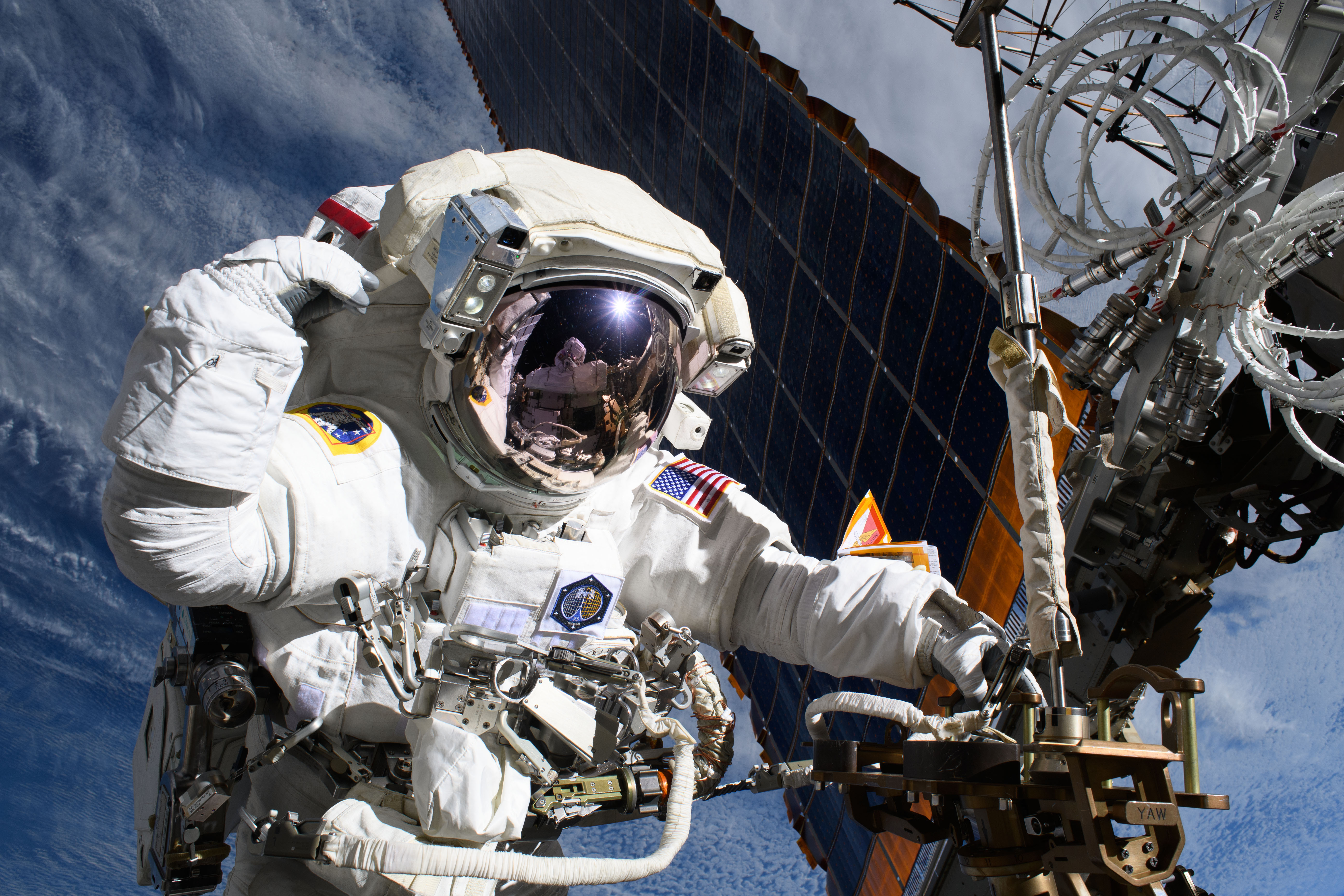
NASA has been a major participant in the International Space Station, a large orbital laboratory developed through cooperation among multiple space agencies and countries. The station provides a platform for scientific research in microgravity and supports long-duration human spaceflight.
Astronauts conduct experiments involving biology, physics, materials science, Earth observation, and other research areas. The experience gained from long-duration missions also contributes to understanding how humans live and work in space.
The International Space Station demonstrates how international cooperation can support complex scientific and engineering projects. NASA’s involvement has included spacecraft development, astronaut missions, scientific research, and station operations.
NASA’s Robotic Space Missions
NASA’s work extends far beyond human spaceflight. Robotic spacecraft have explored planets, moons, asteroids, comets, and distant regions of the solar system. Robotic missions can travel to environments that may be difficult or dangerous for humans and can collect scientific information over long periods.
Mars exploration has been a major area of NASA’s robotic activities. Various orbiters, landers, and rovers have studied the Martian atmosphere, surface, geology, climate, and potential habitability. Missions such as the Mars rovers have provided detailed information about the planet’s ancient environments and geological history.
Other NASA missions have explored Jupiter, Saturn, Pluto, asteroids, and other solar-system destinations.
NASA and Space Telescopes
NASA has also played a major role in space-based astronomy. Telescopes operating above Earth’s atmosphere can observe wavelengths of light that are blocked or distorted by the atmosphere. This provides scientists with clearer views of distant astronomical objects.
The Hubble Space Telescope is one of the best-known examples. It has produced extensive observations of galaxies, nebulae, stars, planets, and other celestial objects. More recently, the James Webb Space Telescope has expanded astronomical observations using infrared capabilities.
These observatories help researchers study the formation of stars and galaxies, planetary systems, cosmic evolution, and other fundamental questions about the universe.
NASA and Earth Science
NASA does not focus only on distant space. Earth science is another major part of its activities. Satellites and other instruments are used to study Earth’s atmosphere, oceans, land surfaces, weather-related processes, ice, vegetation, and climate systems.
Data collected through Earth-observation missions can help scientists understand changes occurring across the planet. Researchers use these observations alongside measurements from other sources to study environmental processes and develop scientific models.
Earth science missions demonstrate that space technology can provide important information about the planet on which humans live. Satellite observations can cover large geographic areas and provide repeated measurements over time.
NASA and Aeronautics
The word “Aeronautics” in NASA’s name reflects its continuing work in aviation research. NASA develops and tests technologies intended to improve aircraft efficiency, safety, performance, and environmental characteristics.
Aeronautics research can involve aircraft design, propulsion, air traffic management, advanced materials, autonomous systems, and new concepts for flight. NASA researchers work with universities, industry, and other organizations on projects designed to address aviation challenges.
This work is distinct from NASA’s space exploration activities but shares many technological foundations, including advanced engineering, computing, materials science, and control systems.
NASA’s Role in Scientific Research
Scientific research is central to NASA’s activities. The agency supports investigations across numerous fields, including astrophysics, planetary science, Earth science, heliophysics, biological science, and physical science.
Researchers analyze information collected by spacecraft, telescopes, satellites, aircraft, and instruments. These observations can lead to new scientific discoveries and improve understanding of natural processes.
NASA also supports technology development that makes future missions possible. Innovations in sensors, communication, propulsion, robotics, computing, materials, and life-support systems can contribute to increasingly ambitious exploration projects.
NASA and Future Space Exploration
NASA continues to develop programs focused on future human and robotic exploration. Lunar exploration is an important area of current activity, particularly through the Artemis program, which aims to support a sustained human presence around and on the Moon.
The Moon can also serve as a location for testing technologies and operational methods that may eventually support missions farther into the solar system. Mars remains another major long-term exploration objective.
Future missions are expected to involve advanced spacecraft, robotics, scientific instruments, communications systems, and life-support technologies. International and commercial partnerships are also increasingly important components of modern space exploration.
Why NASA Is Important
Knowing what is the full form of NASA is only the beginning of understanding the organization’s importance. NASA has contributed to space science, aviation research, Earth observation, technology development, and human exploration for decades.
Its missions have produced enormous quantities of scientific data and have helped develop technologies used in space and on Earth. NASA’s work also provides opportunities for international scientific cooperation and inspires students and researchers to pursue careers in science, technology, engineering, and mathematics.
Its activities demonstrate how long-term investment in research and engineering can produce new knowledge and technological capabilities.
Conclusion
The answer to what is the full form of NASA is National Aeronautics and Space Administration. Established in 1958, NASA is the United States civilian agency responsible for a wide range of aeronautics and space activities. Its work includes human spaceflight, robotic exploration, Earth science, astronomy, aeronautics research, and technology development.
From the Apollo Moon missions and the International Space Station to Mars exploration and advanced space telescopes, NASA has contributed significantly to scientific and technological understanding. Its continuing research and exploration programs demonstrate the importance of engineering, international cooperation, scientific investigation, and long-term innovation in expanding humanity’s knowledge of Earth and the universe.