
Introduction
Computers have become an essential part of modern life. From educational activities and office work to gaming, communication, banking, and entertainment, people use computers for countless purposes every day. Although computers contain several important components, one of the most significant parts is the CPU. It is responsible for processing instructions, performing calculations, managing operations, and coordinating different parts of a computer system. Without it, a computer would not be able to perform the tasks that users expect.
The full form of CPU is Central Processing Unit. It is commonly described as the brain of a computer because it handles instructions and processes information. Whenever someone opens an application, writes a document, plays a game, browses the internet, or performs calculations, the CPU helps execute the required operations. Understanding the CPU is useful for students, computer beginners, technology enthusiasts, and anyone interested in learning how electronic devices work.
1. What Is a CPU?
A Central Processing Unit is the primary processing component of a computer that executes instructions provided by software and manages various computational activities. It receives instructions from programs, interprets them, performs calculations or logical operations, and produces results that can be used by other components. The CPU works with memory, storage, input devices, and output devices to ensure that the entire system operates properly. It is installed on the computer’s motherboard and communicates with other hardware through electrical signals and data pathways.
The CPU does not work independently. It relies on different components to receive information, store temporary data, and display completed results. For example, when a user types a sentence into a word-processing application, the processor helps interpret the software instructions and manages the processing needed to display letters on the screen. Similarly, when a computer runs multiple applications, the CPU allocates processing time to different tasks. Its performance and capabilities significantly influence how quickly a computer responds to commands.
2. Why Is the CPU Called the Brain of a Computer?
The CPU is often called the brain of a computer because it controls and processes many of the operations that allow the machine to function. Like the human brain coordinates different activities in the body, the processor manages instructions and communicates with various computer components. It helps determine which operations need to be performed, when they should happen, and how information should be handled during processing.
This comparison is not entirely literal because computers and human brains operate differently. However, it makes the CPU’s role easier to understand for beginners. The processor reads instructions from programs and performs the required actions according to their commands. It handles arithmetic calculations, logical comparisons, and control-related activities. Without a CPU, a computer would not be able to execute software or respond meaningfully to user input. Its importance extends to laptops, desktop computers, servers, smartphones, tablets, and many other electronic devices that require instruction processing.
3. Main Functions of a CPU
The CPU performs several essential functions that support the operation of a computer system. These functions include processing instructions, calculating values, making logical decisions, managing data movement, and coordinating hardware activities. Whenever a program runs, the CPU follows instructions that help the software perform its intended purpose. It processes information and communicates with memory and other components to ensure that the required data is available at the right time.
One of its major responsibilities is executing program instructions. It also performs mathematical calculations such as addition, subtraction, multiplication, and division. Logical operations help it compare values and make decisions, such as determining whether a condition is true or false. The CPU also helps manage the order in which instructions are executed. In modern systems, processors can handle multiple instruction streams and tasks through advanced scheduling and execution technologies. These capabilities make computers useful for everyday activities as well as complex scientific, creative, and professional work.
4. Important Components of a CPU
A CPU contains several internal components that work together to execute instructions efficiently. Each component has a specific responsibility, and their coordination allows the processor to complete operations. Although modern processors contain advanced structures and many additional elements, the basic concepts of the Arithmetic Logic Unit, Control Unit, and registers remain important for understanding how a CPU works.
Arithmetic Logic Unit (ALU)
The Arithmetic Logic Unit is responsible for performing arithmetic and logical operations. It can calculate numerical values and compare information according to the instructions it receives. Mathematical operations include addition, subtraction, multiplication, and division, while logical operations involve comparisons and decision-making processes. The ALU is essential for calculations in applications such as spreadsheets, financial software, engineering programs, games, and scientific tools.
Control Unit (CU)
The Control Unit manages the execution of instructions and coordinates activities within the processor. It helps fetch instructions from memory, interpret them, and direct other components to perform the required operations. It also controls how information moves between the CPU, memory, and other hardware. The Control Unit helps maintain the correct sequence of operations so that programs can function as intended.
Registers
Registers are small, extremely fast storage locations inside the processor. They temporarily hold instructions, addresses, data, and intermediate results that the CPU needs while processing information. Because registers are located within the processor, accessing them is generally much faster than accessing regular system memory. They help the CPU complete operations efficiently by keeping frequently required information close to the processing units.
5. How Does a CPU Work?
A CPU works by following a process commonly explained through the instruction cycle. This cycle involves fetching an instruction, decoding it, executing it, and storing or transferring the result. The processor continuously repeats this process while a computer is operating. Instructions may come from programs stored on a computer’s storage device, but they are generally loaded into memory before the CPU executes them.
During the fetch stage, the CPU obtains an instruction from memory. In the decode stage, it determines what the instruction means and which operation is required. During execution, the processor performs the calculation, comparison, or other action specified by the instruction. Finally, the result may be stored in a register, written to memory, or sent to another component. These stages happen extremely quickly, allowing users to interact with applications without noticing the individual operations. The speed and efficiency of instruction execution contribute to the overall responsiveness of a computer system.
6. Different Types of CPUs

Processors are available in different designs depending on the device, workload, power requirements, and performance expectations. Desktop processors are generally designed to provide strong performance for demanding applications, while laptop processors often balance speed with energy efficiency and heat management. Mobile processors are optimized for smartphones and tablets, where battery life, compact size, and thermal limitations are important considerations. Server processors are developed to handle large workloads, multiple users, data processing, and enterprise applications.
Modern processors may also differ in architecture, core count, instruction sets, and supported technologies. Some CPUs are designed for basic office work and browsing, while others are built for gaming, software development, video editing, artificial intelligence workloads, or professional computing. Choosing a processor depends on the purpose of the device rather than simply selecting the model with the highest specifications. A suitable CPU should offer enough performance for the user’s activities while maintaining reasonable power consumption, cost, and compatibility with other hardware.
7. CPU Cores and Threads Explained
A CPU core is an individual processing unit within a processor. Older computers commonly featured processors with a single core, while modern CPUs often contain multiple cores. Each core can execute instructions, allowing the processor to handle several tasks more efficiently. A multicore CPU can distribute workloads across different cores, improving performance in applications designed to use parallel processing.
Threads represent sequences of instructions that can be scheduled for execution. Some processors support simultaneous multithreading, allowing a single physical core to manage multiple threads under suitable conditions. This technology can improve utilization of processor resources, although it does not mean that two threads always perform as efficiently as two separate physical cores. More cores and threads can be beneficial for multitasking, video rendering, compiling software, simulations, and other demanding workloads. However, the number of cores alone does not determine CPU performance. Architecture, clock speed, cache, software optimization, power limits, and cooling also influence the overall experience.
8. Understanding CPU Clock Speed
Clock speed measures how frequently a processor’s clock cycles occur and is commonly expressed in gigahertz (GHz). One gigahertz represents one billion cycles per second. Clock speed is an important specification because it provides information about the operating frequency of a CPU. However, it should not be treated as a complete measure of performance, since processors can perform different amounts of work during each cycle.
A CPU with a higher clock speed may perform better in certain applications, particularly workloads that depend heavily on single-core performance. However, a processor with a lower frequency can sometimes outperform another processor with a higher frequency because of its newer architecture, improved efficiency, larger cache, or more advanced execution capabilities. Modern CPUs can also adjust their operating frequency automatically according to workload, temperature, and power conditions. This flexibility helps processors deliver higher performance when needed while reducing power consumption during lighter tasks.
9. What Is CPU Cache Memory?
CPU cache is a small, high-speed memory located within or closely integrated with the processor. It stores frequently used data and instructions so the CPU can access them more quickly than it could from main memory. Cache memory helps reduce delays that occur when the processor needs information from RAM. It is especially useful because modern CPUs can process instructions at very high speeds, and waiting for slower memory can limit overall performance.
Cache memory is commonly divided into different levels, such as L1, L2, and L3. L1 cache is typically the smallest and fastest, while L2 provides additional capacity and L3 often serves as a larger shared cache in many processor designs. The exact arrangement varies between CPU models and architectures. Cache plays an important role in improving performance during repeated tasks, gaming, software execution, and many data-intensive operations. A processor with a well-designed cache system can use its processing resources more effectively.
10. Difference Between CPU and GPU
The CPU and GPU are both important processing components, but they are designed for different kinds of workloads. A CPU generally contains a smaller number of powerful, flexible cores that are optimized for sequential tasks, complex instructions, and general-purpose computing. It handles operating system activities, application logic, calculations, and many other operations required by a computer.
A GPU, or Graphics Processing Unit, contains many processing units designed to perform large numbers of similar calculations in parallel. GPUs are especially useful for graphics rendering, image processing, video effects, scientific computing, and certain artificial intelligence workloads. While CPUs are effective at managing different types of tasks, GPUs are often better suited to operations that can be divided into many smaller calculations performed simultaneously. Modern computers may include integrated graphics within the processor or use a separate graphics card containing a dedicated GPU. Both components work together to deliver the performance needed by different applications.
11. Importance of CPU in Everyday Devices
The CPU is important in many devices that people use throughout the day. Desktop computers and laptops depend on processors to run operating systems, applications, web browsers, office tools, and multimedia programs. Smartphones use specialized processors to manage communication, applications, cameras, navigation, security features, and other functions. Smart televisions, gaming consoles, wearable devices, and home automation products also contain processing units that help them respond to user commands.
In education, CPUs support online classes, research, presentations, programming, and digital learning platforms. In workplaces, they help employees create documents, analyze data, manage communication, and operate business software. In entertainment, processors contribute to gaming, streaming, music production, photo editing, and video playback. The importance of CPUs extends beyond personal devices to industrial equipment, medical systems, transportation technologies, and scientific instruments. Their processing capabilities help electronic systems become more intelligent, responsive, and capable of performing increasingly complex tasks.
12. How to Choose the Right CPU
Choosing the right processor requires understanding your needs, budget, and the type of computer you want to build or purchase. For basic tasks such as browsing, online classes, document editing, email, and video streaming, an entry-level or mid-range CPU may be sufficient. Users who regularly work with demanding applications, such as video editing software, programming tools, advanced design programs, or modern games, may benefit from a more powerful processor with additional cores and higher performance capabilities.
Before purchasing a CPU, check its compatibility with the motherboard, socket type, memory support, cooling requirements, and power consumption. It is also helpful to compare benchmarks from reliable testing sources instead of relying only on advertised clock speeds. A balanced computer system should have an appropriate amount of RAM, fast storage, suitable graphics capabilities, and adequate cooling. Selecting the right processor can improve productivity, reduce unnecessary spending, and help ensure that the computer meets your needs for several years.
13. Common CPU Problems and Their Causes
Processors are generally reliable, but CPU-related problems can affect computer performance. One common issue is overheating, which may occur when cooling fans are not working properly, dust accumulates inside the system, or the cooling solution is inadequate. High temperatures can cause the processor to reduce its operating speed to protect itself. This behavior is called thermal throttling and may result in slower performance during demanding tasks.
Another issue is unusually high CPU usage, which can make a computer feel slow or unresponsive. This may happen when multiple applications are running, background processes consume resources, software is poorly optimized, or unwanted programs are active. Users can check CPU utilization through system monitoring tools to identify demanding processes. Keeping software updated, maintaining proper ventilation, cleaning dust carefully, and avoiding unnecessary background applications can help improve system performance. If problems continue, checking hardware compatibility and seeking professional assistance may be useful.
14. CPU in Modern Technology
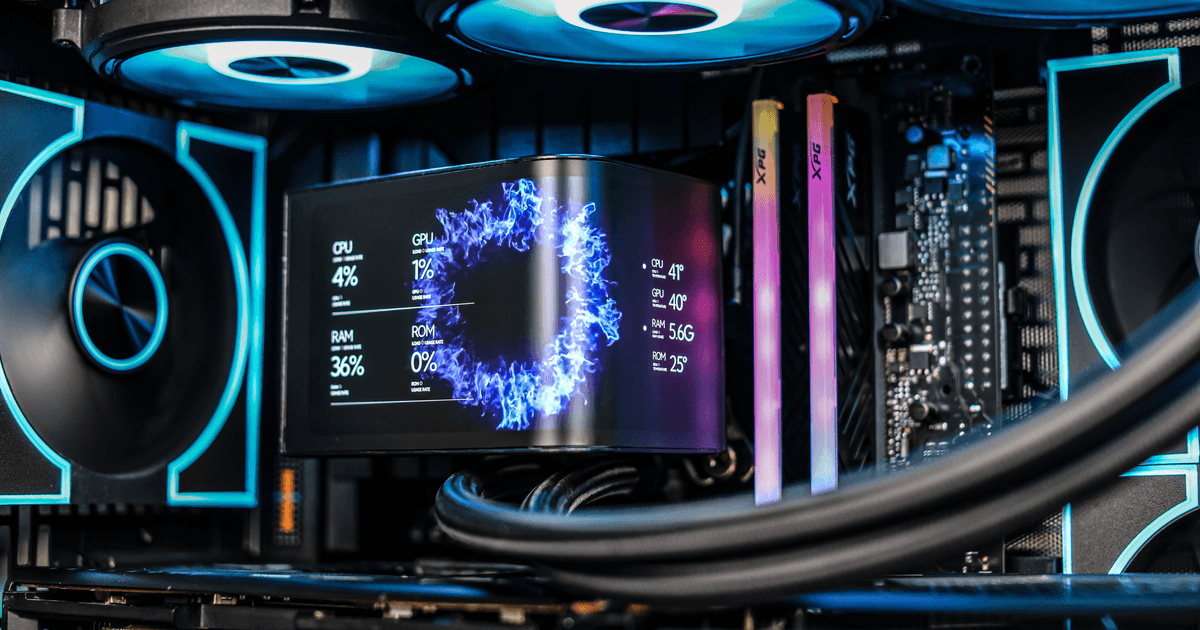
Processors have evolved significantly over the years. Early CPUs were comparatively simple and had limited processing capabilities, but modern processors are powerful, energy-efficient, and capable of managing sophisticated workloads. Improvements in semiconductor manufacturing, processor architecture, cache design, core technology, and instruction execution have helped computers become faster and more capable.
Today’s CPUs are used in areas such as cloud computing, artificial intelligence, cybersecurity, scientific research, robotics, automation, and digital communication. Some processors also include specialized acceleration features designed to support particular tasks. In many modern computing devices, CPUs work alongside GPUs and other specialized processing units to improve efficiency. As technology continues to advance, processor development is likely to focus on greater performance, lower power consumption, better integration, and improved support for emerging applications. These developments make the processor one of the most important foundations of the modern digital world.
15. Frequently Asked Questions (FAQs)
What is the full form of CPU?
The full form of CPU is Central Processing Unit. It is the main processing component of a computer that executes instructions, performs calculations, and manages important computational activities. It works with memory, storage, and other hardware to run applications and complete user tasks.
Is the CPU the brain of a computer?
Yes, the CPU is commonly called the brain of a computer because it processes instructions and coordinates many operations. It helps the computer execute software, perform calculations, and respond to commands from users.
What are the three main parts of a CPU?
The three basic components commonly taught are the Arithmetic Logic Unit (ALU), Control Unit (CU), and registers. The ALU performs arithmetic and logical operations, the Control Unit manages instruction execution, and registers temporarily store data and instructions.
What is the difference between CPU and RAM?
The CPU processes instructions and performs operations, while RAM temporarily stores data and programs that are currently being used. The CPU accesses RAM when it needs information for processing. Both are essential for the functioning and performance of a computer.
Does a higher CPU clock speed always mean better performance?
No. Clock speed is an important factor, but CPU performance also depends on architecture, core count, cache, power limits, instruction efficiency, and the type of workload. A processor with a lower clock speed can sometimes perform better than one with a higher frequency.
Can a computer work without a CPU?
A conventional computer cannot perform its normal computing operations without a functioning processor. The CPU is required to execute instructions and manage essential activities. Some electronic devices use different types of processing units, but they still need a processing component to operate.
Conclusion
The Central Processing Unit is one of the most essential components of a computer because it executes instructions, performs calculations, manages operations, and coordinates activities between different hardware components. Understanding the full form of CPU helps beginners learn the fundamentals of computer technology and appreciate how electronic devices process information. Its main components, including the Arithmetic Logic Unit, Control Unit, and registers, work together to perform different tasks efficiently.
Modern CPUs have developed into powerful processors capable of handling multitasking, gaming, professional software, scientific applications, and advanced computing workloads. Their performance depends on several factors, including clock speed, core count, cache memory, architecture, and power efficiency. Learning about the full form of CPU, its functions, types, and working principles provides a useful foundation for anyone interested in computers, technology, hardware, or digital education. As technology continues to advance, CPUs will remain an important part of the devices and systems that shape everyday life.